

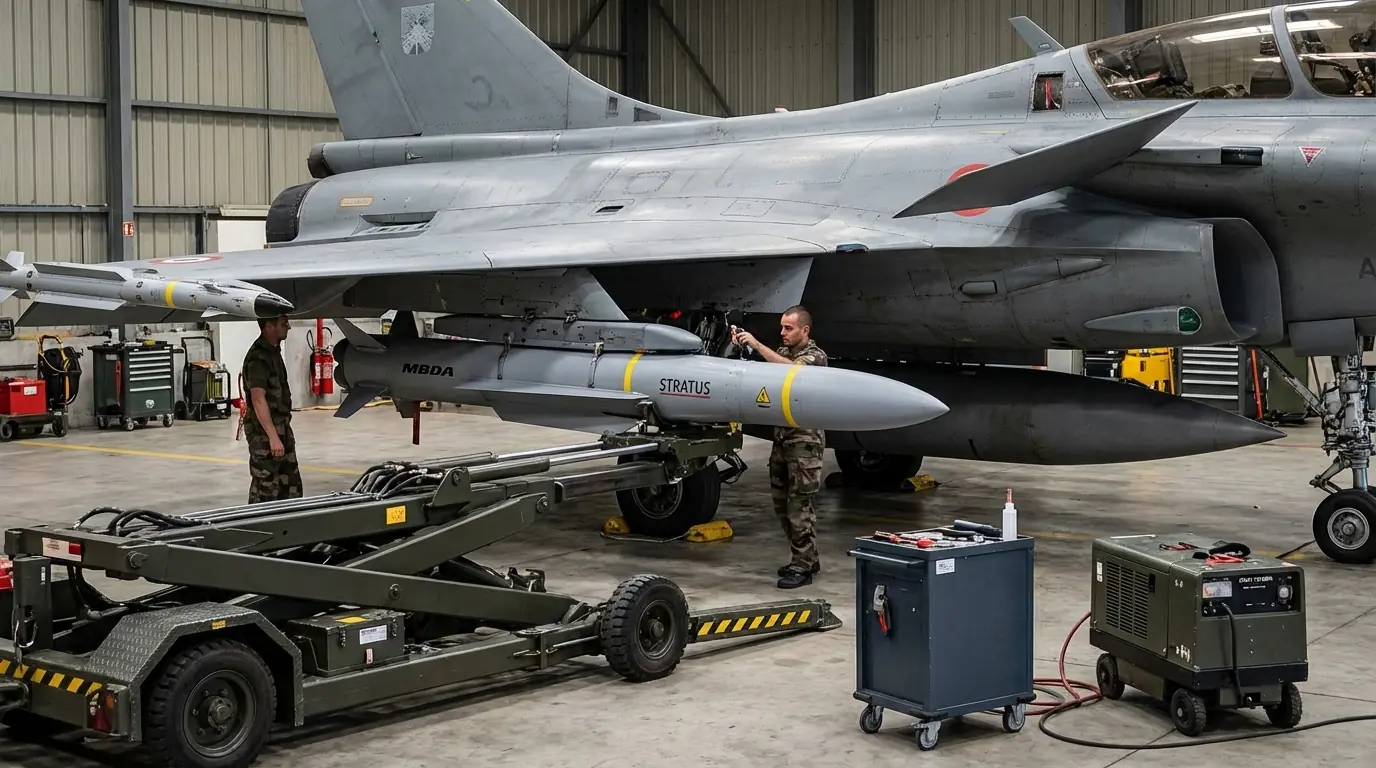
Defense Feeds, Paris — France is developing a new high-speed weapon designed to transform its air combat capabilities. Known as the Stratus supersonic missile, the system is being built to equip the future Rafale F5 fighter and penetrate increasingly advanced enemy air defenses. The program reflects France’s push to stay ahead in a rapidly evolving aerial warfare environment.
The Stratus supersonic missile is part of a broader effort to modernize the French Air and Space Force. As adversaries deploy more sophisticated air defense systems, traditional strike methods are becoming riskier and less effective. This new missile aims to restore the balance by enabling deep penetration strikes against heavily defended targets.
Designed to Break Modern Air Defenses
The Stratus supersonic missile is specifically engineered to defeat advanced integrated air defense systems. These systems, often layered with radar networks and surface-to-air missiles, pose a serious threat to conventional aircraft operations. By combining speed and maneuverability, Stratus is designed to slip through these defenses and reach high-value targets.
Its supersonic speed significantly reduces enemy reaction time. This makes interception far more difficult, especially when combined with potential low-observable features and evasive flight profiles. In modern warfare, speed and unpredictability are key to survival.
The missile is expected to target critical infrastructure such as radar installations, command centers, and missile batteries. Neutralizing these assets early in a conflict can open the door for follow-on air operations. This gives France a strategic edge in contested environments.
Integration with Rafale F5 Fighter
A key element of the Stratus program is its integration with the upcoming Rafale F5 standard. The F5 variant represents the next evolution of France’s multirole fighter, incorporating advanced sensors, connectivity, and combat systems. Together, the Rafale F5 and Stratus missile form a powerful combination.
This pairing allows the aircraft to conduct stand-off strikes while remaining outside the range of enemy defenses. Pilots can launch the missile from a safer distance, reducing exposure to threats. This enhances both survivability and mission success rates.
The integration also highlights France’s focus on network-centric warfare. Data sharing between aircraft, sensors, and weapons will allow for more precise targeting and coordinated strikes. This level of connectivity is becoming essential in modern air combat.

Strengthening France’s Strategic Autonomy
The development of the Stratus supersonic missile underscores France’s commitment to maintaining strategic independence. By investing in domestically developed weapons systems, Paris reduces its reliance on foreign technologies and supply chains. This ensures greater control over its defense capabilities.
Such autonomy is increasingly important in a world of shifting alliances and geopolitical uncertainty. Nations with indigenous defense industries can adapt more quickly to emerging threats. They are also less vulnerable to export restrictions or political pressure.
The program also supports France’s defense industry, strengthening companies involved in missile development and aerospace innovation. This contributes to long-term technological growth and economic resilience.
Preparing for Future High-Intensity Conflicts
The Stratus supersonic missile is being developed with future conflicts in mind. As military powers invest heavily in air defense systems, penetrating these defenses will become more challenging. Weapons like Stratus are designed to ensure that air forces can still operate effectively in such environments.
The missile’s development aligns with broader trends in modern warfare, where speed, precision, and survivability are critical. It also complements other advanced systems being integrated into next-generation fighter platforms.
With the Rafale F5 expected to enter service in the coming years, the Stratus missile will play a central role in shaping France’s airpower. Together, they represent a shift toward more advanced, flexible, and resilient combat capabilities.
As development progresses, the Stratus program signals France’s determination to remain at the forefront of military innovation. In an era of increasingly contested skies, having the ability to strike first and strike effectively could prove decisive.
