


Inexpensive and relatively simple unmanned drones have proliferated on the battlefield. Capable of approaching discreetly and carrying and delivering explosive payloads, they are targeting and attacking not only vehicles and equipment but also stalking individual soldiers. Hiding from them is challenging because they use visual and thermal-sensitive cameras to spot targets. These thermal sensors measure temperature differences in the environment. They can detect “hot” objects like vehicles or living beings that stand out against “cooler” backgrounds, even if concealed by foliage or traditional camouflage. As a result, soldiers become vulnerable and can be seen and attacked.
Although thermal imagers have been widely deployed for decades, the recognition of the need to eliminate or reduce the thermal signature of not only combat equipment such as tanks but also individual infantrymen has only gained serious attention in the Ukraine conflict. The introduction of more compact and affordable thermal imagers, along with their use on small drones, has made countering the thermal threat a priority. Finding ways for soldiers to remain hidden from these sensors has become a critical concern.
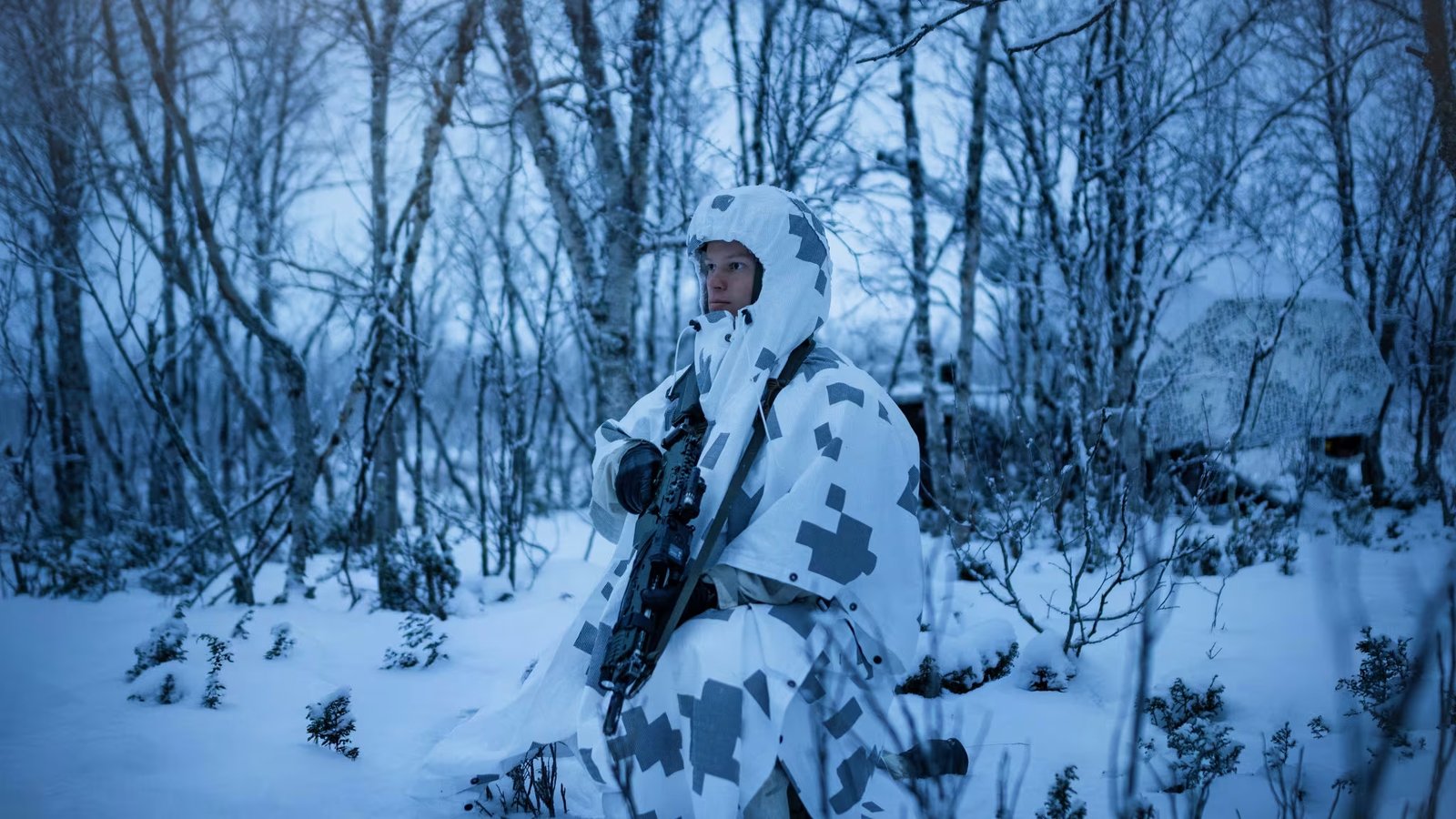
Several companies have introduced solutions. Each utilises layered compositions of materials to reduce the soldier’s exposed body heat, thereby decreasing his contrast with his surroundings. Designs include ponchos, capes, tarps, and ensembles. These need to be lightweight, quickly deployable, compatible with the soldier’s kit, durable, and not restrict movement.

The Ukrainian’s STG-Defence has developed its Anti-Thermal Poncho, while Casper 2.0 is known as an “Anti-Drone Cloak.” Other thermal suppression technologies are being offered by TecPro Technologies with its HT-4 material solution in Switzerland; Italy’s ProApto offers both a poncho and Grille-style options; the Czech firm 4M supplies an InfraHex material poncho; and Israel’s FibroTex presents its Nightwalker. Additionally, Germany’s Ghost-Hood offers the GHOST-MULTI-COVER, a lightweight, multifunctional, thermal protection, as well as the GHILLIE, which provides full-coverage multispectral protection.
Finally, Sweden’s SAAB offers its Barracuda line of multi-spectral camouflage systems. The company has been a leader in developing effective and practical counter-surveillance solutions for end users since the 1970s. Its latest include not only the Barracuda Soldier System, which provides visual, near IR, mid-wave IR, and far-wave IR (thermal) protection, but also ultraviolet (UV) protection. Their system is already in use by the British Royal Marines. Additionally, it has introduced an Arctic Poncho specifically designed for use in snow and ice environments.
Among the initiatives underway to reduce thermal signatures is an effort by the US Marines. They are seeking a Multi-Spectral Camouflage Overgarment as described in a recent March 2026 Sources Sought. The importance is evident as they plan to field a system by 2027 and to equip their entire force by 2030.
The need to hide from one’s opponent remains as vital as ever. However, the solutions have shifted away from printed patterns on battle dress. Today’s battlefield demands advanced technology that must be simple, easily used, and affordable. The adage that the key to survival in combat is “To not be seen” has gained new urgency and a fresh approach.
by Stephen W. Miller
