

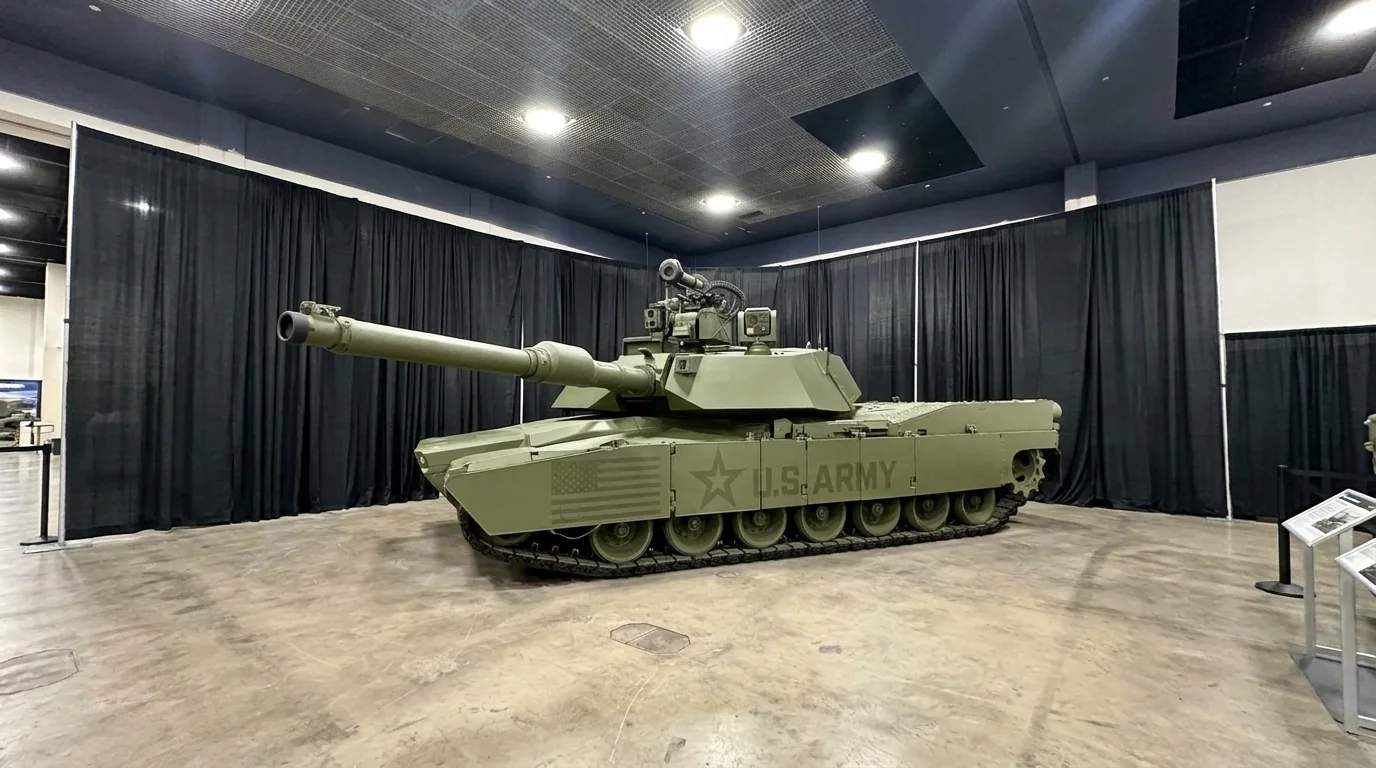
What happens when one of the world’s most successful battle tanks is no longer considered future-proof?
That’s the question driving the development of the M1E3 Abrams, the U.S. Army’s ambitious effort to reshape armored warfare for an era defined by drones, artificial intelligence, precision-guided weapons, and constantly evolving battlefield threats.
For decades, the Abrams tank has been a symbol of American military power. Its combination of firepower, protection, and mobility helped establish a reputation that few armored vehicles could match. Yet modern warfare has exposed a difficult reality: even legendary platforms must adapt or risk becoming outdated.
The M1E3 Abrams is not simply another upgrade in a long line of improvements. Instead, it represents a fundamental shift in design philosophy. Military planners are looking beyond thicker armor and bigger systems, focusing on something equally important, survivability through intelligence, adaptability, and efficiency.
Recent conflicts have demonstrated how quickly technology can alter the battlefield.
Small drones now identify targets in minutes. Precision strikes can reach vehicles from miles away. Logistics networks are under constant pressure. In this environment, future tanks must do more than absorb punishment; they must detect threats faster, share information instantly, and operate with greater flexibility.
That’s where the next-generation Abrams enters the picture.
Designed to be lighter, smarter, and easier to modernize, the M1E3 Abrams tank aims to address many of the challenges facing armored forces in the coming decades. In this post, we’ll explore its expected features, specifications, technological innovations, and how it could redefine the future of U.S. armored warfare.
What Is the M1E3 Abrams Tank?
The M1E3 Abrams is not merely the next version of the Abrams tank. In many ways, it’s a response to a question military planners have been quietly asking for years: What should a tank look like when every battlefield is saturated with drones, sensors, and precision weapons?
To understand why the M1E3 matters, it’s helpful to look at the path that led here.
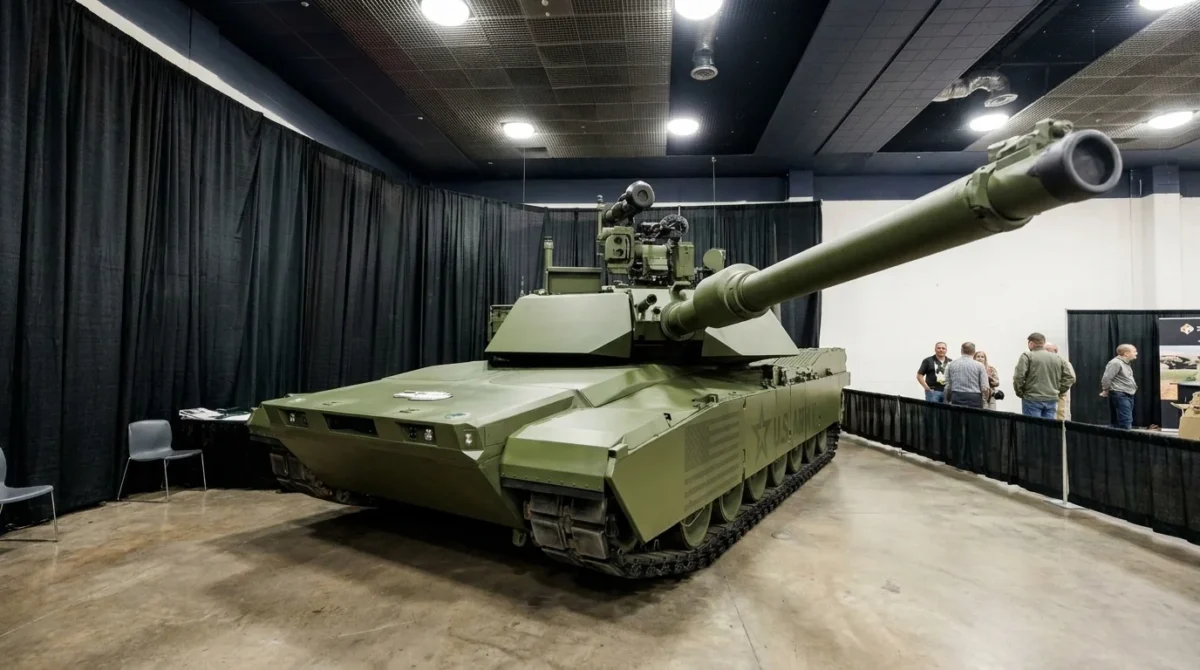
Since entering service in 1980, the Abrams platform has gone through multiple upgrades, from the original M1 to the M1A1, M1A2, and the latest SEPv3 and SEPv4 configurations. Each generation added better armor, more advanced electronics, improved communications, and stronger protection systems.
The result was a formidable combat vehicle, but also a very heavy one. Some modern Abrams variants weigh more than 70 tons, creating challenges for transport aircraft, bridges, recovery vehicles, and battlefield logistics.
The M1E3 Abrams program aims to reverse that trend.
Rather than continuously adding weight and complexity, the U.S. Army wants a tank designed from the outset for future warfare. Early concepts indicate a vehicle that emphasizes modularity, digital integration, crew protection, and rapid technology upgrades. In simple terms, engineers want a tank that can evolve as fast as the threats it faces.
One of the most discussed aspects of the M1E3 is its potential use of advanced automation. Systems that once required additional crew members may be handled by automated technologies, reducing workload while increasing operational efficiency.
At the same time, improved active protection systems are expected to help defend against anti-tank missiles, loitering munitions, and drone attacks.
The goal isn’t to replace the Abrams legacy. It’s to ensure that legacy remains effective for the next several decades, on battlefields that may look dramatically different from those of the past.
M1E3 Abrams Tank Specifications
Military enthusiasts often ask the same question first: How powerful will the M1E3 Abrams be?
The interesting thing is that the answer may not be measured solely by armor thickness or cannon size.
The M1E3 is being designed around a broader idea of combat effectiveness, one that combines firepower, survivability, mobility, and digital connectivity into a single system.
Although many technical details remain classified or are still evolving, several core design priorities have already emerged.
Expected M1E3 Abrams Specifications
| Category | Expected Capability |
| Type | Main Battle Tank (MBT) |
| Crew | Likely 3 personnel |
| Main Armament | Advanced 120mm smoothbore cannon |
| Loading System | Autoloader |
| Turret | Potential unmanned or partially unmanned design |
| Powerplant | Hybrid-electric architecture under consideration |
| Protection | Active Protection System (APS) + advanced armor |
| Battlefield Network | Fully digital open architecture |
| Counter-Drone Capability | Integrated anti-UAS systems |
| Weight | Significantly lighter than current Abrams variants |
Perhaps the most important specification isn’t visible from the outside at all: weight reduction.
Modern Abrams tanks are incredibly survivable, but their size and mass create challenges. A lighter M1E3 could cross more bridges, travel farther on less fuel, and be deployed more quickly during a crisis. For military planners, those advantages matter just as much as armor protection.
The vehicle’s armament is expected to remain centered on a powerful 120mm cannon, preserving the Abrams’ reputation for long-range lethality. However, future ammunition types may become just as important as the gun itself. Programmable rounds, smart munitions, and drone-intercept capabilities could expand the tank’s role beyond traditional armored combat.
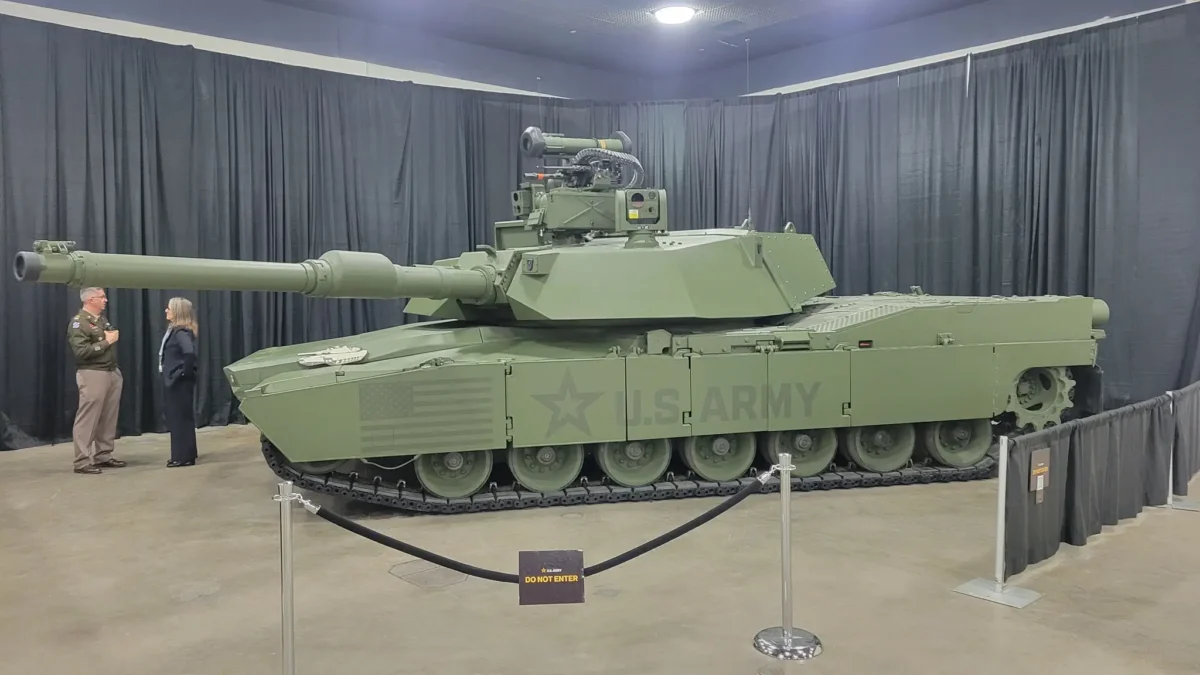
The digital backbone of the M1E3 may prove equally transformative. Think of the tank as a battlefield data hub rather than simply a gun on tracks. Sensors, targeting systems, drones, and command networks could all feed information into a shared operational picture, helping crews make faster and better-informed decisions.
In short, the M1E3 Abrams specifications suggest a vehicle designed not just to survive future wars, but to process, adapt, and fight within an increasingly connected battlefield ecosystem.
Key Features of the M1E3 Abrams
The most fascinating aspect of the M1E3 Abrams isn’t any single piece of equipment. It’s the philosophy behind the design.
For decades, tank development followed a fairly predictable formula: add more armor, improve the gun, and install better electronics.
The M1E3 takes a different route. Instead of asking, “How do we make the tank tougher?” engineers are asking, “How do we make the tank smarter, faster, and harder to target in the first place?”
That shift is shaping nearly every major feature expected on the vehicle.
Potential Unmanned Turret
One of the most discussed innovations is the possibility of an unmanned turret. Traditionally, crew members occupy the turret alongside ammunition and critical combat systems. In the M1E3, much of that equipment could be automated and remotely operated.
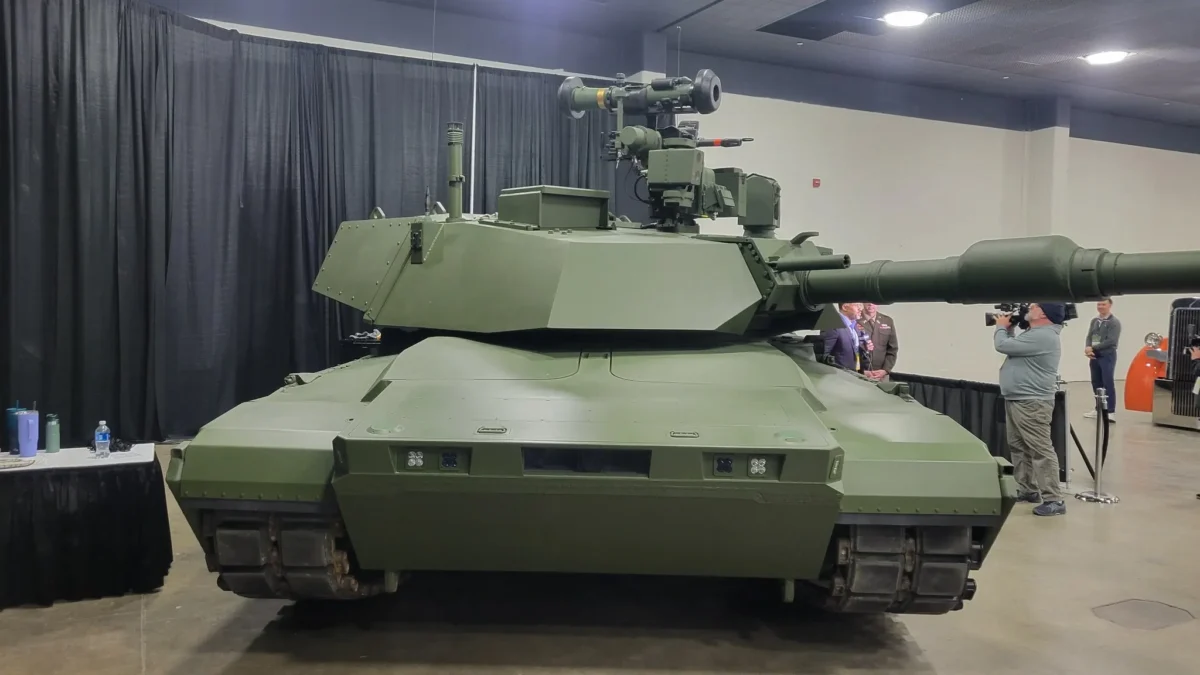
This arrangement offers a major survivability benefit. By relocating the crew into a better-protected compartment within the hull, the risk to personnel decreases even if the turret is damaged during combat.
Autoloader Technology
For generations, Abrams tanks have relied on a human loader. The M1E3 is expected to replace this role with an autoloader.
At first glance, that might seem like a simple labor-saving feature. In reality, it’s much more significant. Automated loading systems can maintain consistent firing rates, reduce crew size, and free soldiers to focus on battlefield awareness rather than repetitive physical tasks.
Read also: Tank Autoloaders Explained: Are They Better Than Manual Loaders?
Advanced Active Protection Systems
Modern battlefields are saturated with threats. Anti-tank guided missiles, loitering munitions, and armed drones can appear from multiple directions simultaneously.
Rather than depending entirely on passive armor, the M1E3 is expected to use sophisticated Active Protection Systems (APS) capable of detecting, tracking, and defeating incoming threats before impact.
Open Digital Architecture
Perhaps the least flashy, but arguably most important, feature is the tank’s digital framework.
Military technology evolves rapidly. A sensor considered cutting-edge today may feel outdated within five years. The M1E3’s open architecture is intended to simplify upgrades, allowing new software, electronic warfare tools, targeting systems, and counter-drone technologies to be added without rebuilding the entire vehicle.
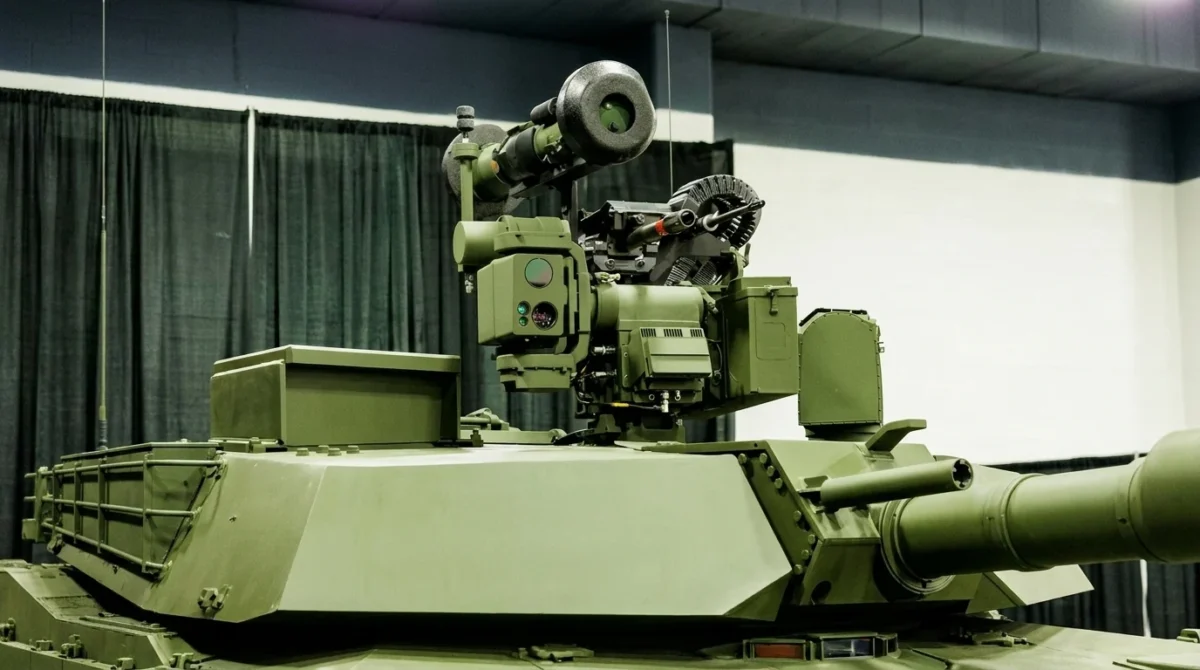
It’s a bit like owning a computer that can continuously receive hardware upgrades instead of becoming obsolete every few years.
Artificial Intelligence and Automation
Artificial intelligence won’t replace tank crews anytime soon, but it can dramatically enhance decision-making.
Future M1E3 systems may assist with target identification, threat prioritization, route planning, and sensor fusion. Instead of forcing soldiers to process information from multiple screens and devices, AI can organize data into a clearer picture of the battlefield.
Taken together, these features reveal something important: the M1E3 Abrams is being designed less as a traditional tank and more as a highly connected combat platform capable of evolving alongside future threats.
M1E3 Abrams vs M1A2 SEPv3: What’s Actually Changing?
At first glance, comparing the M1E3 Abrams to the M1A2 SEPv3 might seem unfair. One is a battle-tested tank currently serving in operational units, while the other represents the Army’s vision for the future.
Yet this comparison reveals exactly why the M1E3 program exists.
The M1A2 SEPv3 is widely regarded as one of the most capable main battle tanks ever fielded. It combines heavy armor, advanced targeting systems, and exceptional firepower. But there’s a catch. Every upgrade added over the years increased weight, maintenance requirements, and logistical complexity.
The M1E3 aims to reverse that trend.
Side-by-Side Comparison
| Feature | M1A2 SEPv3 | M1E3 Abrams |
| Crew Size | 4 | Likely 3 |
| Loader | Human Loader | Autoloader |
| Combat Weight | 70+ tons | Reduced weight target |
| Turret Design | Fully Manned | Potentially Unmanned |
| Architecture | Traditional Upgrade Path | Open Digital Architecture |
| Power System | Gas Turbine Engine | Advanced Hybrid Concepts |
| Counter-Drone Systems | Limited Integration | Core Design Priority |
| Upgrade Flexibility | Moderate | High |
| Battlefield Networking | Advanced | Next-Generation Connected Systems |
The difference is almost philosophical.
The SEPv3 was built for an era where survivability often meant adding more armor. The M1E3 is being designed for a world where threats come from above, from cyberspace, and from autonomous systems moving faster than human reaction times.
Think about drone warfare. A relatively inexpensive loitering munition can threaten vehicles worth millions of dollars. That reality forces military planners to rethink protection. Simply adding thicker armor isn’t always the answer.
Read also: Are Tanks Still Relevant in Modern Warfare? Lessons from Ukraine
Mobility also plays a larger role in the M1E3 concept. A lighter tank can deploy faster, consume less fuel, and access terrain that heavier vehicles may struggle to navigate. In modern warfare, getting to the fight quickly can be just as important as winning it.
Perhaps the biggest difference, though, lies in adaptability.
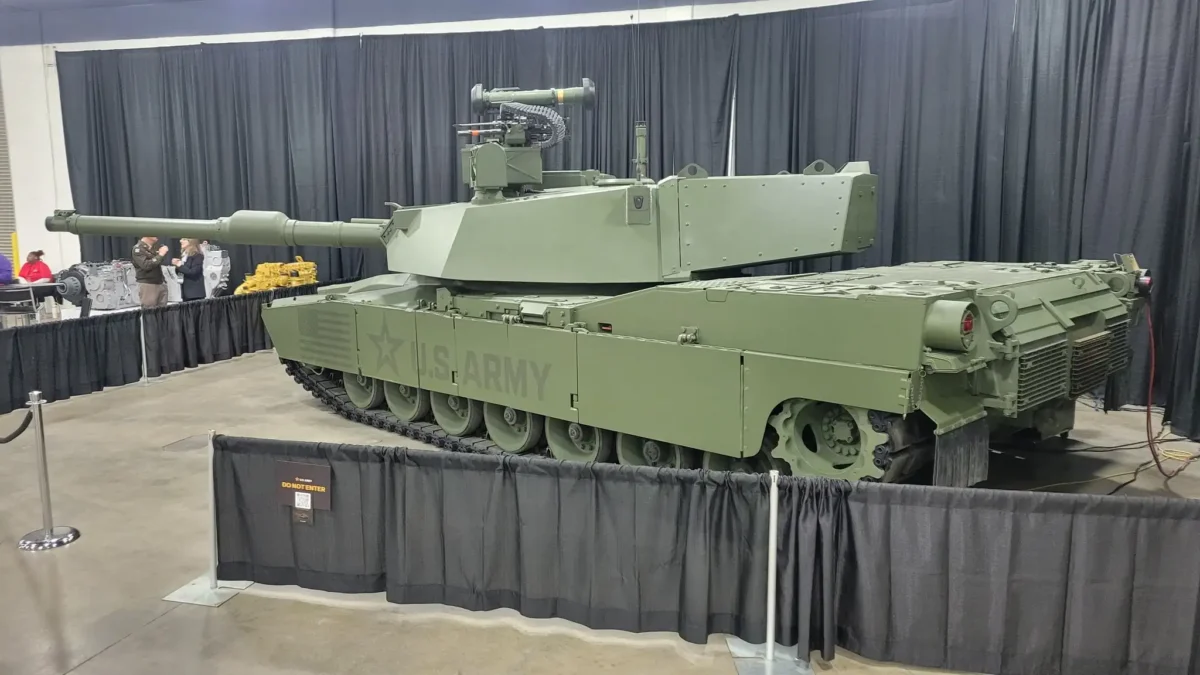
The SEPv3 represents the peak of decades of Abrams evolution. The M1E3 is being built as a platform that can continue evolving for decades to come. Instead of chasing threats with periodic upgrades, it is designed to absorb new technologies as they emerge.
That’s not merely an upgrade. It’s a shift in how armored warfare is being approached for the next generation.
How the M1E3 Abrams Addresses Modern Battlefield Threats
If military planners were designing a tank solely to fight other tanks, the job would be relatively straightforward.
But today’s battlefield is crowded with dangers that barely existed when the original Abrams entered service. Small drones hover overhead. Precision-guided missiles strike from miles away. Electronic warfare systems jam communications and sensors. Even commercial technology can become a battlefield threat when adapted for military use.
The M1E3 Abrams is being developed with these realities front and center.
The Drone Problem
A decade ago, many armies viewed drones primarily as reconnaissance tools.
Today, they can locate targets, guide artillery fire, deliver explosives, and even act as kamikaze weapons. Recent conflicts have demonstrated that relatively inexpensive drones can threaten vehicles costing millions of dollars.
This is one reason counter-drone technology is expected to become a core component of the M1E3. Future systems may include advanced sensors, electronic countermeasures, and defensive weapons designed specifically to detect and neutralize unmanned aerial threats.
Protection Beyond Armor
Traditional tank design focused heavily on passive protection, thicker steel, composite armor, and reinforced structures.
The M1E3 expands that concept.
Modern protection increasingly involves detecting a threat before impact and stopping it in flight. Active Protection Systems (APS) can track incoming missiles and launch countermeasures in fractions of a second. In many cases, preventing a hit is more effective than trying to survive one.
Electronic Warfare and Digital Resilience
The next major battlefield may not be visible at all.
Electronic warfare has become a critical factor in modern conflicts. Communications, navigation systems, and sensors can all be targeted by jamming or cyber attacks.
Because the M1E3 is expected to operate within a highly connected combat network, digital resilience becomes just as important as physical armor. Secure communications, encrypted data links, and resilient software architecture are likely to be essential design priorities.
Urban Combat Challenges
Cities present unique dangers for armored vehicles. Narrow streets, hidden firing positions, rooftop attacks, and limited visibility can all reduce a tank’s advantages.
The M1E3’s emphasis on advanced sensors, battlefield networking, and automation could help crews maintain awareness in these complex environments. Instead of relying solely on what a commander can see through a hatch, crews may receive data from multiple sensors, drones, and nearby units simultaneously.
Fighting in a Multi-Domain Battlefield
Perhaps the most important thing to understand about the M1E3 Abrams is that it is being built for a battlefield that extends far beyond land.
Future operations may involve coordination between ground forces, aircraft, satellites, cyber units, and autonomous systems. Success will depend on how effectively these assets share information and respond to threats in real time.
In that environment, a tank can no longer function as an isolated armored vehicle.
The M1E3 is being designed as a connected node within a much larger combat ecosystem, one capable of sensing, communicating, adapting, and fighting across multiple domains at once.
