


SEOUL, Republic of Korea — October 2026 — South Korea is moving to strengthen the digital backbone of its future military, with a new command-and-control R&D program highlighting growing demand for cloud-based information sharing, AI-enabled decision support and more closely connected battlefield systems.
On October 6, the Defense Acquisition Program Administration announced plans for a second preliminary industry briefing on its Command and Control Information Sharing System R&D program.
The program is intended to integrate data, common services and terminals now operated through the C4I systems of South Korea’s joint and individual military services into a cloud-based command-and-control information-sharing architecture. The briefing is scheduled for November 24 and is open to interested domestic companies.
The project comes as South Korea gives greater policy attention to information-driven and AI-supported military operations.
In an Armed Forces Day address on October 1, the government said AI, drones, robotics, space and cyber technologies are transforming warfare and identified AI-based command and control among the future capabilities whose development should be accelerated.
The address also called for further development of manned-unmanned teaming systems and high-energy laser interception weapons as part of a broader effort to build what the government described as a smarter and more technologically advanced force.
Taken together, the announcements illustrate the importance South Korea is placing on the networks and command architecture needed to connect future sensors, autonomous systems and weapons.
Command and control is increasingly shaped not only by communications equipment, but by the ability to move and process information across multiple operational domains and deliver it to commanders at useful speed.
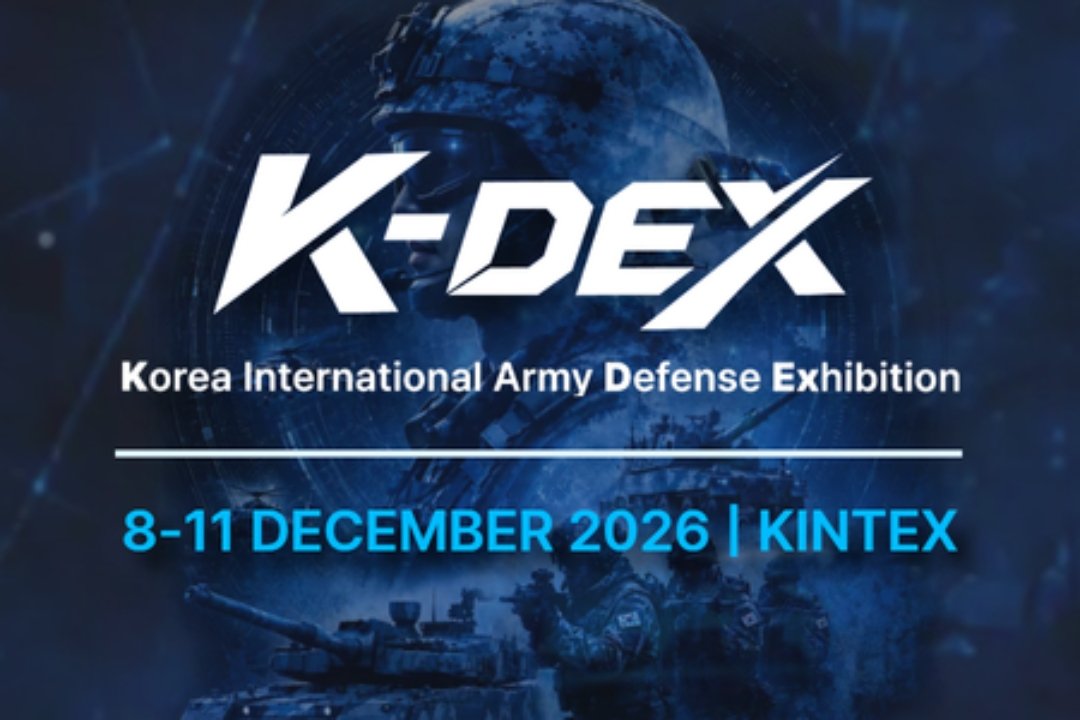
That challenge will be one of the technology areas highlighted at K-DEX 2026, which will take place from December 8 to 11 at KINTEX Exhibition Center 2 in Goyang, Republic of Korea.
Among the exhibition’s five principal themes is Hyper-Connected Networks & Intelligent Command and Control, covering the use of cloud, AI and connected C4I technologies to integrate information from battlefield sensors and support military decision-making.
The theme sits alongside autonomous and manned-unmanned teaming systems, long-range precision strike, drone and counter-drone technologies, and smart military infrastructure.
The combination is significant because the effectiveness of many emerging systems increasingly depends on the networks connecting them.
An unmanned reconnaissance vehicle, battlefield drone or long-range precision weapon can generate or consume large volumes of operational data. Intelligent C4I systems provide the architecture through which that information can be shared, processed and translated into decisions.
K-DEX will therefore present command-and-control technologies not as a stand-alone category, but as part of a wider connected battlefield environment involving sensors, autonomous platforms, communications networks and strike systems.
That positioning closely reflects the modernization issues now being addressed through South Korea’s defense R&D and acquisition programs.
The exhibition will also give international companies an opportunity to examine where their own technologies may fit within Korea’s developing defense ecosystem, particularly in areas such as secure communications, cloud infrastructure, tactical networking, sensors, autonomous systems and decision-support technologies.
Korean suppliers, meanwhile, will be able to present their systems to overseas military, government and industry representatives while exploring international requirements for similar connected battlefield capabilities.
K-DEX 2026 will be the first edition following the integration of KADEX and DX KOREA into a single international ground defense exhibition. It will be held across Halls 6, 7, 8 and 9B of KINTEX Exhibition Center 2.
The exhibition’s broader program will include B2B and G2B meetings, technical presentations, seminars and networking activities, providing additional channels for companies to discuss potential applications and partnerships with defense stakeholders.
With South Korea now advancing a cloud-based C4I integration project and calling for faster development of AI-enabled command-and-control capabilities, the digital battlefield is becoming a more concrete part of the country’s defense modernization agenda.
K-DEX 2026 will provide an opportunity for industry and defense stakeholders to examine the technologies underpinning that shift — from networks and data architecture to AI, autonomous systems and connected weapons.
Visitor pre-registration is currently open. Depending on eligibility, advance registrants may receive free or discounted admission, while pre-registration also supports faster entry at the exhibition venue.
Defense-industry professionals, buyers, military personnel and other prospective visitors can register through the official K-DEX 2026 website ahead of the December exhibition.
