

Series Introduction
This is the first installment in a four-part series examining how Special Operations Forces (SOF) should assess, select, and qualify operators for the operating environment of 2040. One argument runs through all four parts: in SOF the operator is the platform, so human performance is decisive, and the validity of any assessment, selection, and qualification (ASQ) system depends on the criterion space the system is built to predict, a space that is now shifting. Part 1 establishes the conceptual foundation: why ASQ system validity depends on the definition of success the system targets, how today’s SOF ASQ systems are structured, and the two questions that organize the series. Part 2 anchors the evolving SOF criterion space in the two SOF trinities. Part 3 examines the technology layer, cyber, space, and human-machine teaming, and connects it with those enduring human-domain demands. Part 4 turns to measuring what matters: adaptive performance as the central organizing construct, methods for assessing adaptability and related attributes, and a diagnostic framework for detecting when the criterion has shifted. We begin from the premise that has always defined SOF and will continue to: mission sets evolve, but the SOF operator and their performance remain decisive.
Foreword
The success of our military relies on our people. This series is a deliberate and thoughtful look into how we must continue to evolve our Special Operations Force assessment and selection process. The authors call for evolution in our process and examination of the attributes we rely upon for SOF selection. This paper captures the requirements for us to grow through our experience and intentionally prepare to win in this new age of warfare.
Perhaps most importantly, this series highlights the importance of individual character in our selection, training, and service within SOF. SOF is a high-performance organization. This is a desirable quality, but it can create blind spots where we overlook or devalue issues of character in high performers. Inevitably, this willful blindness erodes our mission effectiveness. As one seasoned SOF operator once told me, we have incredibly high standards of performance, but the most significant and strategic failures we have had were issues of character.
I commend this series to the active duty and retired SOF force. It is a professional and informed examination into the attributes of our most important SOF asset: our people. The goal is to evolve our assessment and selection while we stay true to our origins, confident in our identity, proud of our history, and never content.
– RADM (Ret) Jamie Sands, former Commander, United States Naval Special Warfare Command.
Introduction
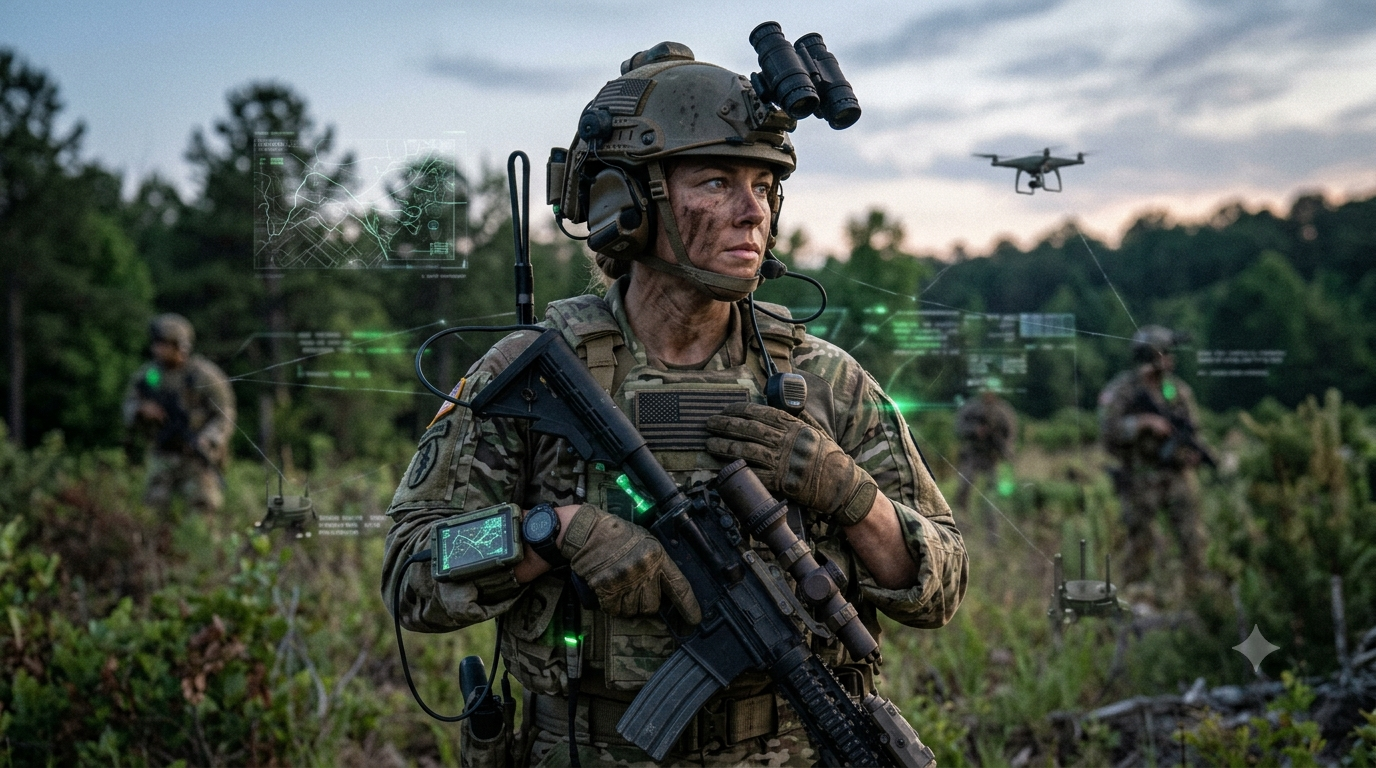
SOF remain the most human-capital-dependent capability in the U.S. military. Platforms evolve; human performance remains decisive. In SOF, the operator is the platform. As mission demands shift from the Global War on Terrorism (GWOT), where counterterrorism and counterinsurgency efforts were dominant, toward semi- or fully-contested, data-dense, and technologically saturated environments, longstanding assumptions about SOF selection and qualification demand reassessment.
To date, shared assumptions underlying the logic model of selection are that stress exposure reveals suitability and that endurance (often physical) remains the major marker of SOF operator effectiveness. Here we offer a 2040 SOF reassessment, seeking not to abandon the largely successful model, but to recalibrate or orient future research and development toward two major questions:
- Given evolving operational demands, should future selection emphasize technology fluency, adaptability, cognition, and decision-making under complexity as strongly as endurance, stress tolerance, and other traditional markers of SOF effectiveness?
- More importantly, how would we know when the criterion model (fundamental nature of mission success) has shifted enough, demanding changes to SOF qualification?
Before proceeding, we note an important scoping consideration. SOF is not monolithic, and the criterion space for selection varies meaningfully across components and mission sets. While this paper addresses SOF qualification broadly, we distinguish between formations whose comparative advantage lies in Special Warfare, principally Army Special Forces, Civil Affairs, and Psychological Operations, and formations with distinct mission demands such as the 75th Ranger Regiment, the 160th Special Operations Aviation Regiment, and National Mission Force elements. For the former, which comprise the bulk of United States Army Special Operations Command (USASOC), the criterion space is anchored less in direct action excellence than in unconventional warfare (UW), irregular warfare (IW), and support to political warfare, executed through the enduring comparative advantages of influence, governance, and operations with and through indigenous forces and populations. Our arguments about technology, adaptability, and cognitive demands must be read against these types of mission backdrops, not as a substitute for it.
A further note on scope. The general framework of this paper: selection validity as a function of criterion-space alignment, adaptive performance as a central organizing construct, and a diagnostic apparatus for detecting criterion drift, is applicable enterprise-wide. The substantive prescriptions are developed most fully for the Special Warfare enterprise (Army Special Forces, Civil Affairs, and Psychological Operations), with adjacent applicability to Marine/MARSOC formations conducting related missions. The Navy, Air Force, and Coast Guard services face their own criterion shifts and warrant parallel analyses from analysts closer to those communities. The general arguments and the approach we develop here are intended to generalize across such communities.
SOF assessment, selection, and qualification (ASQ) systems carry asymmetric importance, whether for Army Special Forces, Navy SEALs, Marine Raiders, Air Force special operators, or U.S. Coast Guard specialized forces. These systems do not merely screen for minimum competence; they shape the probability of exceptional performance in environments where small differences in operator effectiveness generate disproportionate operational consequences. Moreover, selection errors carry asymmetric costs:
- False positives → costly attrition, training losses, operational risk; and
- False negatives → loss of exceptional performers, degraded force capability.
Empirical studies of SOF personnel reinforce the importance of talent differentiation. Norwegian SOF operators, for example, exhibit higher emotional stability and lower agreeableness relative to conventional military candidates. Danish naval special warfare candidates display elevated conscientiousness and reduced neuroticism, alongside measurable personality shifts following intensive training. In Australian Army special forces selection, prospective work suggests that noncognitive attributes (e.g., teamwork, integrity, persistence) meaningfully differentiate candidates beyond baseline fitness and testing. Parallel patterns appear in tactical law enforcement populations, where optimal SWAT profiles emphasize low vulnerability and strong self-discipline. These findings converge on a central insight: SOF effectiveness is fundamentally a talent management equation, and the variables in that equation may be changing. As the operational environment evolves, SOF qualification systems must evolve with it.
Why Selection Depends on the Criterion Space
Selection systems do not exist in a vacuum. Their value depends entirely on the definition of success they are designed to predict. In personnel science, this definition is known as the criterion space: the set of behaviors, outcomes, and performance dimensions that distinguish effective from ineffective operators.
No selection model is universally valid. A predictor is only useful to the extent that it explains meaningful variance in criterion performance. When the nature of work or the mission demands changes, the criterion space necessarily shifts. As a result, predictors optimized to enable certain mission capabilities may experience validity decay. This is not a failure of the selection system; it is a natural consequence of evolving mission demands.
Historically, SOF selection systems emerged from operational mission demands dominated by high-risk activities, prolonged physical and psychological hardship, environmental stress, sleep deprivation, and sustained uncertainty. Physical endurance, stress tolerance, and psychological stability were therefore dominant predictors because they aligned with the primary drivers of mission success. Selection validity reflected criterion alignment.
However, as operational demands evolve—persistent surveillance, cyber-physical integration, contested communications, and artificial intelligence (AI)-mediated decision systems—performance bottlenecks may increasingly reside in cognitive adaptability, complexity management, and decision-making under ambiguity. If the relative weighting of performance dimensions shifts, selection logic must shift accordingly. Selection validity is inseparable from criterion quality. If success is redefined by the environment, predictors must be recalibrated to match the emerging structure of performance itself.
For example, in Army SOF, particularly Special Forces, Civil Affairs, and Psychological Operations, the criterion space for operator selection and qualification should be anchored in the force’s foundational mission capabilities: unconventional warfare, irregular warfare, and support to political warfare. These capabilities increasingly depend on Army SOF’s comparative advantage in cognitive, informational, and human-centered competition.
Accordingly, cognitive warfare cannot be treated merely as an information-age complication; it is a central feature of contemporary and future conflict. As such, future Army SOF assessment systems should prioritize predictors that best forecast success in human-centered competition. These include predictors associated with the ability to shape perceptions, influence decision making, build legitimacy, and affect behavior among relevant populations, partners, adversaries, and external audiences. In short, future SOF selection and qualification systems should emphasize attributes that enable operators to create effects by, with, and through people, not through stand-off lethality alone.
How SOF Qualification Works Today
Despite service-level variation, SOF qualification systems share a common architecture: multi-hurdle selection followed by progressive training and evaluation (see Table 1).
Table 1. U.S. SOF Communities and Selection Traditions
| SOF Community | Core Mission Capabilities | Traditional Emphasis | Evolutionary Trend |
| U.S. Army Special Operations Command (USASOC) | Irregular warfare, unconventional warfare, foreign Internal defense, direct action, special reconnaissance, counterterrorism, counterinsurgency, civil affairs, military information support/psychological operations. | Endurance, land navigation, cognitive Screening, psychological suitability, team performance. | Early adoption of formal psychometric and cognitive Screening; institutionalized multi-hurdle attrition models [e.g., the U.S. Army’s Special Forces Assessment and Selection (SFAS) and Ranger Assessment and Selection Program (RASP)] emphasizing stress exposure, adaptability, and team dynamics. |
| Naval Special Warfare Command (NAVSPECWAR) | Maritime special operations, direct action, special reconnaissance, unconventional warfare, counterterrorism, foreign internal defense. | Extreme physical stress, water competency, resilience, mental toughness. | Endurance-centric stress inoculation [the Basic Underwater Demolition/SEAL (BUD/S) tradition]; increased injury mitigation, structured screening, and performance monitoring while retaining hardship-based evaluation. |
| Air Force Special Operations / Special Warfare (AFSOC / AFSW) | Precision strike, personnel recovery, air-ground integration, sensing, aviation foreign internal defense, air-to-ground capabilities. | Physical robustness, technical competence, cognitive ability, stress tolerance. | Fragmented specialty pipelines; movement toward standardized Special Warfare selection frameworks integrating cognitive, physical, and psychological assessment. |
| Marine Forces Special Operations Command (MARSOC) | Counterterrorism, Counterinsurgency, foreign internal defense, security force assistance. | Physical performance, problem solving, judgment, team adaptability. | Built from Marine generalist traditions; stronger visible emphasis on decision-making, adaptability, and ethical judgment alongside endurance. |
| U.S. Coast Guard Deployable Specialized Forces (DSF) | Maritime interdiction, counterterrorism, law enforcement integration. | Physical fitness, marksmanship, behavioral suitability, decision-making. | Hybrid military–law enforcement selection influences; greater emphasis on psychological screening, risk management, and operational judgment. |
Across the SOF enterprise, pipelines typically involve eligibility screening, assessment and selection (physical, cognitive, psychological, team-based evaluation), and qualification and specialty training.
Historically, selection systems emphasize three dominant domains. The first domain, physical robustness, has been measured by performing physical tasks (or work samples) that assess candidate’s endurance, load carriage, and stress tolerance. The second domain, cognitive ability, has been measured by standardized tests of a candidate’s reasoning and learning capacity. The third domain, psychological stability, has been measured by standardized tests of a candidate’s emotional regulation and resilience.
A fourth domain, character, has long been treated as essential but measured least rigorously of the four, relying largely on peer evaluations and cadre observation. These methods carry real signal but are vulnerable to halo effects, impression management, and in-group bias. Recent, visible accountability failures across the SOF community suggest character cannot be treated as a residual variable that emerges from physical and psychological screening; it warrants its own measurement model.
By character we mean the dispositional tendencies that govern behavior when no one is watching and when incentives push toward expedience: integrity under pressure to deceive, moral courage to dissent or report, restraint in the use of force and authority, humility and coachability, and accountability for error. These facets overlap with but are not reducible to conscientiousness or emotional stability; a candidate can score well on standard personality measures and still lack moral courage or restraint.
Bringing science to character assessment is feasible beyond peer evaluation. Promising methods include forced-choice personality formats that reduce socially desirable responding (i.e., faking), situational judgment tests anchored in SOF-specific ethical dilemmas, biographical data keyed to past indicators of integrity, and structured behavioral interviews focused on prior instances of moral courage and ownership of failure. Each has an evidentiary base outside SOF that warrants targeted validation inside it. Character also warrants the trainability analysis we apply elsewhere: procedural ethical reasoning is responsive to instruction, but core honesty, moral courage, and restraint under provocation are far less malleable within the pipeline and are better treated as screen-in or screen-out criteria at assessment.
Classic job analysis research in Special Forces occupations identified multidimensional performance requirements spanning decision-making, navigation, interpersonal effectiveness, teaching, and endurance. This foundational work established two enduring principles:
- SOF performance is inherently multidimensional; and
- Performance variability is substantial and predictable.
While modern pipelines differ in execution, most remain anchored in a historically dominant paradigm: selection for physical endurance, cognitive competence, and stress tolerance. This selection model worked because it was aligned with operational realities: prolonged physical stress, environmental hardship, sleep deprivation, and sustained uncertainty. These models were not arbitrary; they reflected the criterion space of earlier conflicts. However, the 2040 SOF environment will demand recalibration.
Conclusion
SOF ASQ systems are only as valid as the criterion space they predict, and when mission demands change, that space shifts beneath it. Today’s ASQ systems remain anchored in a paradigm, physical endurance, cognitive competence, and stress tolerance, that effectively served the criterion space of earlier and recent conflicts. The SOF 2040 operating environment will demand recalibration. However, recalibration toward what?
Part 2 of the series (The Two Trinities and the Human-Domain Advantage) answers this question, locating the human-domain advantage in the two SOF trinities that any credible 2040 criterion model must hold at its center, before layering in the emerging demands of new, disruptive technology and its implications for the SOF operator of 2040.
Author affiliations
David Dorsey, PhD, HumRRO; Col. David Maxwell, U.S. Army, Ret., Center for Asia Pacific Strategy; Mike Ingerick, HumRRO; Mick Crnkovich, former Director for Irregular Warfare in OSD, and CEO Stratagem Consulting.
