

This essay is from the Security & Defence PLuS Emerging Voices Series, which highlights the next generation of scholars and practitioners shaping thinking on strategy, security, and defense. The series brings together perspectives from PhD candidates and early career researchers, grounded in the complex geopolitical realities of the 21st century.
The collection explores a “Latticework of Resilience” that connects often-overlooked sectors, such as subnational diplomacy and critical infrastructure inherent in agriculture security, to the core of national security. Taken together, the essays emphasize the importance of adaptive, multidisciplinary approaches to building resilience in an increasingly complex global environment.
The first event in the Emerging Voices series was held at Arizona State University on 2 March 2026, with events to follow at King’s College London and UNSW. Watch the event recording: The Emerging Voices Series: Strategy, Security & Defence at Arizona State University.
Over the past decade, the Indo-Pacific has emerged as a global hub for maritime great-power competition. The region hosts vital shipping routes, strategic chokepoints, and contested spaces within international politics. It has also become home to a dense buildup of the world’s most powerful navies, creating overlapping spheres of maritime influence within the undersea domain. This return of great-power competition has driven intense military investment in navies, especially by China and the United States. Currently, the undersea domain within the Indo-Pacific hosts the world’s largest concentration of submarine forces, critical infrastructure, and thousands of miles of subsea cables, making it strategically indispensable. As nations continue to invest in submarines, autonomous naval systems, and seabed surveillance, maintaining maritime superiority has become increasingly difficult. The same maritime technology that allows nations the ability to protect the domain can also be used to threaten it. This essay argues that the growing strategic importance of the undersea domain combined with the rapid advancement of subsea naval technology is transforming great power competition in the Indo-Pacific from a contest that focuses only on submarine warfare into a contest for superiority beneath the surface.
For the past century, the submarine dominated the undersea domain and earned the role of a ‘silent killer’. The vessel earned its reputation for its unique ability to operate undetected. By leveraging the ocean’s acoustic complexity, the submarine remains concealed, enabling it to conduct intelligence, surveillance, and reconnaissance (ISR), participate in ASW, provide deterrence, and maintain second-strike capabilities. Currently, the Indo-Pacific hosts the world’s largest concentration of submarine forces. According to the International Institute for Strategic Studies, “the Asia-Pacific region operates a total of 235 military submarines, which is almost half (48%) of the worldwide total and more than three times that of Europe (73) or North America (69).” In addition to the United States and China, countries such as Australia, South Korea, Japan, and India are investing in their submarine fleets. As these countries expand their undersea capabilities, the Indo-Pacific’s underwater domain is becoming a crowded and often contested environment. Submarines provide navies with a flexible means of protection and military power. Their growing proliferation, especially within the Indo-Pacific, has forced navies to reinvest in antisubmarine warfare and sharpen their ability to detect, track, and counter underwater threats. The result is a renewed emphasis on antisubmarine warfare and the ability to deny an adversary the ability to effectively deploy and use submarines.
The Expanding Undersea Battlespace
Today, the undersea domain is no longer defined by submarines alone, but also by the environment that carries the world’s internet, data, and communication through undersea infrastructure. Embedded in the sea floor, thousands of subsea cables extend through and around the Indo-Pacific. Underwater critical infrastructure (UCI) includes subsea telecommunications cables, seabed sensors, and energy networks used by both civilians and militaries worldwide. Because these cables carry 95 percent of the world’s data, they are an integral part of digital infrastructure and have become inseparable from national security. As critical infrastructure continues to expand, it directly contributes to ongoing great-power competition in the region. The cable networks are embedded within a complex regional maritime landscape shaped by trade and intense geopolitical tensions. According to the Center for Strategic and International Studies, the cables also directly affect “three of the world’s largest economies, China, India, and Japan—and are responsible for more than a third of global economic activity.” This includes numerous emerging and developing economies, creating a regional landscape of disparate response capabilities to subsea cable threats and disruptions. As this landscape continues to evolve, government cooperation is essential for adapting to and overcoming threats to subsea cables and the maritime security environment.
The growing importance of underwater critical infrastructure makes the cables increasingly vulnerable to attack in undersea warfare. Historically, targeting submarine cables has been a common naval strategy in combat. During the First World War, Britain cut the Germans’ telegraph lines to prevent military communications. During the Cold War, America used submarines to tap into Russian cables in Operation Ivy Bells. A modern example of the vulnerability of the cables occurred off the coast of Taiwan in 2023 and 2025. In February 2023, a Chinese-registered vessel severed two undersea communication cables, completely placing the Matsu Islands offline. While China claimed that the incident was an accident, its effects could have been devastating for the island. Since the island is reliant on twenty-four cables, fourteen international and ten domestics, any disruption can paralyze Taiwan’s ability to communicate to the outside world and coordinate a military response. Recently, in 2025, a Hong Kong-registered vessel, operated by Chinese nationals, was flying under the flags of Cameroon and damaged an undersea fiber-optic communications cable off Taiwan’s northern coast. Taiwan’s coast guard suspected the vessel was involved with Chinese gray-zone activities, but nothing was formally confirmed. The incidents demonstrate the difficulty in protecting and responding to ambiguous accidents or future conventional military attacks on subsea cables. These incidents highlight how the vulnerable subsea infrastructure can be exploited in gray-zone competition, while nations maintain plausible deniability.
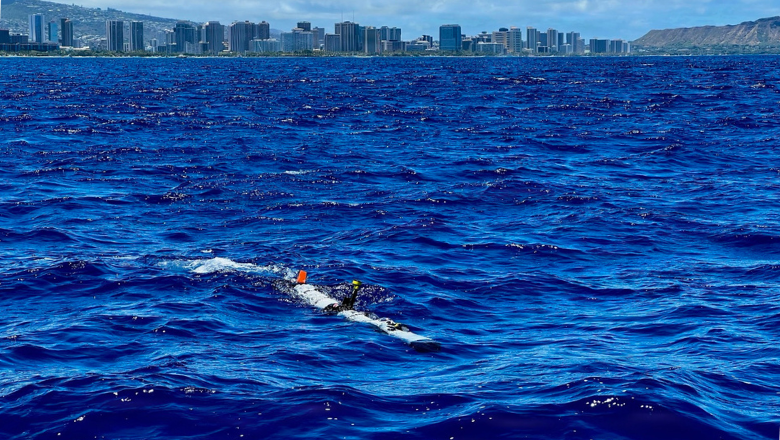
Today, modern navies could use submarines, autonomous underwater vehicles (AUVs), and uncrewed underwater vehicles (UUVs) to sabotage seabed cables. Powered by artificial intelligence, these submersibles can be deployed from surface ships and submarines and programmed to reach a target on the ocean floor. Compared with submarines, autonomous naval systems are cheaper to build and exclude human life from the conflict. This provides navies with a low-cost way to expand their undersea presence, allowing them to deter potential adversaries and protect regional security without the financial burden of procuring a submarine fleet. At the moment, the United States and China have the largest arsenals of UUVs, which is accelerating adoption across Indo-Pacific navies. Consequently, countries like Australia, Japan, China, and South Korea are investing in autonomous systems, making UUVs a strategic response to evolving naval modernization amid U.S.–China strategic competition in the region. This evolving threat landscape is driving a broader transformation in how navies approach undersea operations. With the technological shift toward autonomous naval systems, protecting submarine cables now falls under the responsibility of anti-submarine operations. Traditionally focused on tracking and hunting submarines, ASW now encompasses the entire underwater battlespace. Approaching and neutralizing UUVs requires a multiplatform approach because of their quiet nature, size, and rapid production. UUVs vary in size from small (a few feet) to extra-large (several hundred feet). Therefore, traditional ASW practices and strategies must adapt to incorporate advanced sonar technology, ongoing undersea surveillance, and counter-autonomous platforms. As described by the NATO Undersea Research Center, multi-static sonar combines data from several active and passive sensors in the region. It uses artificial intelligence to rapidly sift through large volumes of sonar data to detect low-signature underwater vessels. Using the information produced, the Navy can deploy counter-UUVs to the area or conduct a patrol there, especially around strategic chokepoints. As a result, the future of ASW will depend on the Navy’s awareness of the undersea battlespace and its ability to respond to the emerging threats rapidly.
China’s Pursuit of Undersea Superiority
China provides the clearest example of how the undersea domain is becoming an integrated aspect of great power competition through investments in submarines, UUVs, and subsea surveillance. Currently, the Chinese People’s Liberation Army Navy (PLAN) operates over 60 submarines, ranging from advanced diesel-electric to nuclear-powered. The modernization of the submarine fleet includes the ongoing construction of nuclear-powered ballistic missile submarines, specifically the Type 93, 94, and now the 96 class—which have significantly enhanced stealth, propulsion, and missile payload capabilities. As described in Congressional testimony by the United States Navy’s Director of Intelligence, Rear Admiral Mike Brookes, “China has dramatically increased its domestic submarine production capacity through major infrastructure investments at three primary shipyards, accelerating production from less than one nuclear submarine per year to significantly higher rates. These expansions include the construction of facilities that have tripled the capacity of the construction hall, enabling higher production rates for conventional submarines…These investments, initiated as early as 2010, have more than doubled China’s submarine production.” As a result, the projected growth of the submarine fleet will be roughly seventy submarines by 2027, with an additional ten by 2035. These developments demonstrate China’s industrial and technological ability to sustain a long-term maritime competition with the United States and its regional allies.
In addition to submarine modernization, the development of UUVs has emerged as a strategic component of China’s Anti-Access/Area Denial (A2/AD) strategy in the Indo-Pacific. A2/AD refers to the defensive use of technology to prevent an adversary from entering the theater of operations and to limit its abilities within the zone of conflict. In competition with the United States and the surrounding navies, the PLAN invests in the ability to monitor and defend the maritime space surrounding the First Island Chain. While nuclear-powered ballistic missile submarines are the primary layer of China’s maritime defense, the addition of UUVs provides an additional layer of security and operational surveillance. Currently, the Chinese navy is investing in large autonomous systems, such as the HSU 001, as well as smaller UUVs for underwater operations. These underwater operations include conducting ASW against adversary submarines, monitoring chokepoints, and gathering intelligence on foreign navies operating near the island chain. Their low-cost construction has made these systems attractive for operating in contested waters, thereby expanding China’s persistence in the Indo-Pacific’s underwater domain. To reinforce the maritime layer of defense, China has also invested heavily in the “Great Underwater Wall”. This network of seabed sensors, hydrophones, and autonomous platforms is designed to improve undersea awareness and limit the operational abilities of adversary submarines within the area. If these technologies continue to mature within the Indo-Pacific, future undersea superiority may be defined not only by stealth, but by the ability to deny it to others. The modernization of nuclear-powered submarines and autonomous systems provides China with a layered defense and an integrated approach to maritime security.
Success in the undersea domain is no longer determined solely by the strength and size of the submarine fleet, but by a nation’s ability to effectively monitor and secure the undersea environment. With critical infrastructure expanding and naval technology advancing, the undersea domain is becoming central arena of great power competition within the Indo-Pacific.
Enhancing Allied Capabilities Over the Next Decade
It is projected that by 2030, there will be 250 to 300 submarines operating within the Indo-Pacific. The sheer growth in submarine numbers, paired with the complexity and scale of the maritime environment, makes individual national efforts insufficient to address evolving undersea threats fully. Multinational cooperation is essential because it allows countries to pool resources, bridge capability gaps, and respond more effectively to shared challenges such as protecting underwater infrastructure and developing autonomous naval systems. By integrating shared intelligence, conducting joint ASW exercises tailored to contested undersea scenarios, and investing together in cutting-edge technologies, allied nations can collectively improve their detection and response capabilities. Furthermore, a coordinated posture that leverages the unique geography and strengths of each partner, along with the development of an integrated allied naval doctrine, ensures a unified approach to safeguarding critical undersea assets. An alliance-based action directly addresses the challenges posed by both traditional submarine threats and emerging innovations in the undersea domain, strengthening the region’s resilience against escalating great-power competition.
Maintaining undersea superiority requires sustainable multinational cooperation, as seen with the Australian, United Kingdom, and United States (AUKUS) partnership. The alliance provides one of the strongest foundations for maintaining undersea superiority and enhances collective awareness and technological cooperation. Consisting of two pillars, the first includes an agreement to support Australia in acquiring its first armed nuclear-powered submarine. The second pillar “promotes cooperation in eight advanced military capability areas: artificial intelligence, quantum technologies, innovation, information sharing, and cyber, undersea, hypersonic, counter-hypersonic, and electronic warfare domains.” These initiatives support the technological capabilities used to monitor and protect the undersea domain. Together, the partnership demonstrates that securing the undersea domain requires more than a powerful submarine fleet. Effective security depends on allied cooperation, shared intelligence, technological integration, and the maintenance of maritime awareness among the Indo-Pacific partners.
Ultimately, securing the undersea domain has become imperative within great power competition in the Indo-Pacific. No longer defined by submarine warfare, the undersea environment is now shaped by critical infrastructure, autonomous naval weapons, and subsea surveillance that operate below the surface. As naval technology continues to develop, nations will need to maintain maritime security through awareness and the ability to monitor, protect, and control the underwater domain. Due to the size of the Indo-Pacific, the United States and its allies must address these challenges as a partnership. The future of great power competition within the undersea domain will not be judged by the size of the navy’s submarine fleet but by its ability to integrate the growing technology into a layered maritime strategy and effectively illuminate the undersea battlespace. This includes combining submarines, autonomous systems, allied cooperation, and the defense of critical infrastructure. As the maritime presence continues to grow in the Indo-Pacific, maintaining the undersea advantage will be essential to success.
