

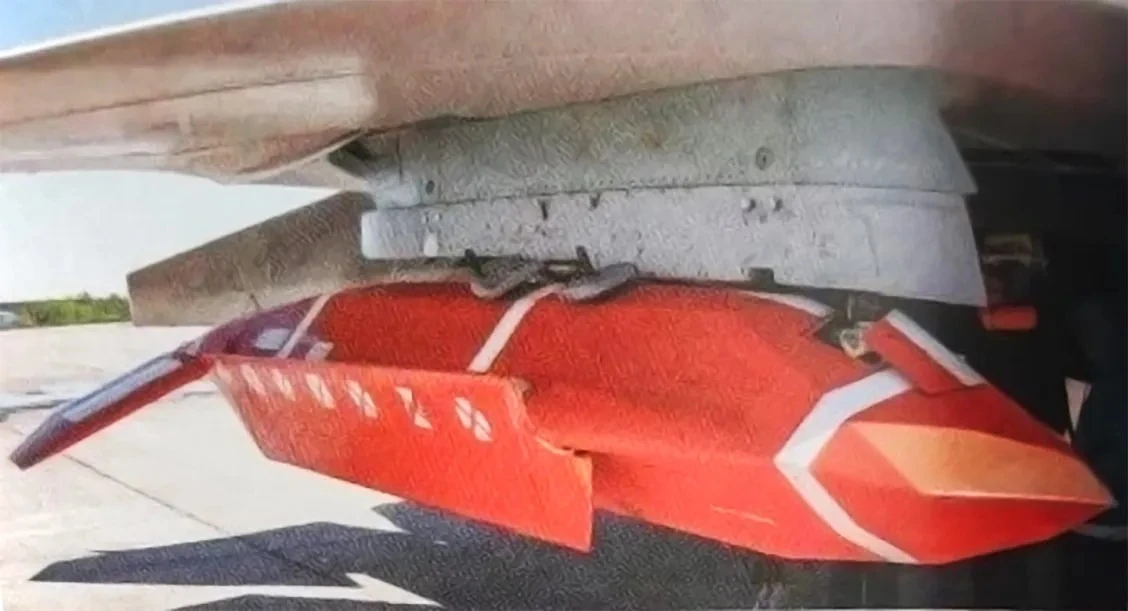
Defense Feeds, Moscow — Russia’s next-generation air-launched weapon is drawing renewed attention as the Russia S-71K stealth missile revealed in unprecedented detail offers a closer look at its design and potential capabilities.
Newly surfaced imagery and analysis provide insight into a system that appears focused on survivability and precision strike in contested environments. As modern air defenses grow more sophisticated, such developments are becoming increasingly significant.
The S-71K is believed to be part of a broader effort to enhance Russia’s long-range strike capabilities. Designed as an air-launched missile, it can be deployed from aircraft to engage targets at extended distances. This allows platforms to remain outside heavily defended zones while still delivering effective strikes.
The emergence of detailed visuals provides rare insight into a system that has largely remained out of public view. While many aspects of the missile remain unclear, the available information points to a design optimized for reduced detectability and improved performance. The development raises important questions about how such systems may influence future air combat.
Stealth-Oriented Design and Features
One of the most notable aspects of the S-71K is its apparent emphasis on stealth. The missile’s shape and structure suggest efforts to minimize radar visibility, which would enhance its ability to penetrate advanced air defense systems. Features such as smooth contours and potential internal components indicate a focus on reducing detection.
Stealth is becoming a critical factor in modern missile design. As air defense systems improve, simply relying on speed or range is no longer sufficient. Reducing a missile’s signature increases the likelihood of reaching its target without interception.
The S-71K appears to follow this trend, incorporating design elements that align with low-observable technology. While exact specifications remain undisclosed, the visible characteristics suggest a deliberate effort to enhance survivability. This approach reflects broader developments in missile technology worldwide.
At the same time, achieving effective stealth in a missile platform presents technical challenges. Balancing performance, payload and detectability requires careful engineering. The S-71K’s design may provide insight into how these challenges are being addressed.

Air-Launched Capability and Operational Role
As an air-launched missile, the S-71K offers significant operational flexibility. Aircraft equipped with such weapons can strike targets from stand-off distances, reducing exposure to enemy defenses. This capability is particularly valuable in high-threat environments.
The missile is likely intended to complement existing strike systems within Russia’s arsenal. By providing an additional layer of capability, it enhances the overall effectiveness of air operations. It also allows for more varied mission planning.
Air-launched systems can be deployed rapidly and repositioned as needed. This makes them well suited for dynamic operational scenarios. The ability to adapt quickly is a key advantage in modern warfare.
In addition, the integration of such missiles into aircraft platforms requires coordination between different systems. Ensuring compatibility and reliability is essential for effective deployment. This highlights the importance of ongoing testing and refinement.
Implications for Modern Air Warfare
The emergence of the S-71K highlights broader trends in air warfare. As both offensive and defensive technologies advance, the competition between detection and evasion continues to intensify. Missiles designed with stealth in mind represent a response to increasingly capable defense systems.
For Russia, the development of such a system may enhance its ability to conduct precision strikes in contested environments. It also signals continued investment in advanced military technology. This is part of a wider effort to maintain strategic capability.
From a global perspective, the introduction of new missile systems contributes to an evolving security landscape. Other nations may respond by developing countermeasures or advancing their own technologies. This dynamic drives ongoing innovation in both offensive and defensive systems.
The detailed imagery of the S-71K provides a valuable opportunity for analysis. While many questions remain, it offers a clearer understanding of the direction in which missile technology is evolving. Observers will continue to monitor its development and potential deployment.
As modern conflicts become more complex, systems like the S-71K are likely to play an increasingly important role. Their ability to operate effectively in contested environments will shape future strategies. The unveiling of this missile marks another step in that ongoing evolution.
