

One word came up in almost every UN General Assembly session and sideline meeting on the Gulf Coordination Council (GCC) that I attended last week: resilience. It is an important word, and the Gulf Arab states have proved resilient in the aftermath of drone and missile attacks.
But I think there is a missing part of this discussion. Resilience has a cost. Resources are not infinite, and governments cannot build redundancy for every possible outcome. At the same time complacency also has a cost, and that cost can be much larger if something actually goes wrong. So perhaps the more important question for policymakers is not whether to build resilience, but how much resilience should you buy?
SIGN UP FOR THIS WEEK IN THE MIDEAST NEWSLETTER
The cost of complacency
The cost of resilience is concrete and shows up in budgets and capital allocations in areas such as spare industrial capacity, inventories, alternative supply chains, and redundancy. The cost of complacency stays abstract, and so it tends to be underweighted. In effect, governments are being asked to buy insurance against an event that may never happen or may happen in a way no one anticipated. The goal is calibrated resilience, not maximum resilience.
One useful tool to analyze this challenge comes from operations research: the critical fractile. This formula looks at the cost of having too little of something versus the cost of having too much. Empty hotel rooms are an expense, for example. A water, power, or hospital system that runs out of capacity during a crisis is a national emergency. The higher the cost—in financial and human terms—of failure, the more economically rational it is to carry redundancy. I recommend GCC governments set resilience standards sector by sector, according to the consequences of failure, rather than pursuing the same standard across the economy.
Beyond redundancy
More capacity does not automatically mean more resilience. A second desalination plant on the same power grid offers limited protection. Two pipelines provide only nominal redundancy if they pass through the same vulnerable corridor. Facilities spread across a country may still depend on the same communications network, software, or small team of specialized technicians. The key is to avoid a single or common point of failure.
One should think of redundancy as optionality: several distinct pathways through which a critical function can continue, so that no single failure can shut it down. This impacts GCC national development strategies. Before the current conflict, a common criticism of plans such as Saudi Arabia’s Vision 2030 was that capital was deployed without enough attention to value creation. That criticism still holds, and efficiency and returns on investment remain essential. But spare capacity that once looked like waste may now be a sensible insurance premium. Nonetheless, one must decide how much, and where.
As a first step, the GCC should set up a six-country joint resilience commission, tasked with creating infrastructure resilience capacity. Some of this can come from creating redundant networks, but the more important part would be to create linkages between the six nations. Some of this has already manifested from the necessity of the current conflict. When the Strait of Hormuz was first shut, GCC member states supported one another to bring hydrocarbon product to market. One of the central lessons from this conflict should be the importance of this GCC interoperability, which is crucial given the geography of the Arabian peninsula and its strategic chokepoints. Only a combined GCC effort will build and scale effective resilience in a cost-effective manner. The sum of GCC resilience is greater than its individual parts.
People are the most important part of resilience
Planning, redundancy, and operational readiness all matter. But no one can anticipate every disruption or build enough backup infrastructure to cover every outcome. When the plans run out, resilience depends on people who can adapt and improvise.
This makes investment in human capital perhaps the most important investment of all. When I was a US naval officer on a nuclear-powered submarine, we drilled for almost every possible scenario—a reactor shutdown, fire, flooding, torpedo in the water, and others. This built muscle memory, discipline, and technical expertise.
However, the ultimate form of resilience is human character. We are seeing this now in Ukraine, where parents will still drop the kids off at school and go to work even after a bombing in the neighborhood. Physical infrastructure can be priced, stress-tested, and duplicated. The ability of people to improvise and adapt requires agility and inspiration. This is perhaps the most important form of resilience and strength for any nation—and it is hard-earned in crises like the one the GCC is facing right now.
Khalid Azim is the director of the MENA Futures Lab at the Atlantic Council’s Rafik Hariri Center for the Middle East.
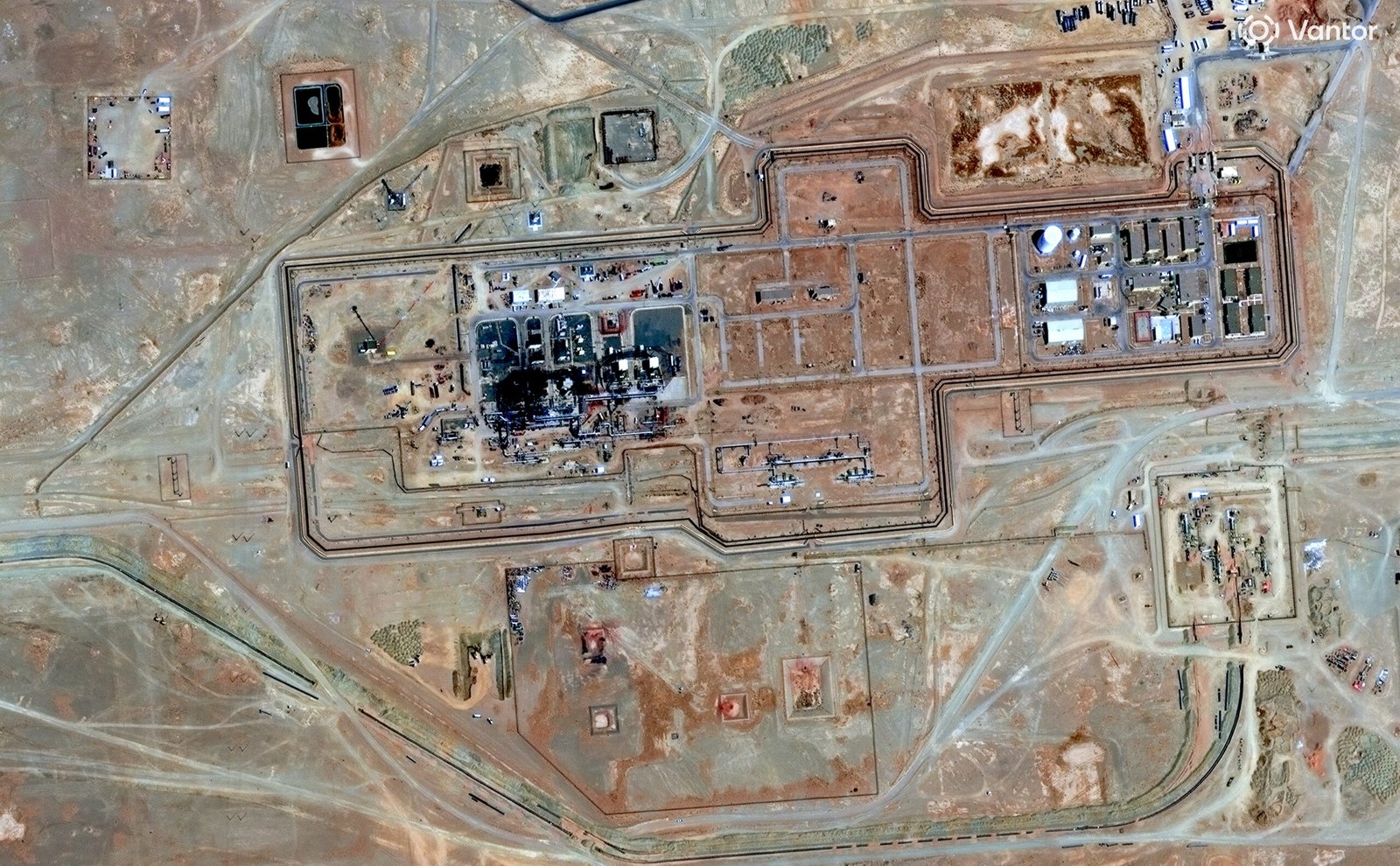
Image: Satellite imagery shows repairs and bypass construction of the Saudi Arabia East-West pipeline days after damage following a drone attack, near Al Dhekra, Al Madinah Province, Saudi Arabia, September 22, 2026. Vantor/Handout via REUTERS
