

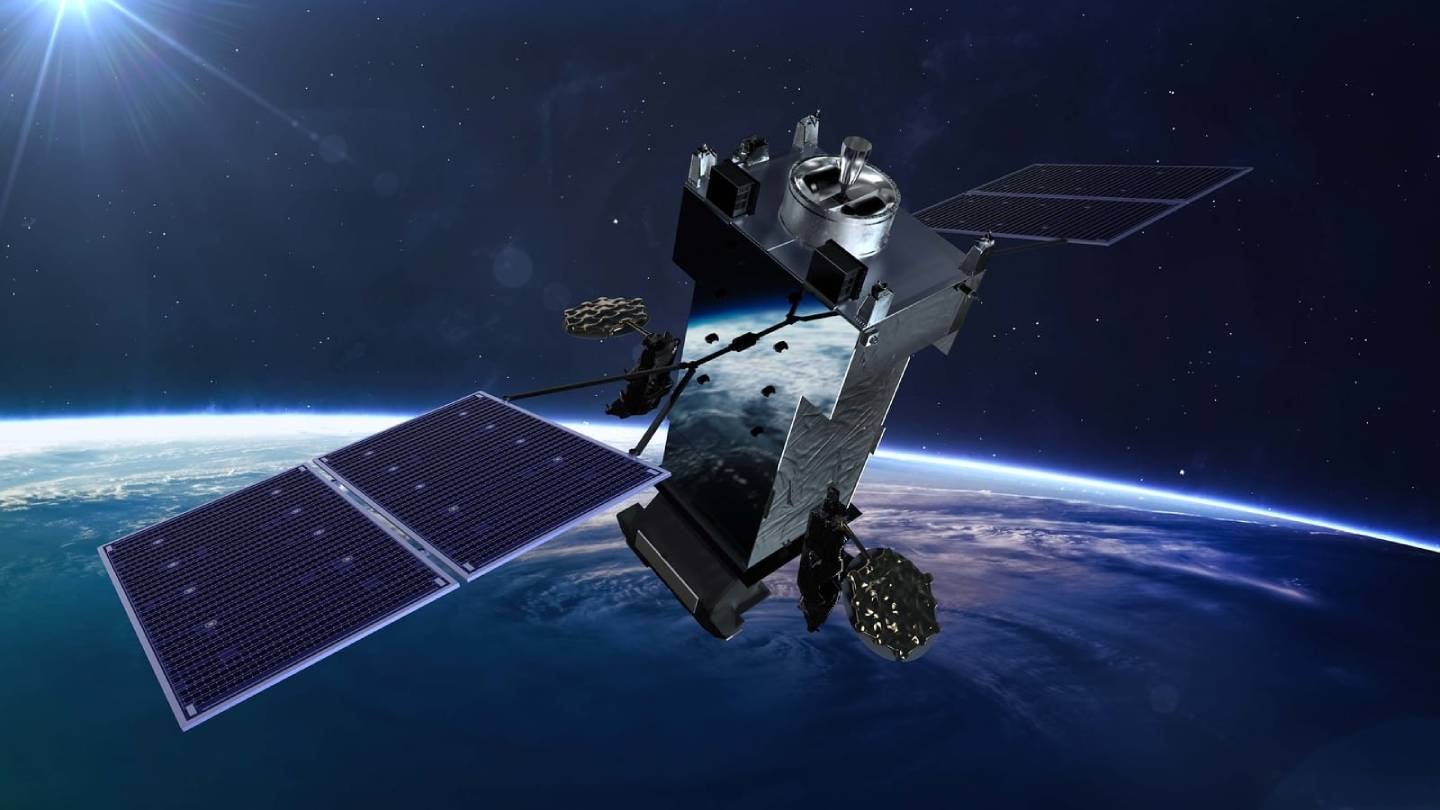
RTX said that its Raytheon unit has provided its second sensor payload to Lockheed Martin for integration into the US Space Force’s Next-Generation Overhead Persistent Infrared (Next-Gen OPIR) Geosynchronous Earth Orbit (GEO) Block 0 satellite programme.
These satellites, also known as NGG, are produced by Lockheed Martin and will work alongside the current Space Based Infrared Systems (SBIRS) and other assets in Low Earth Orbit and Medium Earth Orbit.

Discover B2B Marketing That Performs
Combine business intelligence and editorial excellence to reach engaged professionals across 36 leading media platforms.
Raytheon has designed and built sensor payloads for two of the GEO Block 0 satellites, with the first payload delivered to Lockheed Martin in 2024.
These sensors employ advanced optical technologies and algorithms to detect heat signatures from missile launches, including those of hypersonic and other advanced missile threats.
They are designed to enhance sensitivity and improve tracking functionality as part of the missile warning system.
Raytheon Mission Solutions & Payloads vice president Jeff McCall said: “Demand for resilient missile warning and tracking across all orbital regimes continues to accelerate. Programs like NGG demonstrate how high-altitude, long-duration observation sensing unlocks new mission coverage in key areas.”
The Next-Gen OPIR programme is scheduled to replace the SBIRS programme, which completed its final Geosynchronous Earth Orbit satellite delivery in 2022.
The first Next-Gen OPIR GEO missile warning satellite underwent thermal vacuum and acoustic testing in August last year, with the satellite now ready to support the initial operational launch.
Once in operation, these satellites and the future Next-Gen OPIR Polar satellites will function together to create a multi-layered and integrated missile warning, tracking, and defence system.
Lockheed Martin noted that the new sensors installed on Next-Gen OPIR GEO satellites are designed to address adversary threats through the detection of advanced missile boost technologies, characterised by faster burning and dimmer signatures.

