

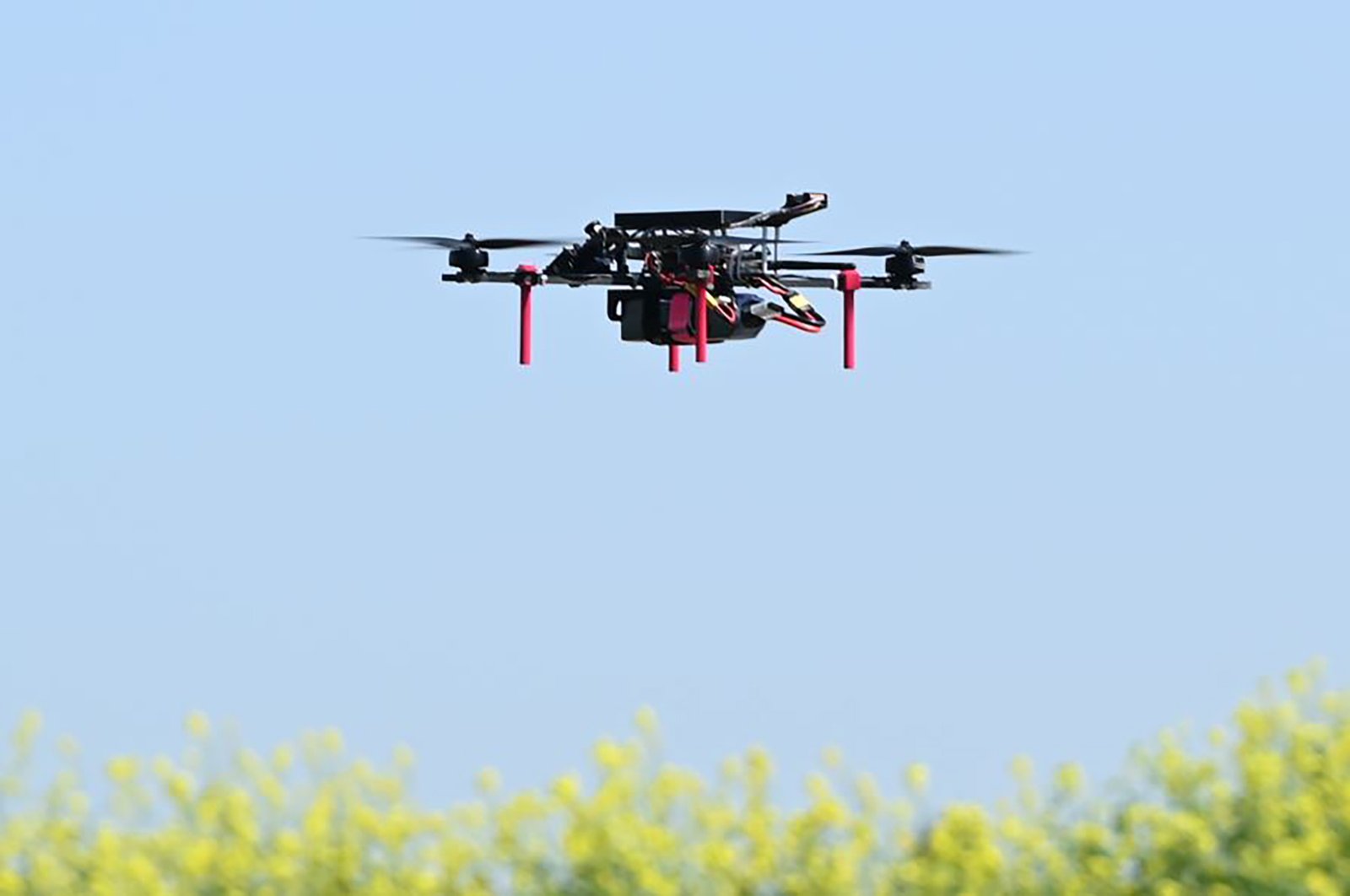
As European militaries race to counter the rapidly growing threat posed by armed FPV drones, Israel’s Rafael Advanced Defense Systems is offering a new lightweight interceptor named “Light Hunter” and designed specifically for this mission. During a live demonstration attended by ESD at a highly classified site in northern Israel, the company showcased Light Hunter — a compact “drone against drone” system capable of destroying highly maneuverable UAVs while minimizing collateral damage.
Israeli defense company Rafael Advanced Defense Systems is offering its new Light Hunter counter-drone interceptor to several European countries as armed forces seek effective solutions against the rapidly expanding threat posed by first-person-view (FPV) drones and other small unmanned aerial systems.
ESD observed the system during a special live demonstration held at one of Rafael’s highly classified facilities in northern Israel.
Designed to Hunt FPV Drones
Unlike traditional air defense systems, Light Hunter has been specifically developed to intercept highly agile FPV drones that have become a defining feature of modern battlefields.
Rather than relying on explosive warheads, the interceptor employs an advanced net-based interception mechanism, allowing it to neutralize hostile drones while significantly reducing the risk of collateral damage.
According to Rafael, this makes the system particularly suitable for operations in urban environments and other areas where conventional kinetic interceptors could pose unacceptable risks.
Advanced Guidance and Networking
The company says the interceptor combines an advanced seeker with a command-and-control (C2) architecture that provides enhanced situational awareness during engagements.
Encrypted radio-frequency communication links and integrated mesh networking ensure reliable connectivity between the interceptor, operators, and the wider counter-drone network, even in complex operational environments.
Small, Lightweight and Recoverable
One of Light Hunter’s distinguishing features is its compact design. The interceptor weighs approximately 2 kilograms and has a diameter of around 300 millimeters, making it considerably smaller than most conventional air-defense interceptors. Despite its size, it can engage targets at distances of up to 8 kilometers.
The system remains airborne for approximately 20 minutes, depending on the mission profile. It cruises at roughly 30 meters per second before accelerating to approximately 50 meters per second during the final interception phase.
Another notable capability is its recoverability. If no target is engaged — or after successfully neutralizing a threat — the interceptor can autonomously return to its launch point from distances of up to 5 kilometers, allowing it to be reused.
Light Hunter – Built for High-Risk Environments
Rafael officials present during the demonstration emphasized that Light Hunter was developed specifically to defeat highly maneuverable FPV drones and other small unmanned aerial systems.
According to the company, the system is intended for use in densely populated urban areas and other high-risk operational environments where minimizing collateral damage is essential.
As FPV drones continue to reshape modern warfare — from Ukraine to the Middle East — European armed forces are increasingly looking for dedicated counter-drone solutions that combine precision, mobility, and affordability. Rafael believes Light Hunter is designed to meet exactly that requirement.
Author: Arie Egozi, Israel Correspondent
Click here to read the latest issue of ESD.
