

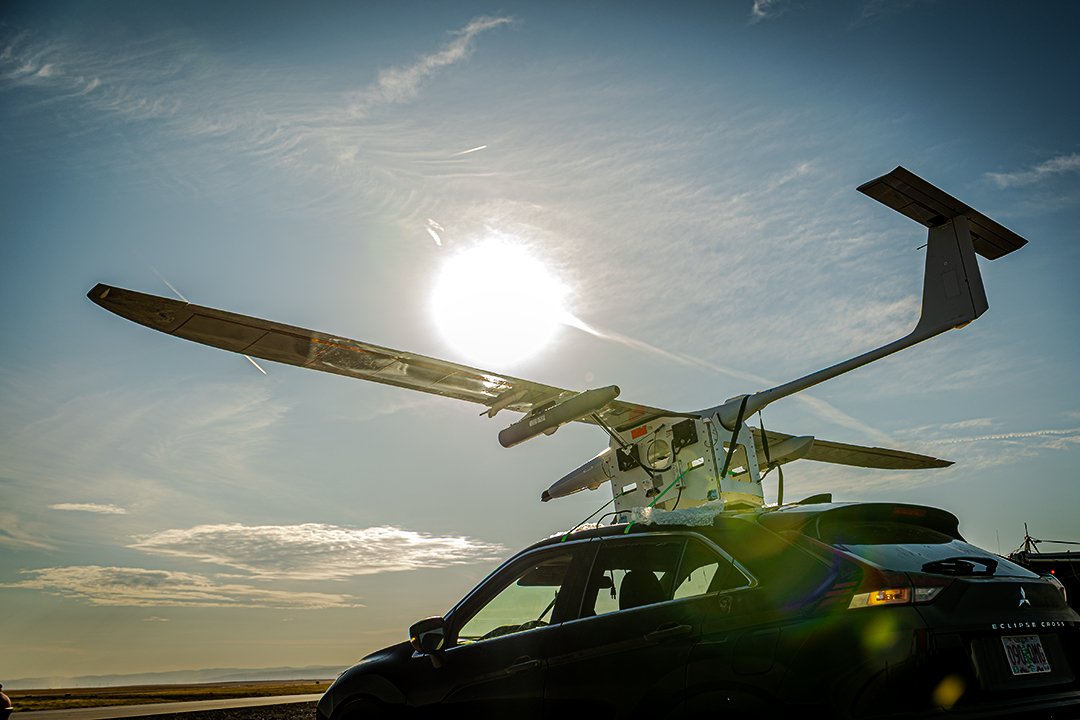

As radar systems evolve to meet increasingly complex battlefield demands, adaptability, interoperability, and autonomous capability are becoming critical requirements.
In this interview, Scott Hillman – Senior Director of Business Development from IMSAR discusses how radar is changing for both manned and uncrewed platforms, the growing role of AI-enabled ISR, and what operators are seeking from next-generation airborne sensing systems.
How has radar development changed and progressed over the last ten years, and what capabilities are clients now seeking in a system?
Clients are often reactive to current threat environments, but they’re also focused on what may become battlefield realities in the future and desire ISR technology that is adaptable to changing mission requirements. Our radar systems are multimode, and have always provided modes and capabilities to answer most land and maritime domain ISR missions. We’re engaged closely with and maintain deep relationships with our clients around the world to ensure we align our development roadmap to what they’ll need for their next mission. A client explained it like this: “We need something that is Ready Now, and Future Proof”. I think what you’ll see next from IMSAR is addressing the newest threats coming from the Air Domain, so stay tuned for that!
IMSAR has a number of radar systems within its portfolio. Can you explain how each is tailored to a client’s specific requirements? Are there particular systems that have proven more desirable recently, especially given the increase in global threat environments?
Each of our radar systems is built on Common Operating Radar Equipment, or “CORE” components and software. From the operator’s view of the Lisa3D user Interface, each IMSAR radar is practically the same. Our products are each designed to address differences in Group 2 through 4 UAS and manned aircraft with regard to each aircraft’s available payload Size, Weight, and Power (SWaP). Smaller group 2-3 UAS seem to be increasing in popularity around the world, and clients are demanding more advanced ISR capabilities from their uncrewed systems. Our NSP-3 and NSP-5 radar systems are the most popular choices recently, and provide a lot of value for their size. Our best clients are those who want to use larger numbers of smaller UAS to perform similar work that you would normally see from a small number of large and exquisite ISR aircraft, possibly even augmenting what SAR data is received from satellites too. Robotic and Autonomous systems, namely UAS, allow the operators to create a cost-effective and organic airborne ISR solution that can absorb some losses but still keep the same levels of situational awareness.

In terms of providing a radar system for a UAS, what are the specific requirements that need to be followed compared to manned platforms, beyond just size and weight?
When it comes to UAS, other than the physical SWaP, you’ve got to be compatible with the passing of ISR data from the radar through the data links that the client is using all the way to where the data ends up in front of a decision maker. We’re doing some onboard processing to keep our bandwidth requirements as low as they can be to maintain timely situational awareness, and our output data products follow NATO STANAG requirements to make them easier to integrate across many allies and partner nation intelligence networks.

The air environment has become increasingly crowded within the battlespace, with manned fighters soon to operate alongside CCAs, etc. How are radar systems being adopted to meet this more complex environment, both in partnership and to defeat threats?
It’s all about delivering compatible datasets and command and control with an open architecture. Manned/Unmanned Teaming is the future of combat. If the platform and sensor systems are truly compatible, then data passes seamlessly and stays relevant. Exciting times are ahead with the amount of AI-enabled autonomy we will see in the next few years. You’re going to see one pilot controlling many assets and sensors simultaneously, and you’ll see uncrewed systems operating semi-autonomously and fully autonomous in conducting missions. We are working very closely with the world’s leaders in AI and Autonomy to ensure IMSAR radar systems are integrated and tested along the way.
Regarding the outlook for radar systems, analysing both UAS and manned systems, what is required moving forward, and what do you expect clients to request in terms of capabilities, etc.?
What is required to move forward is to recognize what our clients are doing and design our systems in close connection with end user feedback, as we have more and more radar systems deployed across today’s current conflict zones. We expect the Counter-UAS demand to keep growing, and that mission requirement is at the top of our development roadmap. I’d expect to see a meaningful update in IMSAR radar systems that will add the ability to detect and track airborne targets from UAS and manned aircraft, addressing the newest threats that are now predominantly coming in from the Air domain. We’re also working aggressively with global and domestic partners to create real-time target classification and identification through the use of AI and Machine Learning programs that make exploitation of SAR and MTI data products more automated, relying less on specially trained personnel to perform those critical and time-sensitive tasks.

How important is interoperability when integrating radar systems with other onboard sensors such as EO/IR cameras, electronic warfare systems, and communications links? How does IMSAR approach multi-sensor integration?
IMSAR has come out with a marketing campaign that highlights the “Iron Triad” of ISR sensors, because we have the experience to really speak knowledgeably to the complimentary nature of having multiple types of sensors working together to give the best picture of what is happening on the ground. Interoperability is absolutely critical, and we maintain an open architecture and great relationships across the ISR industry to ensure that radar is ready to pair and operate with a wide variety of EO/IR and Signals/EW sensors. Our Lisa3D UI incorporates multi-sensor command and control with real-time data display all in one place for superior visualization and situational awareness.
From your perspective, what are the key challenges platform manufacturers face when integrating advanced radar onto smaller unmanned aircraft, and how is IMSAR helping to simplify that process for customers?
We’ve done our best to react to the market, and create SWaP levels and radar designs that are as simple to integrate with aircraft as they can be. There is rarely a simple solution, but we’ve completed over one hundred different integrations across UAS and manned aircraft. We plan to add dozens more platforms as the industry evolves, and we remain very focused on what the current and future market demands when it comes to different aircraft and advanced radar capabilities. We maintain shareable documentation for each IMSAR radar product and we have a small but extremely responsive and talented engineering team that seems to always have the answer to work with the client and deliver the radar capability they are desiring!
