

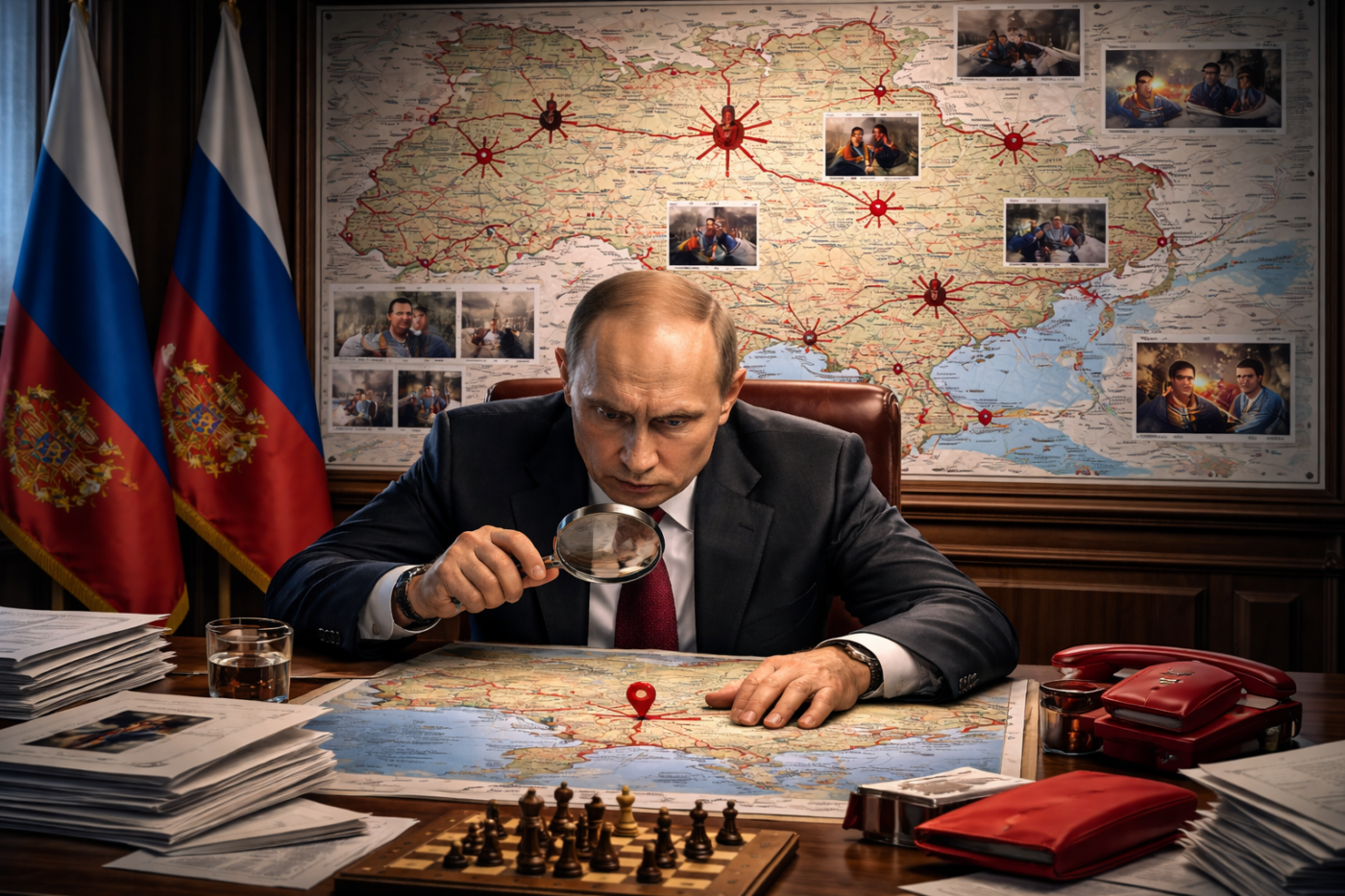
Putin’s behavior in his full-scale invasion of Ukraine, which began exactly four years ago – on February 24, 2022, seems irrational and resembles an obsession. Having launched a large-scale invasion of Ukraine and suffered an initial setback, Putin has not abandoned a war that is causing enormous human losses, destroys the Russian economy and isolates Russia on the international scene.
For Russia, the full-scale invasion of Ukraine started in 2022 brought numerous material and reputational losses: humiliating defeats for the Russian army and navy in the first phase of the war, huge human losses – already exceeding 1.2 million casualties; the accession of Finland and Sweden to NATO, Ukrainians’ hatred of Russia for centuries, Prigozhin’s mutiny, which demonstrated the fragile system Putin had created, in which the head of a private military company staffed by pardoned convicts could revolt and take cities without a fight; loss of the Assad regime in Syria; loss of ground in Transcaucasia, a region traditionally under strong Russian influence for centuries; humiliating strikes on Russia’s strategic bombers and oil refineries deep in Russia; humiliating kidnapping of one of its greatest allies, Nicolás Maduro; and seizure of tankers belonging to the shadow fleet flying the Russian flag. All these failures, and especially the inability to achieve a decisive victory in Ukraine, have seriously undermined Russia’s influence on the international stage. Until February 24, 2022, countries in the Global South perceived Russia as a country capable to impose its will to other countries and as a real counterweight to the United States. After over four years of war, Russia has proven itself not incapable of defeating Ukraine, a country whose military few took seriously before Russia’s invasion.
As the war grinds on, the list of Russia’s losses – human, material and reputational – will continue to grow. What did Russia get in return? What Russia got in return is scorched fragments of land with completely destroyed infrastructure, abundantly littered with mines, and other explosive devices. When we evaluate the territory that Russia has captured, we need to remember that Russia has the largest territory in the world and the lack of land has never been a problem for Russia. The problem has always been the undeveloped nature of Russian lands. And yet Putin continues to stubbornly wage war, despite all the losses Russia has suffered and will suffer.
Putin’s behavior resembles that of a gambler who went to a casino and lost a significant, but not very large, sum. Afterward, he should have left, but his pride prevented him from doing so. He continued to gamble and began to lose more and more, significantly worsening his already dire situation. Thus, in 2022, after the failure of his initial war plan and the defeat near Kyiv, Putin could have returned his troops to their original positions and ended the war, declaring that his goal was not to conquer Ukraine but to demonstrate the capabilities of his army, which could approach the capital of a neighboring state in a matter of days and withdraw just as quickly. Despite the initial setback, Putin did not abandon his plan: after the initial setback, more followed. Victory always seemed close to Putin, but always proved elusive – first, Kyiv had to fall, then the Ukrainian defenses had to crumble under the pressure of the Russian army, then an icy collapse had to paralyze life in Ukrainian cities. Each time, final victory was close to Putin, but ultimately eluded him, like a win for a gambler or a mirage for a weary traveler in the desert. Perhaps Putin is simply afraid to end the war without a decisive victory. He needs to offer his people something in return for the human, material and reputational losses they have suffered. Taking Kyiv and subjugating Ukraine, from Putin’s perspective, would be an adequate reward for the price Russia has paid in this war.
The war continues, Putin is chasing the Fata Morgana of Russia’s victory and believes that he will finally get lucky.
