

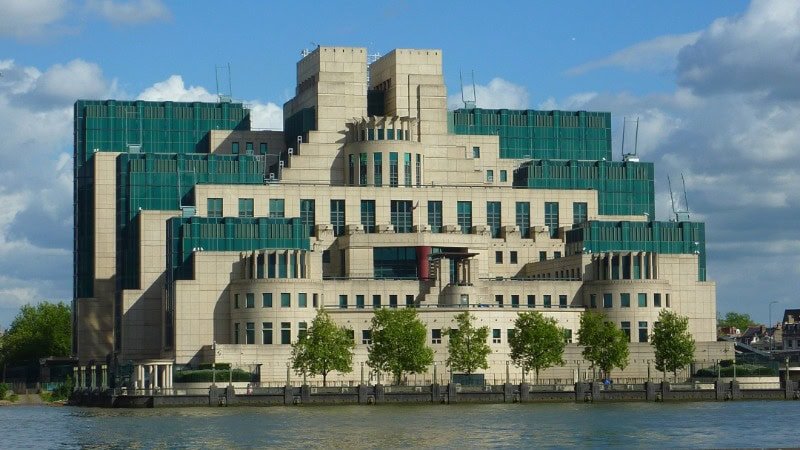
In recent weeks, various details have emerged regarding Japan’s plan for to establish a dedicated foreign intelligence service which, like the United Kingdom’s Secret Intelligence Service (SIS, commonly known as MI6) or the United States’ Central Intelligence Agency (CIA), would be tasked with collecting human intelligence (HUMINT) from overseas.
Provisionally named the “Foreign Intelligence Agency”, the new body is expected to be established by the end of fiscal 2027, and proposals have emerged from the ruling Liberal Democratic Party (LDP) to use Britain’s SIS as a model which would see the Japanese intelligence service operate as a standalone agency overseen by the Foreign Minister.[1]
Japan’s proposed overseas intelligence-gathering body would be distinct from the country’s National Intelligence Bureau (NIB), which was recently established on July 31 of this year and has a separate task of organizing the overall intelligence-sharing activities of various government ministries.[2]
Background to Japan’s Foreign Intelligence Agency
Japan’s move to form a dedicated Foreign Intelligence Agency stems from an October 2025 coalition agreement between the ruling LDP and its junior partner Japan Innovation Party (JIP), which included a commitment to establish the new body as an independent agency by the end of fiscal 2027.[3]
A proposal subsequently published by the LDP’s intelligence strategy panel this August highlights how the prospective Foreign Intelligence Agency is expected to conduct full-scale HUMINT operations covering diplomatic, national security and economic issues.[4]
This would represent a significant expansion of Japan’s current institutional framework under which an International Counter-Terrorism Intelligence Collection Unit (CTU-J), established within Japan’s Foreign Ministry in 2015, engages solely in terrorism-related intelligence gathering and analysis.
News reports also indicate that the new Foreign Intelligence Agency is expected to be able to engage in various covert forms of HUMINT.[5] This is a capability that Japan has been lacking up to now because of various post-war constitutional and domestic political constraints, placing Japan on an unequal footing with both partner nations, such as the US and UK, and hostile states like China and Russia.[6]
In order to establish the Foreign Intelligence Agency by the end of fiscal 2027, an expert panel is set to be formed this autumn to consider its organizational structure and legislative requirements.[7] In advance of this, the LDP has proposed that Japan could model the new agency on the UK’s SIS and the Australian Secret Intelligence Service (ASIS).[8]
A Japanese Agency Modeled on Britain’s MI6
The LDP panel’s proposed model draws inspiration from Britain’s SIS and ASIS by placing Japan’s prospective Foreign Intelligence Agency under the purview of the country’s Foreign Minister.
At the same time, the agency is expected to operate independently from policy-making divisions within the Foreign Ministry. This is to ensure the autonomy of its intelligence activities and to make sure that findings are not distorted by diplomatic or policy priorities.
The LDP panel assesses that this arrangement could ensure ministerial accountability while also allowing the agency to retain independence in day-to-day intelligence-gathering operations, budget arrangements and personnel management.
If adopted, this structure would differ significantly from the CIA in the United States, which operates as a fully independent agency outside of the Secretary of State’s purview, instead reporting to a Director of National Intelligence (DNI) appointed by the President.
Thus, if modeled on the UK’s SIS and Australia’s ASIS, a standalone Japanese Foreign Intelligence Agency under the purview of the Foreign Minister would likely see greater ministerial accountability than if established as a CIA-style fully independent agency.
According to American grand strategist Edward Luttwak, Japan’s placing its Foreign Intelligence Agency under its Foreign Ministry would also bring additional benefits in the form of close coordination with diplomatic missions and the ability to draw upon the language skills of foreign ministry personnel.[9]
The LDP panel initially sees the new Foreign Intelligence Agency as a relatively small body upon its formation, with an adequate degree of operational readiness and a small number of staff. This initial phase would then be followed by a gradual expansion of the agency’s duties as it secures additional specialized experts.[10]
Having the agency fall under the Foreign Ministry may also be of benefit for ensuring its operational readiness by the end of fiscal 2027 by enabling it to draw upon the connections and expertise of the ministry’s CTU-J, which has likely gained a variety of experience in terrorism-focused HUMINT over the last decade or so.
Outstanding Issues
However, numerous outstanding issues remain in the run-up to the prospective formation of a Japanese Foreign Intelligence Agency by the end of fiscal 2027.
One issue is whether the LDP’s junior partner JIP will agree with the LDP’s intelligence strategy panel that defining the body as a standalone agency under the purview of the Foreign Minister aligns adequately with the spirit of the coalition agreement’s commitment to an independent agency if the JIP were to envision a CIA-style agency.
Another will be legislative hurdles, especially in relation to covert HUMINT activities. The LDP’s intelligence strategy panel recognizes this, highlighting that the government should examine whether new legislation is needed to ensure that the activities of officers operating overseas adhere to Japan’s domestic legal framework.[11]
A related problem, as pointed out by Kyodo, is whether the government will be able to gain the understanding of the Japanese people as to the necessity for covert activities in intelligence-gathering operations.[12]
Finally, there will be the challenge of building up officers’ language skills and other pertinent HUMINT capabilities and ensuring adequate staff numbers for the agency – a process that can take years.
Conclusion
In conclusion, the Japanese government’s plan to establish a dedicated Foreign Intelligence Agency by the end of fiscal 2027 is an ambitious one. It will require extensive deliberations by the coalition parties as to its organizational structure and significant input from this autumn’s expert panel regarding legislative issues surrounding covert activities.
While it could be formed on schedule, the agency will likely be limited in effectiveness at first and will take many years to build up the capabilities and expertise required to match long-standing services like the CIA or MI6. This will be compounded by the fact that Japan’s agency will be without the benefit of Five Eyes membership.
Nevertheless, the establishment of a dedicated Foreign Intelligence Agency will send out an important signal to both partner nations and hostile states that Japan is ready to engage in covert HUMINT activities in support of its national security.
Notes:
[1] Sankei Shimbun, <独自>対外情報庁「英国モデル」で MI6参考、外相監督案を明記 自民が提言へ [Exclusive: LDP to Propose Foreign Intelligence Agency Based on “UK Model,” Specifying Oversight by Foreign Minister and Referencing MI6], July 27, 2026, https://www.sankei.com/article/20260727-R2V54ZEAIFKWTBM57NAU6FFTBQ/.
[2] Asia Today, “Japan launched intelligence bureau but lacks overseas network”. Translated by UPI, July 31, 2026, https://www.upi.com/Top_News/World-News/2026/07/31/japan-national-intelligence-bureau-national-security/7451785540742/.
[3] LDP and JIP, “自由民主党・日本維新の会 連立政権合意書” [LDP and JIP Coalition Agreement], p.6, https://storage2.jimin.jp/pdf/news/information/211626.pdf.
[4] LDP Headquarters for Intelligence Strategy, “我が国の『情報防衛力』の強化に向けて―開かれた社会を、隠れた工作から守る―” [Strengthening Our Nation’s “Information Defense Capabilities”: Protecting an Open Society from Covert Subversion], August 5, 2026, p.8, https://storage2.jimin.jp/pdf/news/policy/213980_2.pdf.
[5] Kyodo, “政府、対外情報機関の検討を加速 27年度末までの創設目指す” [Government Accelerates Consideration of Foreign Intelligence Agency; Aims for Establishment by End of Fiscal 2027]. Yahoo News, August 13, 2026, https://news.yahoo.co.jp/articles/a3933fbdd78f03faa100c76d4829ead61c1a07ab.
[6] Robert Ward and Laurence Stobart, “Japan’s sweeping intelligence reforms”. IISS, Online Analysis, August 6, 2026, https://www.iiss.org/online-analysis/online-analysis/2026/08/japans-sweeping-intelligence-reforms/.
[7] LDP Headquarters for Intelligence Strategy, “我が国の『情報防衛力』の強化に向けて―開かれた社会を、隠れた工作から守る―(要旨)” [Strengthening Our Nation’s “Information Defense Capabilities”: Protecting an Open Society from Covert Subversion (Summary)], p.6, August 5, 2026 Kyodo, “政府、対外情報機関の検討を加速 27年度末までの創設目指す” [Government Accelerates Consideration of Foreign Intelligence Agency; Aims for Establishment by End of Fiscal 2027]. Yahoo News, August 13, 2026, https://news.yahoo.co.jp/articles/a3933fbdd78f03faa100c76d4829ead61c1a07ab.
[8] LDP Headquarters for Intelligence Strategy, “我が国の『情報防衛力』の強化に向けて―開かれた社会を、隠れた工作から守る―” [Strengthening Our Nation’s “Information Defense Capabilities”: Protecting an Open Society from Covert Subversion], August 5, 2026, p.8-9, https://storage2.jimin.jp/pdf/news/policy/213980_2.pdf.
[9] Yoshinari Kurose, “Japan Plans Foreign Intelligence Agency, Luttwak Warns Against CIA Model”. Japan Forward, June 11, 2026, https://japan-forward.com/interview-edward-luttwak-foreign-intelligence-agency-cia-model/.
[10] LDP Headquarters for Intelligence Strategy, “我が国の『情報防衛力』の強化に向けて―開かれた社会を、隠れた工作から守る―(要旨)” [Strengthening Our Nation’s “Information Defense Capabilities”: Protecting an Open Society from Covert Subversion (Summary)], p.6, August 5, 2026 https://storage2.jimin.jp/pdf/news/policy/213980_1.pdf.
[11] LDP Headquarters for Intelligence Strategy, “我が国の『情報防衛力』の強化に向けて―開かれた社会を、隠れた工作から守る―” [Strengthening Our Nation’s “Information Defense Capabilities”: Protecting an Open Society from Covert Subversion], August 5, 2026, p.9, https://storage2.jimin.jp/pdf/news/policy/213980_2.pdf.
[12] Kyodo, “政府、対外情報機関の検討を加速 27年度末までの創設目指す” [Government Accelerates Consideration of Foreign Intelligence Agency; Aims for Establishment by End of Fiscal 2027]. Yahoo News, August 13, 2026, https://news.yahoo.co.jp/articles/a3933fbdd78f03faa100c76d4829ead61c1a07ab.
