

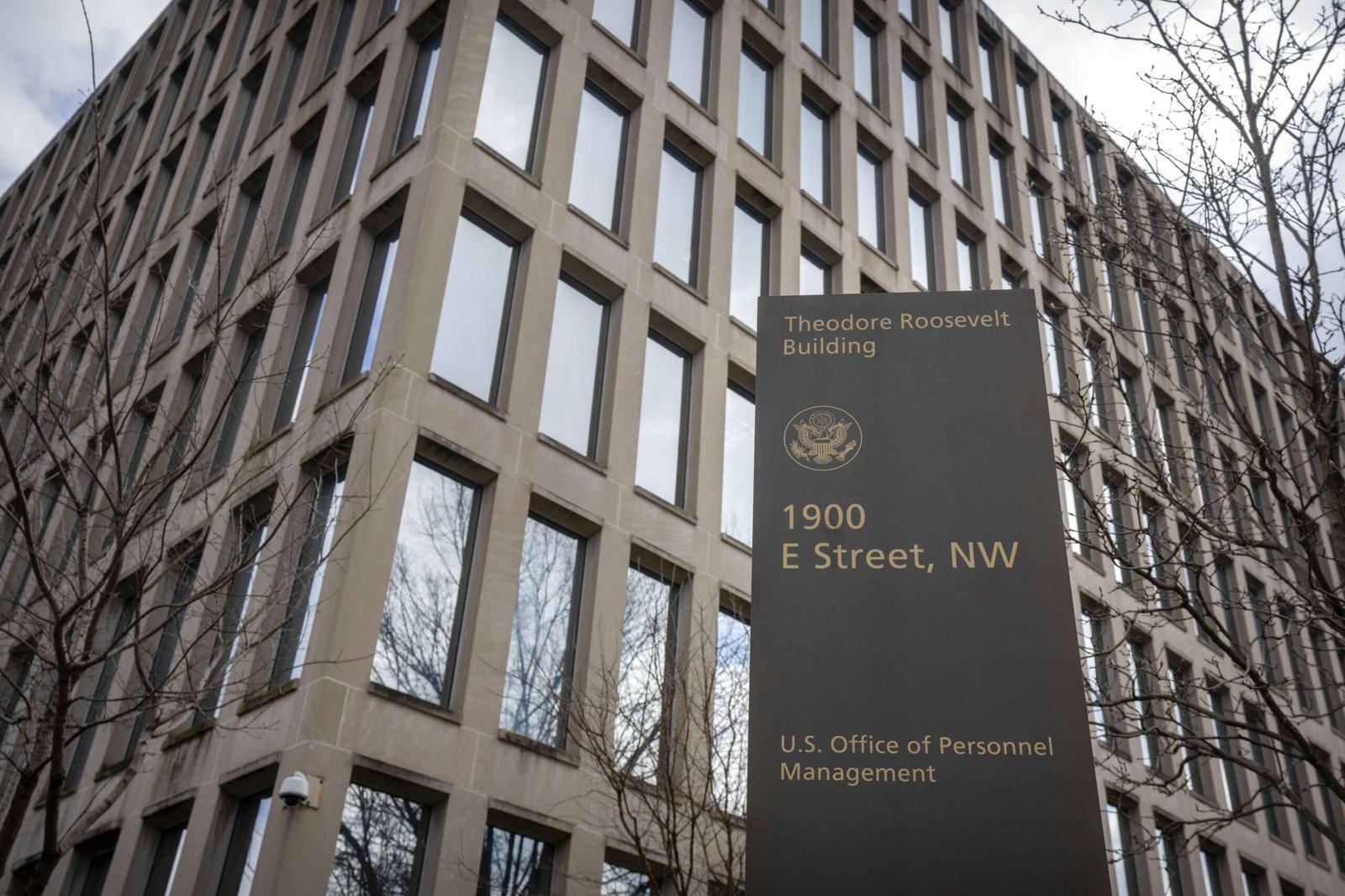
An overhaul to the federal workforce’s performance management system is now set in stone, following a final rule the Office of Personnel Management released this week.
Going forward, agencies will be limited in the share of employees they can rate highly in performance reviews. OPM’s final regulations, which are scheduled to publish Tuesday to the Federal Register, remove a previous ban on using forced distribution in the government’s performance management system.
The final rule marks the largest overhaul of the government’s performance management system in decades. Agencies will have to be in compliance with OPM’s changes by Jan. 1, 2027. Once effective, the changes to performance management will apply across virtually the entire federal workforce.
“These changes are necessary to promote a culture of accountability and excellence across the federal workforce — one that reflects both the government’s evolving operational demands and its longstanding commitment to a merit-based civil service,” OPM said in the final rule.
Along with limiting how many employees can be deemed high performers, OPM’s final rule also eliminates “level 2” of the government’s five-level scale for employee performance ratings; removes the ability for employees to contest their performance ratings through grievance and arbitration proceedings; and requires OPM to review agencies’ performance rating systems every other year.
Supervisors’ performance reviews will now be tied, in part, to “driving a culture of accountability,” and they will have to complete additional training on the new rating system. Also under the final rule, agency officials will no longer be required to review any “unsatisfactory” performance ratings.
The changes are due to what OPM says is longstanding rating inflation of federal employee performance. The final regulations pointed to sources including the Government Accountability Office and Merit Systems Protection Board, which have released reports over the years showing that federal employee reviews are often concentrated at higher performance levels.
“The evidence clearly shows that the federal government’s approach to performance management has long struggled to accurately measure employee performance,” OPM said. “The current degree of rating inflation has so egregiously undermined the credibility and accountability of performance appraisal systems that implementing a standardized distribution is the best alternative.”
The final rule comes after OPM proposed regulations in February to remove the current ban on using a forced distribution of federal employee performance evaluations. Beginning in 2027, agencies will have to cap the share of employees who can receive ratings at the top two performance levels, but no limits will be placed on how many employees can receive lower-level ratings.
The final rule builds on 2025 guidance from the Trump administration, which called on agencies to begin limiting top performance ratings and implementing faster discipline for employees deemed poor performers. It also mirrors regulations OPM finalized in September 2025, which limited top performance ratings for career members of the Senior Executive Service.
Earlier this year, many commenters on OPM’s proposed regulations raised concerns about negative impacts on morale, productivity, retention and teamwork as a result of the overhaul of the performance management system. Some also warned that a forced distribution system would lead to unfair comparisons between different employees.
In March, the American Federation of Government Employees argued that the Trump administration’s overhauls would violate the Civil Service Reform Act. The federal union called OPM’s plans to change the performance management system “contrary to law.”
“The standardized distribution of ratings will effectively result in employees being rated not based on their ability, knowledge and skill, but instead, against one another. This type of rating system has all the earmarks of a popularity contest, not a meritocratic evaluation system,” AFGE said. “This will result in ratings based on broader, less defined criteria, thereby increasing the subjectivity in the ratings process and contravening the requirement for objective evaluation.”
In its final rule, OPM pushed back against many of the commenters’ criticisms.
“Any human judgment is by nature comparative,” OPM said. “Thus, the quality of an evaluation is improved by ensuring that it is comparative in nature … instead of absolute.”
Critics of the Trump administration’s performance management changes have also said they would negatively impact agency culture and innovation. Many argued that the new system would force agencies to incorrectly rate employees due to strict limits on the upper levels of performance. And some raised concerns that the performance management overhaul would erode merit systems principles, leading to politicization, favoritism and retaliation against certain employees.
“OPM does not agree that use of a standardized rating system would deny employees fair or equitable treatment or subject them to arbitrary action,” OPM said in response.
Still, OPM made an amendment to its final rule “to make clear that agency performance appraisal systems and programs must be administered consistent with the merit system principles,” and that “OPM will enforce such compliance.”
If you would like to contact this reporter about recent changes in the federal government, please email drew.friedman@federalnewsnetwork.com or reach out on Signal at drewfriedman.11
Copyright
© 2026 Federal News Network. All rights reserved. This website is not intended for users located within the European Economic Area.
