

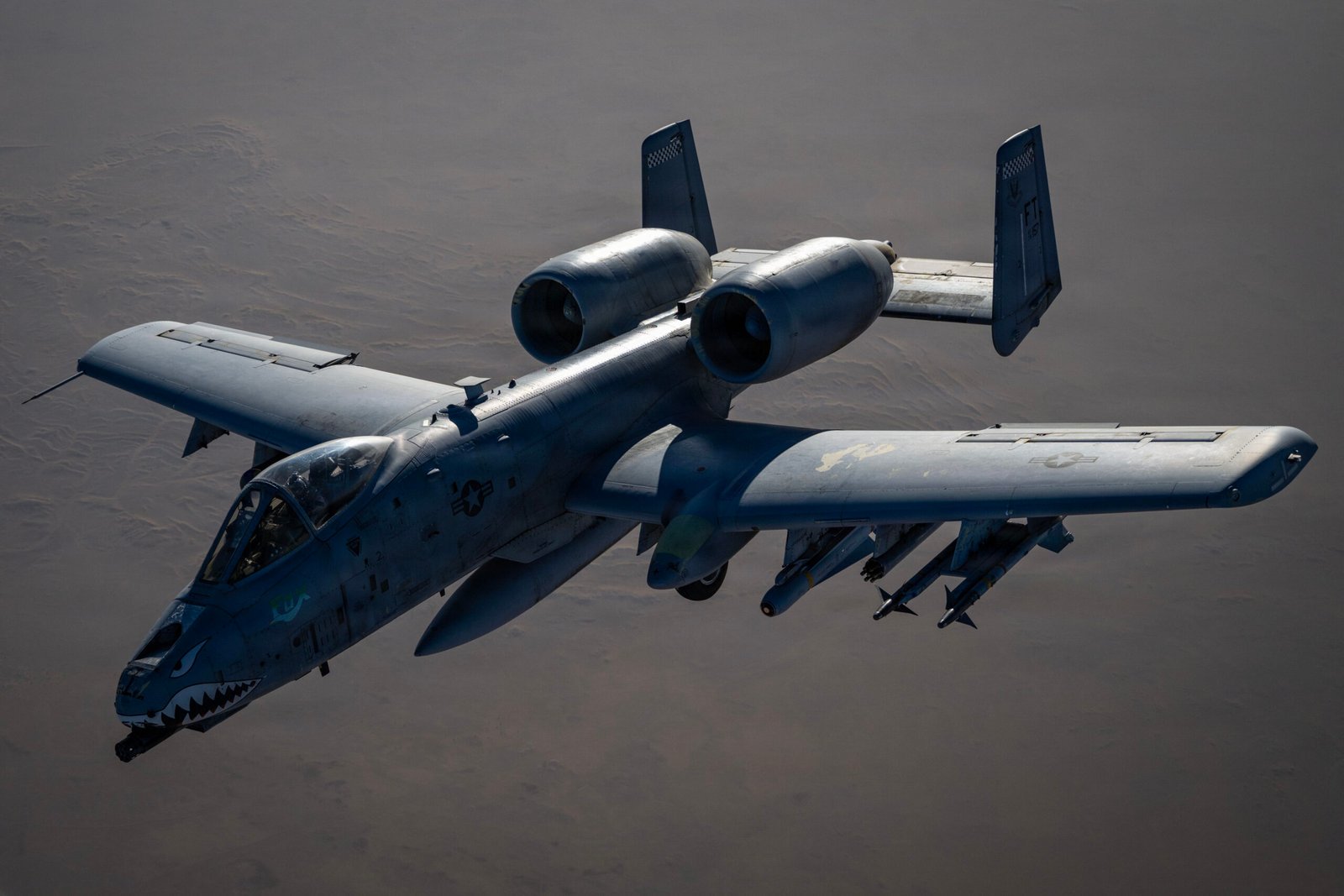

The United States has deployed A-10 attack aircraft against Iranian fast attack craft in the Strait of Hormuz, with AH-64E now joining combat operations to destroy Iranian drones, Chairman of the Joint Chiefs of Staff, General Dan Caine, confirmed on 19 March. The move marks a direct escalation in countering maritime threats in one of the world’s most critical energy chokepoints.
He did emphasise that US allies in the region are using their own AH-64s to destroy Iranian drones. Footage released by the United Arab Emirates Ministry of Defence shows AH-64E Apache helicopters from the Emirati Air Force intercepting and destroying several Iranian Shahed one-way attack drones over the Persian Gulf using the helicopter’s 30 mm M230 chain gun.
General Pierre Schill, Chief of Staff of the French Army, also announced that France has deployed four Tiger attack helicopters in the Middle East to counter drones. They complement other French assets, including Rafale fighter jets, which are already used to intercept drones.
USAF A-10s have been conducting strikes against Iran-backed militias in Iraq, one of which mistakenly hit the Iraqi army base at Al Habbaniya in Anbar province on 25 March. Seven Iraqi soldiers were killed, and 13 others were wounded in the strike. Iraq’s Defense Ministry strongly condemned the incident, stating the troops were on a humanitarian mission, and Iraqi officials have called for the withdrawal of US forces from the region.
The incident might be connected to increased activity by Iran-backed groups, including the Islamic Resistance, which previously carried out a series of attacks on the US-operated Victory Base, where an HH-60M Black Hawk and an AN/MPQ-64 Sentinel radar were targeted.
Using the UK’s Rapid Sentry defence weapon armed with the Lightweight Multirole Missiles (LMM), UK special forces have shot down at least 14 incoming missiles, fired either by Iran or its proxies. They were protecting a base shared with US troops in Erbil, Northern Iraq, and were part of the RAF Regiment, which defends British assets and personnel in the region.

On 27 March, Iran launched a combined missile and drone strike on Prince Sultan Air Base in Saudi Arabia, destroying two KC-135R tanker aircraft and an E-3G Sentry AWACS early warning aircraft, resulting in ten USAF servicemen being injured. The USAF faced another setback when Spain closed its airspace to US aircraft participating in the operation against Iran.

The country’s Prime Minister, Pedro Sánchez stated that Madrid had rejected all flight plans related to the operation in Iran and that the USAF could no longer use the Spanish bases in Rota and Morón de la Frontera for refuelling or as transit points.
Washington has had to find new locations to station its B-52 and B-1 strategic bombers, which were ultimately hosted by the United Kingdom at Fairford Air Base. Due to the closure of Spanish airspace, American bombers will be forced to fly either over French territory with refuelling over the Mediterranean Sea or by circumnavigating the Iberian Peninsula via the Strait of Gibraltar.

Meanwhile, the Gulf States continue to be targeted by Iranian strikes. Bahrain’s defence force says that its air defence systems, including the Patriot PAC-3, “continue to confront successive waves of Iranian terrorist aggressions.” It stated that 153 missiles and 331 drones have now been intercepted and destroyed since hostilities began on 28 February.
According to Ukrainian President Volodymyr Zelensky, Ukraine has already deployed 228 specialists to intercept Shahed drones in Qatar, the UAE, Saudi Arabia, Jordan, and Kuwait. He also stated that Ukraine is actively engaging in technical cooperation with Middle Eastern countries at both the level of defence ministries and directly with state leaders to conclude defence agreements for C-UAS systems and expertise.
by David Oliver
