

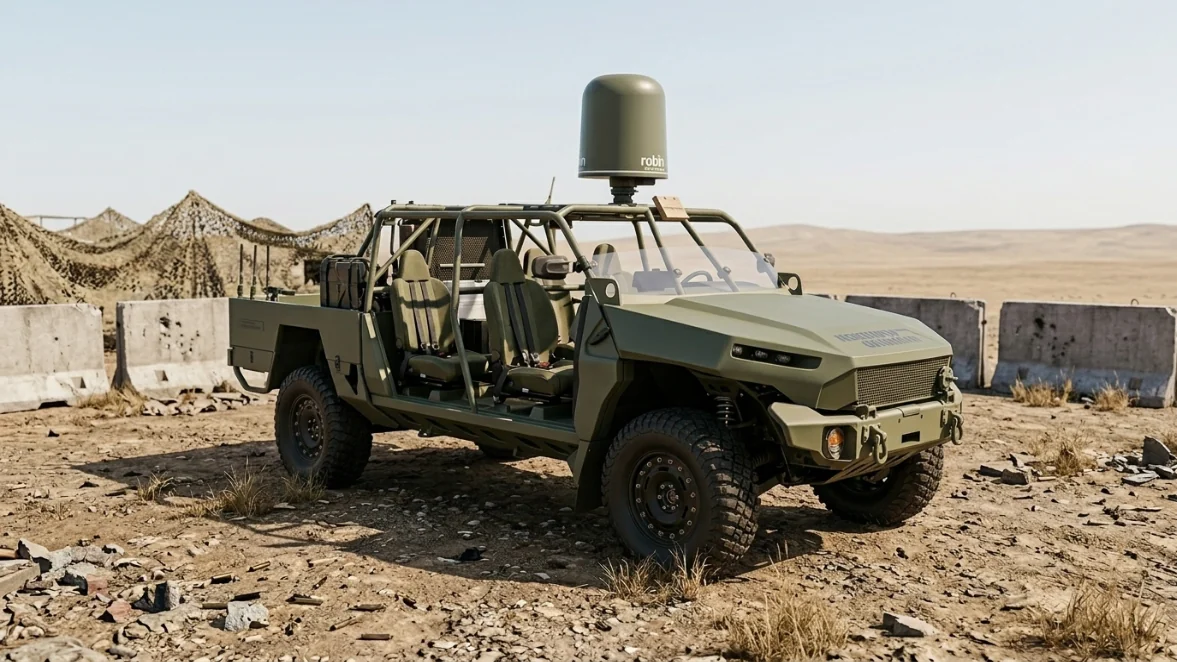
Defense Feeds – Tampa, Florida: The Northrop Grumman Reveals AION Counter-Drone System presentation at SOF Week 2026 highlights the growing race to develop advanced defenses against unmanned aerial threats as drone warfare rapidly reshapes modern battlefields.
American defense giant Northrop Grumman used the special operations-focused event to showcase its new AION counter-drone platform, a system designed to detect, track and neutralize hostile unmanned aerial systems in complex operational environments. The unveiling comes as military forces worldwide face increasing threats from cheap attack drones, loitering munitions and swarm-style aerial systems.
The war in Ukraine, conflicts in the Middle East and rising concerns over drone proliferation have pushed counter-UAS technology to the center of military modernization programs. Defense companies are now competing aggressively to deliver systems capable of protecting troops, bases and critical infrastructure from rapidly evolving aerial threats.
Northrop Grumman’s AION system appears aimed directly at that growing operational requirement.
AION Designed to Counter Modern Drone Threats
According to information presented during SOF Week, the AION system combines advanced sensing technologies with electronic warfare capabilities to identify and defeat hostile drones across multiple operational scenarios.
The platform is designed to support military units operating in contested environments where small unmanned aircraft can conduct reconnaissance missions, deliver explosives or overwhelm traditional air defense systems. Unlike conventional anti-air systems built primarily for larger aircraft, counter-drone platforms must respond to smaller, faster and often harder-to-detect aerial targets.
Northrop Grumman stated that AION is capable of integrating different detection and mitigation tools into a single operational architecture. The system can reportedly support radar sensors, electro-optical tracking technologies and electronic warfare functions depending on mission requirements.
One of the key advantages emphasized during the event was mobility. Modern counter-drone systems increasingly need to operate alongside rapidly moving forces rather than remaining fixed around permanent installations. AION appears designed with that flexibility in mind, potentially allowing deployment across tactical military operations, convoy protection missions and expeditionary environments.
Defense analysts say systems like AION are becoming increasingly important as low-cost drones continue spreading across global conflict zones. Small unmanned aircraft once viewed as limited battlefield tools are now capable of conducting precision strikes, surveillance missions and electronic warfare operations against much larger military formations.

Counter-Drone Market Expands Rapidly After Ukraine War
The rise of drone warfare has dramatically accelerated demand for counter-UAS technologies across NATO and allied militaries.
In Ukraine, both Russian and Ukrainian forces have used drones extensively for reconnaissance, artillery targeting and direct attack missions. Cheap first-person-view drones carrying explosives have become especially difficult for conventional air defense systems to intercept cost-effectively.
Those battlefield realities are forcing militaries to rethink how they defend frontline troops and strategic infrastructure. Traditional missile-based air defense systems are often too expensive to use against low-cost commercial-style drones, creating demand for electronic warfare and directed-energy alternatives.
Counter-drone systems now represent one of the fastest-growing sectors within the global defense industry. Companies are racing to develop solutions capable of neutralizing drones through jamming, spoofing, interception or kinetic destruction.
Northrop Grumman’s AION platform enters a highly competitive market where defense firms are increasingly focusing on layered defense networks combining radar coverage, AI-assisted tracking and electronic attack systems.
Military planners also worry about the future threat posed by drone swarms. Large numbers of coordinated unmanned aircraft could potentially overwhelm traditional defenses during high-intensity conflicts involving near-peer adversaries such as China or Russia.
As a result, the Pentagon and allied governments are increasing investments in mobile counter-drone technologies suitable for both conventional military operations and special operations missions.
Electronic Warfare Becoming Critical Battlefield Capability
The unveiling of AION also reflects the broader resurgence of electronic warfare as a core military capability.
Modern conflicts are increasingly shaped not only by missiles and armored vehicles but also by the ability to disrupt communications, sensors and autonomous systems. Electronic warfare now plays a central role in efforts to counter drones without relying entirely on expensive kinetic interceptors.
Systems like AION may allow military units to disable or disrupt hostile drones before they reach their targets, reducing operational costs while improving defensive flexibility. This approach has become especially attractive as drone threats grow in both number and sophistication.
At the same time, the rapid expansion of autonomous systems is creating new operational challenges. Counter-drone platforms must continuously adapt to evolving technologies including AI-assisted navigation, encrypted communications and autonomous targeting systems.
Northrop Grumman’s decision to unveil AION at SOF Week 2026 suggests special operations forces could play an important role in future deployment concepts. Special operations units often operate in environments where traditional air defense coverage is limited, making mobile counter-drone systems increasingly valuable.
As global militaries continue adapting to the drone warfare era, systems like AION highlight how electronic warfare and counter-UAS technology are rapidly becoming essential components of modern battlefield strategy.
