


Defense Feeds – Pyongyang. The North Korea Develops HIMARS-Style Rocket Artillery System reveal is raising new concerns across East Asia as Pyongyang continues accelerating efforts to modernize its missile and long-range strike capabilities in response to growing military competition on the Korean Peninsula.
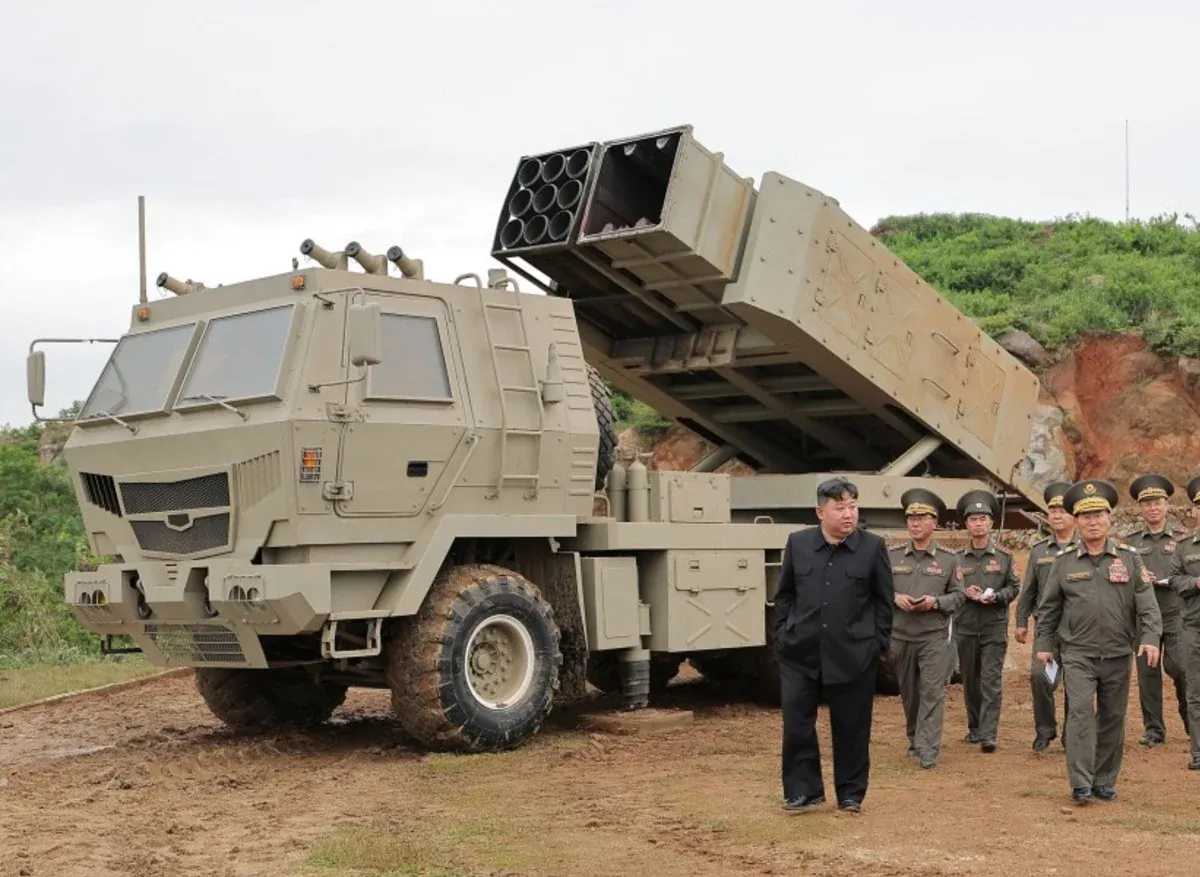
Recent images released by North Korean state media appear to show a new wheeled multiple-launch rocket system that closely resembles the American-made HIMARS platform used extensively by Ukrainian forces during the war against Russia.
The emergence of the system suggests North Korea is increasingly prioritizing mobile precision-strike capabilities capable of supporting rapid battlefield operations and long-range artillery attacks.
Military analysts say the new launcher reflects a broader trend inside the Korean People’s Army toward improving survivability, mobility and operational flexibility for strategic weapons systems. Unlike older tracked artillery platforms, wheeled launchers can reposition more quickly after firing, making them harder to detect and target during combat operations.
The appearance of the system comes amid intensifying military tensions involving North Korea, South Korea and the United States, particularly as Pyongyang continues testing ballistic missiles and expanding its domestic defense industry.
New Rocket Launcher Mirrors Modern Mobile Warfare Trends
The newly unveiled launcher appears visually similar to the U.S.-made M142 HIMARS, a highly mobile rocket artillery system developed by Lockheed Martin that has become one of the most influential battlefield weapons of the Ukraine conflict.
HIMARS gained international attention after Ukrainian forces used the system to strike Russian ammunition depots, command posts and logistics centers deep behind frontline positions. The platform’s combination of mobility, precision and rapid deployment dramatically reshaped how many militaries view modern artillery warfare.
North Korea’s apparent attempt to field a comparable capability highlights how battlefield lessons from Ukraine are influencing military modernization programs worldwide.
While Pyongyang’s new launcher may resemble HIMARS externally, defense experts caution that appearance alone does not confirm equivalent technological sophistication or operational capability. Questions remain regarding the rocket system’s targeting accuracy, fire-control systems and available munition types.
Still, the development signals North Korea’s intent to improve long-range strike flexibility. Mobile rocket launchers provide significant operational advantages because they can quickly relocate after firing, reducing vulnerability to counterbattery attacks and air strikes.
Military analysts also note that wheeled artillery systems are generally easier to deploy across road networks compared to heavier tracked platforms. This mobility could allow North Korean forces to disperse launchers more effectively during wartime scenarios.
Pyongyang Continues Expanding Strategic Weapons Programs
The new artillery system appears as North Korea continues investing heavily in missile technology and strategic weapons development despite international sanctions.
Over the past several years, Pyongyang has unveiled a wide range of ballistic missiles, cruise missiles and tactical nuclear delivery concepts aimed at strengthening deterrence against the United States and South Korea. The country has also focused on improving solid-fuel missile technology, mobile launch systems and battlefield survivability for strategic assets.
South Korean and U.S. intelligence agencies have repeatedly warned that North Korea is attempting to modernize both conventional and nuclear-capable strike forces simultaneously.
The introduction of a HIMARS-style rocket system may indicate growing interest in tactical precision-strike operations beyond traditional massed artillery bombardment strategies historically associated with North Korean military doctrine.
Defense observers believe North Korea’s leadership closely monitors foreign conflicts to study emerging battlefield trends and operational concepts. The Ukraine war in particular demonstrated the importance of mobile artillery systems capable of delivering rapid strikes while avoiding detection.
Pyongyang’s expanding military relationship with Russia has also fueled international concern. Western officials have accused North Korea of supplying artillery ammunition and weapons support linked to Moscow’s war effort, though both countries have denied those allegations publicly.
The continued modernization of North Korea’s strike capabilities is likely to further increase military planning pressure on South Korea, Japan and U.S. Indo-Pacific forces.
Regional Security Concerns Continue Rising
The appearance of the new launcher comes during a period of growing instability across Northeast Asia where missile tests, military exercises and strategic competition continue intensifying.
South Korea and the United States have expanded joint military drills over the past year while strengthening missile defense cooperation and regional deterrence measures. Japan has also increased defense spending sharply amid concerns surrounding North Korean missile activity and China’s growing military power.
Mobile rocket artillery systems present unique operational challenges because they are difficult to track continuously during wartime conditions. Their ability to disperse rapidly across large operational areas complicates targeting efforts for opposing forces.
Military experts warn that future conflicts on the Korean Peninsula would likely involve extensive use of mobile missile launchers, drones, long-range artillery and electronic warfare systems operating simultaneously in highly contested environments.
North Korea’s continued focus on tactical mobility and strike flexibility suggests Pyongyang is adapting its military doctrine to reflect modern battlefield realities observed in ongoing global conflicts.
Although many technical details surrounding the new system remain unclear, the unveiling itself sends a strategic message. North Korea intends to continue advancing its indigenous weapons industry while expanding the range and survivability of its long-range strike arsenal despite mounting international pressure and sanctions.
