

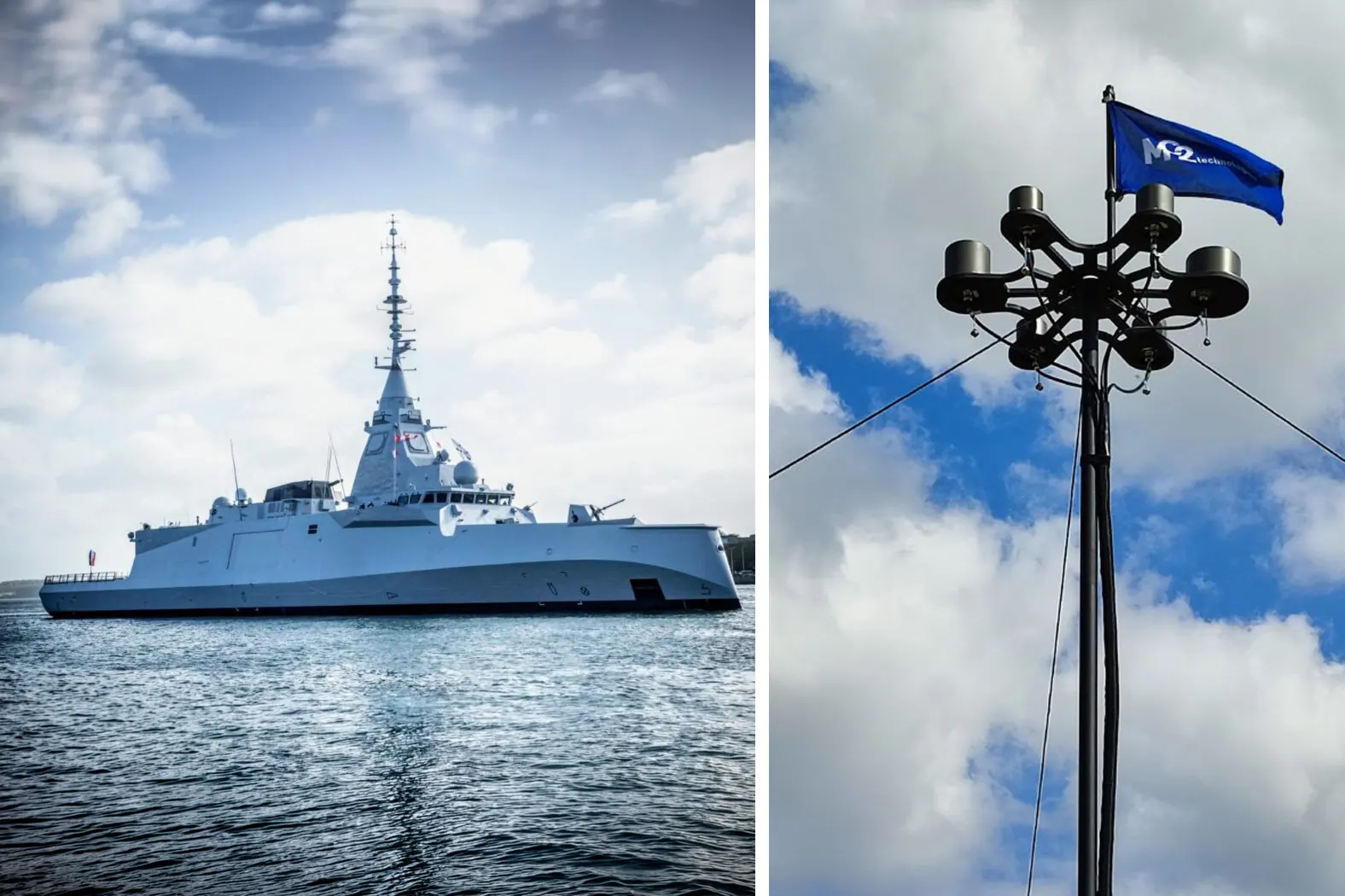
Defense Feeds, Paris — France is moving to strengthen its naval defenses with the integration of Neptune and MAJES electronic warfare systems on its new FDI frigates.
The initiative reflects a growing urgency to counter the rising threat posed by maritime drones in modern naval warfare. As unmanned systems become more widespread, traditional defenses are no longer sufficient on their own.
The deployment of Neptune and MAJES jammers marks a significant upgrade in France’s ability to operate in contested maritime environments. These systems are designed to detect, disrupt, and neutralize hostile drones before they can reach critical assets. The move highlights how electronic warfare is becoming central to naval survivability.
Countering the Rise of Maritime Drone Threats
Maritime drones have rapidly emerged as a major challenge for naval forces around the world. From reconnaissance to attack roles, these unmanned systems can threaten ships with minimal warning and at relatively low cost. This shift has forced navies to rethink how they defend against increasingly agile and distributed threats.
The Neptune and MAJES jammers are specifically designed to counter these evolving dangers. By interfering with drone communications and navigation systems, they can effectively disable or misdirect incoming threats. This provides ships with a critical layer of defense beyond traditional weapons systems.
As drone technology continues to advance, electronic countermeasures are becoming essential. The ability to neutralize threats without firing a shot offers both tactical and strategic advantages. It also reduces the risk of escalation in sensitive operational environments.

Advanced Electronic Warfare Capabilities
The Neptune system focuses on electronic attack capabilities, allowing it to jam and disrupt enemy signals across a wide spectrum. This makes it effective against a range of threats, including unmanned aerial and surface vehicles. Its flexibility ensures that it can adapt to different operational scenarios.
Meanwhile, the MAJES system enhances electronic support measures by detecting and analyzing electromagnetic signals. It provides early warning of potential threats, allowing crews to respond more quickly and effectively. Together, these systems create a comprehensive electronic warfare suite.
This combination allows French frigates to not only defend themselves but also dominate the electromagnetic spectrum. Control of this domain is increasingly seen as a decisive factor in modern naval combat. Ships that can see and disrupt first gain a significant operational edge.
Integration with FDI Frigates
The FDI frigates, also known as Belharra-class ships, are at the center of France’s naval modernization efforts. Designed with advanced sensors, stealth features, and digital systems, these vessels are built for high-intensity operations. The addition of Neptune and MAJES further enhances their capabilities.
Integrating these jammers into the frigates ensures seamless coordination with other onboard systems. This includes radar, weapons, and command networks, creating a fully connected combat environment. Such integration is key to responding quickly to fast-moving threats like drones.
The FDI platform is also designed for interoperability with allied forces. This means its electronic warfare systems can support joint operations and contribute to coalition missions. In modern naval warfare, cooperation is as important as capability.
Strengthening France’s Naval Future
The deployment of Neptune and MAJES jammers reflects a broader shift in naval strategy. As threats evolve, navies must invest in technologies that go beyond traditional firepower. Electronic warfare is now a critical component of maritime defense.
For France, this development strengthens both national security and strategic autonomy. By equipping its fleet with advanced, domestically developed systems, it reduces reliance on external technologies. This ensures greater control over its operational capabilities.
Looking ahead, the importance of counter-drone measures will only continue to grow. The integration of Neptune and MAJES positions France to meet these challenges head-on. It signals a future where control of the electromagnetic spectrum is just as vital as control of the seas.
