

The Army wants its new reservation system to reduce the wait for test-range time from more than a year to no more than 30 days. Since it launched in August, according to the commander of Test and Evaluation Command, they’re averaging 33.
Companies wanting to test a weapon can submit a proposal with dates and a preferred range, and within 24 hours, a “concierge” will call back to schedule a time.
“There’s a perception that testing takes too long to get onto ranges, and at places like White Sands Missile Range—that’s booked out. It may take a while to get on,” Maj. Gen. Pat Gaydon said Tuesday at an AUSA event near Washington, D.C. “But that’s not the only range, and I think there’s a misperception that that’s where everyone needs to go to do their testing.”
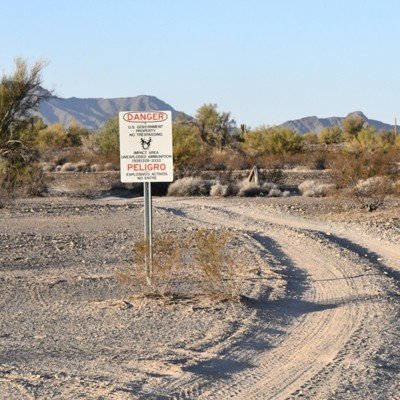
The Army has opened up Dugway Proving Ground, Utah; the West Cibola Range at Yuma Proving Ground, Arizona; Camp Grayling, Michigan; Camp Shelby, Mississippi; Camp Atterbury, Indiana; and an international range near Tan-Tan, Morocco, for its quick-turnaround reservation system.
The permissive test range construct has also pushed the Army to fast-track invitations to its own events. Covenant Industries was testing a missile in Morocco 14 days after getting a call from the Army this fall, according to their president, Abby Denberg.
“When companies are invited to participate in exercises, those invitations usually come about a year out,” she said. “So the final planning conference for exercises is usually about six months before the exercise. There’s a few issues with that. First and foremost is that startups are changing every week, every two weeks, every three weeks, and so locking configurations six months out can hamper your ability to bring the latest and greatest technology to those exercises.”
The flexibility also allows companies to test their systems early and often.
“It was all about…recognizing that they needed a place where they could fly, fail, fix, fly again, and do that sort of iteration, and scheduling a one-week test window a year or 18 months out doesn’t offer that,” Gaydon said. “So what we’re trying to offer is…that they can almost test once a week or one week a month, those sorts of things.”
That is particularly helpful for unmanned systems that rely on artificial-intelligence models, said Nathan Diller, president of Mach Industries.
“What it allows us is very rapid closure on those models, to make sure that you can start to build trust in the models sooner,” he said.
And, dovetailing with the Army’s Continuous Transformation philosophy, companies can get soldier feedback early on, “getting the system into the hands of end-users, allowing them to kind of test your concept of employment and concept of operations, and come back to you and give you that feedback,” Denberg said.
The program has opened up opportunities for some of the Pentagon’s highest priorities.
“If you’re in the drone business, the counter-drone business, the long-range fires, or the low-cost interceptor business, you can only do so much on your own before you probably need to come onto one of our ranges,” Gaydon said. “If you own the whole kill chain and drone/counter-drone, the FAA will not allow you to shoot down your own drone in airspace that is in ours. If you want to test how your drone operates or your missile operates in a contested electronic electromagnetic spectrum environment, it’s hard to do that on a private range, to get those sorts of authorities.”
The Army is also offering companies a kind of initial evaluation that they can use to build confidence in their product.
“We will offer industry a memorandum that said you came, operated in this environment, and you can use that with program offices or however you want,” Gaydon said.
So far, the test-range reservation system has gotten 156 requests, he said. More than 60 percent of them are being or have been scheduled.
“We’ve completed 15 tests to date,” he said. “We have 14 more ready, and have about 93 that we’re actively working to get on the range.”
