

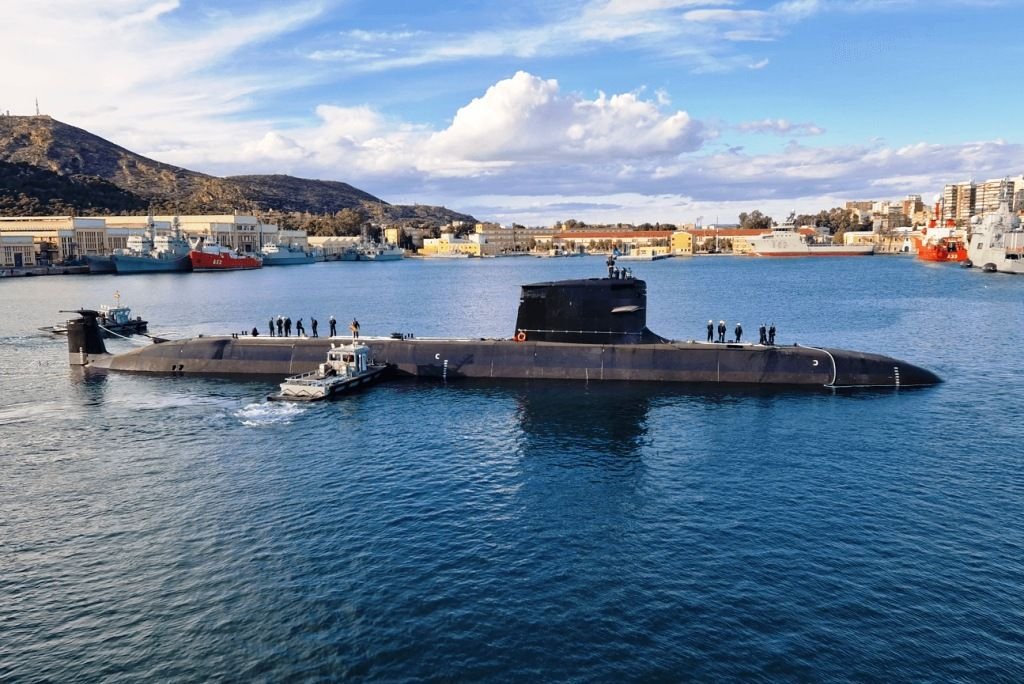
Cartagena (Spain), 23 September 2026 – Navantia has successfully completed testing of the Air Independent Propulsion (AIP) system at its Cartagena shipyard. The AIP system is integrated into a specialized section of the S-83 Cosme García, the third submarine in the S-80 class. The achievement of this milestone marks a decisive step forward for the programme and reinforces Spain’s position among the select group of nations with the industrial and technological capability to design, build, and integrate next-generation conventional submarines.
The trials, which began in June following the commissioning and verification of the equipment in its actual onboard configuration, have demonstrated the system’s integration, performance and operational capabilities in its final location, before the section is transferred to be joined to the remainder of the pressure hull. The section measures 12 metres in length and weighs approximately 400 tonnes.
The S-83 AIP section is currently located in a specialized testing facility at the Cartagena shipyard, specifically designed to validate the system under representative operating conditions. Testing began with the first loading of Liquid Oxygen and Bioethanol onboard. These materials are used by the system to generate the Hydrogen required to feed the fuel cell responsible for producing electrical power for the submarine during submersion.
The system is rated as a third-generation AIP solution. Rather than storing Hydrogen onboard, it produces it on demand from a liquid fuel. This technology, which incorporates a large percentage of Spanish engineering and manufactured components, overcomes the endurance limitations associated with previous generations of AIP systems currently available on the market. It will enable S-80 submarines to remain submerged for weeks at a time, compared with the typical endurance of only a few days for conventional submarines equipped solely with lead-acid batteries. This new capability will provide the Spanish Navy with an unprecedented tactical advantage by significantly enhancing its ability to remain undetected and strengthening its deterrence capability.
The test rig used is a unique facility, the only one of its kind in the world, capable of simulating both the forward and aft sections of the submarine as well as real operating conditions, including diving depth and speed of advance. Thanks to this capability, Navantia has been able to reproduce scenarios equivalent to those encountered during actual operations and demonstrate power generation for battery charging while submerged under a full range of operating conditions. This work will also help optimise the schedule for future Harbour Acceptance Trials (HAT) of the system following the launch of the S-83.
The completion of these tests represents a further milestone for the AIP system developed and integrated by Navantia, a capability of significant strategic and industrial value. The system had previously passed Factory Acceptance Tests (FAT) ashore and had already demonstrated its ability to recharge the batteries of the S-81, the first submarine in the class. The success of this latest testing campaign, carried out with the participation of leading Spanish technology centres and specialists, highlights the expertise and commitment of Navantia’s workforce and the wider national industrial base. Their contribution has been essential in successfully executing a highly complex test programme to the most demanding standards.
“All of this further confirms the technological maturity of the system and demonstrates the national industry’s capacity for innovation and for delivering complex technological developments. I would like to congratulate everyone involved in this achievement, which reflects our commitment to Spain’s defence capabilities and to a culture of innovation that advances our strategic autonomy and technological sovereignty,” said Ricardo Domínguez, Chairman of Navantia.
This achievement forms part of the overall progress of the S-80 programme, under which the S-82 currently undergoing harbour and sea trials, and the S-83 and S-84 are at different stages of construction at the Cartagena shipyard. The programme involves the construction of four next-generation submarines for the Spanish Navy and constitutes one of the most significant industrial and technological defence projects ever undertaken in Spain.
With a high degree of stealth, advanced combat systems, state-of-the-art sensors and a design optimised for long-endurance operations, the S-80 class places Spain at the forefront of conventional submarine construction worldwide. The successful completion of these tests confirms not only the progress of the programme itself, but also the strength of the national industrial and technological ecosystem supporting such a critical strategic defence platform for Spanish and European security.
photo courtesy Navantia
