

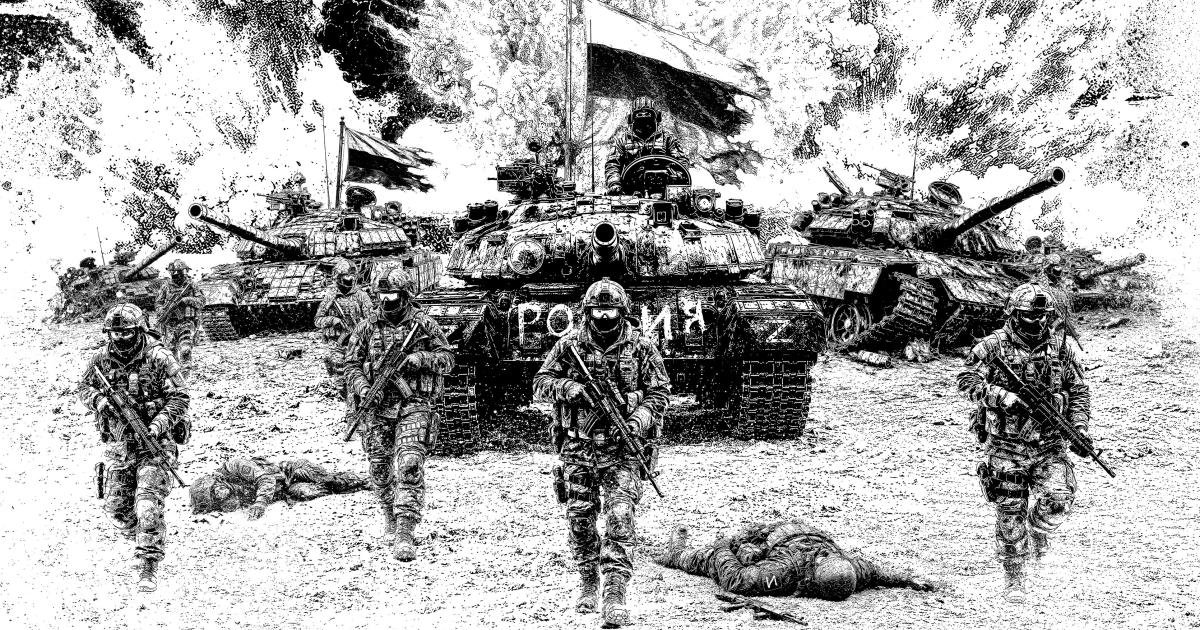
The war in Ukraine, now in its fifth year, has reached another inflection point. Russian forces are visibly struggling on the battlefield as Kyiv’s strategy of making the war futile for Russia is working. But the future of European security does not hinge on the outcome of this war alone. Even if defeated, Russia will remain the primary threat in Europe for years to come. Despite its stagnating economy, poor demographics, and ossifying authoritarian regime, Russia remains the main power capable of and invested in upending the continent’s security architecture. Moreover, Russian military reconstitution after the war is not a question of if but of when.
Defense planners and analysts are divided on the severity of the future danger that Russia’s military poses and how soon the threat could grow. Some fear that Moscow will be capable of continued aggression soon after the war in Ukraine ends. Others believe that it may take many years to reconstitute its weakened and degraded military. There is a sense that Russia’s losses of troops and equipment have left its forces in tatters and that a military incapable of making significant advances in Ukraine can’t possibly threaten Europe.
Current trends suggest that Russia will reconstitute its military enough to pose a major threat faster than analysts expected back in 2022. It will likely take five to seven years, with Russia able to use force to threaten NATO members or Ukraine in more limited ways shortly after the current war comes to a close. Even if full reconstitution takes a few years longer, such a time frame is still short by defense planning standards. Russia will field a larger force with more drones, deep-strike capabilities, and personnel than before the war. It will continue to prioritize defense spending and maintain higher levels of defense industrial production. But the path to reconstitution will not be easy. Historically, Russian force development has been riddled with compromises, overly ambitious designs, insufficient resources, and poor execution. It is often a process of two steps forward and one step back.
As the United States and many European states focus on ensuring Ukraine’s success, they must also think beyond this war and begin preparing for the enduring challenge that Russia poses. Russia’s military will remain strong enough to threaten NATO members’ territory and undermine the alliance, especially if continued U.S. commitment becomes uncertain. Rather than fight the way the Russian military has in the last two years in Ukraine, where the battlefield has been defined by entrenched defenses and positional fighting, Moscow will try to rebuild its capacity to conduct large-scale offensive maneuvers. It will retain a traditional focus on firepower, including artillery and precision-strike capabilities, while adding a large number of drone formations to the force. NATO forces remain superior overall but have yet to adapt to some of these changes, which could lead to higher losses in the opening days of a future war with Russia.
The Russian military is a force in transition. In the coming years, it will continue to have one foot in the future and the other in the past. A NATO-Russian conflict would undoubtedly play out differently than the war in Ukraine has, but poor Russian performance and observable weaknesses should not be cause for complacency among NATO countries. The enduring threat from Moscow is not one that Washington should readily dismiss or simply hand off to Europeans. The United States and its European allies need a more grounded conversation on the future Russian military threat and how to deter it.
RECONSTITUTIONAL CRISIS
Military reconstitution is not something that takes place only in the wake of intense fighting. A country’s forces are in a continuous state of transformation. As the military analyst Dara Massicot has explained, reconstitution should not be measured “only through the restoration of prewar numbers of personnel and equipment.” Rather, it is a “process of regaining combat functions, proficiency, and capabilities” to execute combat missions. Moreover, military power cannot be understood in the abstract; it depends on the specific scenario being considered. When NATO members put forward competing timelines for Russian military reconstitution, for instance, they may be basing their assessments on different scenarios. The force required for a limited Russian cross-border incursion into a Baltic state could be starkly different from that needed for an invasion of Poland.
The baseline for analyzing Russian military reconstitution should be large-scale combat operations because they pose the greatest threat to NATO and the greatest challenge for U.S. forces in Europe. To conduct operations at scale, the Russian military will need to restore not only its manpower and materiel but also its ability to command and support larger formations such as armies, corps, and divisions, and to integrate different branches. The ability to conduct more complex operations is one of the most significant differentiators among modern militaries and an area in which Russia stumbled at the opening of the war in Ukraine. At the same time, NATO must also consider other threats that Russia poses, including a much more limited ground campaign backed by intense missile and drone strikes.
Analysts also need to realize that the Russian military will not be reconstituted to its prewar size and structure. It will pursue an expansive redesign to accommodate a larger force composed of traditional artillery, motorized rifle and tank formations, and drone units. The future Russian military will have more infantry—reversing prior cuts—and more drone formations to provide fire support or conduct precision strikes. It will still be a force seeking to balance capability, capacity, and readiness that will remain dependent on a mix of conscripts, contract service personnel, and partial mobilization of reserve soldiers. Some percentage of the standing formations will be able to deploy on short notice without conscripts, depending on the scenario, while others will require a call-up of reservists to get to full combat strength. Whether the Russian military is forced to keep a large ground force along the 800-mile frontline with Ukraine even after the war ends will also determine what units it has available to deploy elsewhere.
One reason for the uncertainty about how Russian forces will develop is that members of the older generation of military leaders, such as Valery Gerasimov, the chief of the general staff, have set the trajectory. Gerasimov concluded from Russia’s failures early in the Ukraine war that the military was not Soviet enough—that is, it lacked sufficient troops, equipment, reserves, and formations capable of sustaining a war of attrition. In late 2022, before many of the developments in the ongoing war in Ukraine, including the decisive role of drones on the battlefield, the military brass announced that it would significantly expand the force. It also sought to undo prior reforms and remove command structures that enabled the armed forces to better conduct joint operations between branches, in some cases obviously misdiagnosing problems as it did so. But these leaders are not going to be the future of the Russian military. The vision of what Russia’s forces should look like might change as those with current combat experience rise through the ranks.
QUANTITY OVER QUALITY
Defense analysts need to carefully examine the notion that the Russian military has been badly depleted by this war and will take a long time to recover. Although they have suffered massive losses, Russia’s armed forces have expanded over the course of the war, and the country’s production of key munitions and weapons systems has increased. Russia’s military has been degraded significantly in some areas, especially in the quality of its officers and overall personnel, but it has also demonstrated an ability to adapt and evolve.
At least 400,000 Russian soldiers have been killed in action in Ukraine—a British intelligence report released at the end of May suggests nearly 500,000—and another 600,000 to 800,000 have been seriously wounded. Despite these massive casualties, the size of the force has grown from approximately 850,000 active personnel before the war to 1.3 million now. Many formations have doubled or tripled in size, and most of these have added drone, reconnaissance, assault, and electronic warfare units. Following Ukraine’s example, Russia has also introduced a new combat branch dedicated to drone warfare called Unmanned Systems Forces. Although many of the current units will shrink after the war, and assault detachments and reserve formations will be eliminated, the military is unlikely to go back to its prewar size.
Russian military reconstitution after the war is not a question of if but of when.
At the same time, Russian equipment losses in the war have been staggering. According to open-source accounts, as of the beginning of May 2026 the Russian military has lost more than 14,000 armored combat vehicles, 2,100 pieces of artillery, and thousands of other items. Because of Ukraine’s increasingly successful strikes, Russia is now losing air defense systems in much greater numbers than it was earlier in the war, which raises questions about how it will compensate for the more expensive systems it cannot easily replace. Between the losses to aircraft and air and missile defenses, the war is degrading the Russian armed forces in significant ways. In the near term, this will make them more vulnerable to NATO’s airpower and its superior long-range precision-strike capabilities.
Nevertheless, in the last four years, the Russian military has pulled thousands of vehicles and artillery pieces from its stocks. It has refurbished or newly produced thousands of vehicles, and North Korea has supplied over 300 pieces of artillery. Today, the Russian military likely has as many, or perhaps slightly more, armored combat vehicles, including tanks, than it did at the start of the war. These may not be as modern as those it had in 2022, but Russia continues to increase new vehicle production. Estimates suggest that it is now annually producing more than 200 T-90M tanks, the most advanced tank in its arsenal; at this rate, half the tanks in Russia’s armored fleet could be T-90Ms within seven to eight years. Russia also continues to rapidly produce air defense systems and will probably modify future air defense designs based on what it has learned from the war in Ukraine.
Russia now makes millions of tactical drones each year, and it can produce far more cruise and ballistic missiles than it could at the start of the war. The increase in production of large one-way attack drones, of which the military is launching an average 6,500 per month in Ukraine, is especially notable: in 2025, Russia made more than 70,000 of them, and for 2026 it has contracted to obtain at least 100,000 more. The capability of these weapons continues to increase. The Russian military has improved its ability to conduct strikes and addressed difficulties it had when the war started, such as the delay between detecting and engaging a target. It may ultimately end the war with a similar amount of equipment, more personnel, and expanded drone and precision-strike capabilities than it had when it first invaded Ukraine. And at current rates of production, Russia could have a stock of millions of tactical drones and hundreds of thousands of larger one-way attack drone systems within a few years after the war ends. Assessments of Russian military capability must account for these significant expansions of its capacity to conduct deep strikes and the threat they pose to units, bases, and critical infrastructure.
TWO STEPS FORWARD, ONE STEP BACK
Although quantity of materiel may be the easiest metric to estimate, it is equally important to consider the quality of the armed forces when assessing the future Russian military threat. As the military historian Stephen Biddle has long argued, how a military uses its forces matters more for determining combat effectiveness than the numbers of troops and weapons it has on the books.
The Russian military is and will remain a patchwork force that is uneven in quality and capability. Over the course of the war in Ukraine, the armed forces have become much better at dynamic targeting, precision strikes, integrating drones into combat operations, and employing long-range precision-guided weapons in more sophisticated ways. The Russian military’s ability to execute concepts such as recon-fire and recon-strike contours, which involve the real-time integration of reconnaissance systems with artillery and precision strikes, has also matured. Combat experience, investment in organizational capacity, and adaptations to the force structure have made the Russian armed forces more capable of employing drones and precision-guided weapons at scale.
The Russian military has also evolved to better deal with some of the Western capabilities it has confronted in Ukraine and, in select cases, developed effective ways to counter them. Russia has reorganized its logistics and command-and-control systems to reduce the efficacy of more traditional U.S. long-range precision strikes. The net effect is that, over time, Ukraine has already realized much of the shock value from the weapons systems it has previously deployed, including long-range mobile rocket systems such as HIMARS. Conversely, new types of cheap, one-way attack drones with automated targeting are currently wreaking havoc on Russian logistics in Ukraine, but NATO militaries have yet to acquire these systems in substantial numbers.
Despite the difficulties it is facing in Ukraine, the Russian military has shown that it can adapt. In the current war, adaptation cycles typically take three to four months, with one side replicating the tactics or technologies used by the other. Although slower at tactical innovation than Ukraine, the Russian military has demonstrated that it can scale solutions across a large force. It is also making progress in the more challenging question of military learning, which is a longer-term process than wartime adaptation. As Massicot wrote in these pages, “By early 2023, Moscow had quietly constructed a complex ecosystem of learning that includes the defense manufacturing base, universities, and soldiers up and down the chain of command. Today, the military is institutionalizing its knowledge, realigning its defense manufacturers and research organizations to support wartime needs, and pairing tech startups with state resources.”
Russia now makes millions of tactical drones each year.
But the Russian military has historically underinvested in people. Instead, it has placed its trust in technology. Military exercises are frequently scripted, and readiness checks and training are treated as hoops to jump through. The results have been mixed at best and have often fallen woefully short of what is officially claimed. At times, Russian forces lack the quality to readily execute the concepts that the military is developing, so the military struggles to adopt the lessons it learns. After it intervened in Syria, in 2015, for example, the Russian military trumpeted the experience it had gained and cycled air crews and senior officers through the combat zone. In some areas, the experience helped the Russian military improve, but on the whole, officials overstated the positive effects on the force.
The Russian military has also learned some of the wrong lessons. During a period of reform before the war in Ukraine, for example, the Russian military instituted Joint Strategic Commands—unified headquarters above the level of the army that could command different types of troops—to better integrate the branches of the armed forces and improve their ability to conduct operations together. After failing to use the Joint Strategic Commands as intended, the general staff eliminated them and returned control of the branches to their respective service headquarters. The result is that the Russian military is less integrated and will require more ad hoc command-and-control structures in wartime. This is a case of misdiagnosing a problem and adapting in ways that make the situation worse.
Despite improvements in some areas, the Russian military has visibly lost the capacity for large-scale combined-arms maneuvers. Many of the officers and trained personnel required to conduct major combat operations have been killed in the war. In their place, Russian forces have relied on newly contracted assault troops who are often given no more than two weeks of training before being sent into battle. Since 2024, Russia has been fighting with smaller and smaller detachments of troops. It first relied on infantry assault groups of six to eight soldiers; more recently, it has been sending one to two soldiers at a time to infiltrate Ukrainian positions. Russian forces have been conducting small-scale operations on a broad front, grinding their way forward at huge cost. Moscow has built a pipeline to replace the infantry it is losing, but it will take years to replace the quality and experience it once had. The military has learned how to guide individual soldiers with drones and fight with small groups of assault infantry, but these are not substitutes for the cohort of lost battalion and regimental commanders who knew how to conduct offensive maneuvers at scale. As a result, Russia’s military will struggle to use the advantages provided by its growing drone force and improving strike capabilities to support offensive ground operations.
SUNK COSTS
Russia’s military reconstitution faces major obstacles from weakening domestic capacity. Most obvious, the country lacks enough qualified people to staff its military. Although Russian President Vladimir Putin has increased the upper age limit for the service from 27 to 30 and once again raised the official ceiling for the Russian armed forces to about 1.5 million active-duty personnel, Moscow is unlikely to reach this number. The country’s unfavorable demographic profile has further worsened because of the high excess mortality during the COVID-19 pandemic and the casualties from the war. Russia also has a skilled labor shortage and an unemployment rate of 2.2 percent, and the defense sector is competing with the military for skilled labor. As the Russia analyst Alexander Kolyandr wrote in May, “The army needs men to fight. The arms factories need men to supply them. The result is a labor market so tight that ordinary employers can barely function.”
The Russian economy has been militarized, but Moscow has not put it on a wartime footing that would involve full mobilization of its defense industrial base. According to the economist Alexandra Prokopenko, Russia is spending 40 percent of its budget, or eight percent of GDP, on the military. This is roughly double what Russia was spending on defense before the war in Ukraine but well below Soviet expenditures during the latter part of the Cold War. Since 2025, the Russian economy has stagnated. Regional budget deficits are growing, and the national government is borrowing more. The recent boost in oil export revenue resulting from the U.S. war with Iran cannot resolve the structural problems in the Russian economy. The Russian state has sought to raise more revenue to cover the costs of the war, but this will further tax the productive parts of the economy to purchase military goods and to give payouts to soldiers. Moving forward, Moscow will struggle to keep current economic policies, balance inflation, and maintain high levels of defense spending.
Since 2022, Russia has significantly expanded defense industrial production. But it has done so unevenly, producing far more munitions, precision-strike missiles, and drones than major weapons systems. Production capacity has leveled off considerably since an initial surge between 2022 and 2024. Western sanctions and export controls continue to constrain Russia’s production of machine tools and components. Moscow has set up an effective repair and refurbishment pipeline, but much of its ground force equipment draws on legacy stocks that it inherited from the Soviet Union. This means that most of what the Russian military is using now cannot be easily replaced again. As it consumes its reserve stocks to outfit the expanded force currently fighting in Ukraine, it is sapping its equipment reserves—and therefore the army’s future mobilization potential.
But NATO must consider the investments that Russia has made and their implications for the future. Moscow has already paid to ramp up defense production and shift hundreds of thousands of people into its defense industrial complex. After the war, such spending will continue at a high rate, even if it is reduced from wartime levels. And despite efforts to block its access to technology, Russia continues to acquire components and machine tools that are good enough for many defense applications. In 2026, Russian defense spending is projected to reach $180 billion. Because Russia pays for much of its procurement in rubles rather than dollars, when accounting for purchasing power parity, the effective amount it will spend is about $400 billion to $500 billion. This is how Moscow has been able to sustain the war, expand defense production, and contract over 400,000 soldiers per year since 2023.
PAST IS NOT PROLOGUE
Historically, the problem for Russia’s military has not been force design but force development. What may have looked promising initially ends up faltering as lofty ambitions and futuristic concepts run into resource constraints, insufficient training, and weak organizational capacity. The force design and operational concepts may be sound, but the military lacks resources to realize them, resulting in a set of compromises.
Current Russian military thinking still emphasizes a permanent standing force, higher readiness, and more precision-strike capabilities. The military continues to see NATO as the primary threat and remains focused on being able to fight a regional or large-scale war. It has concluded that its failures in Ukraine were not because its concepts were incorrect, but because its forces couldn’t execute them. What has changed are prior assumptions that the battlefield would be fragmented and that forces would be more dispersed. An earlier emphasis on maneuver defense is shifting back toward a focus on positional warfare and the kind of fighting seen in Ukraine.
Besides force design, the hardest part of a military to change is its culture, which can supersede doctrine in wartime. The Russian military suffers from overly centralized decision-making, which discourages and punishes soldiers’ initiative; a reliance on coercion instead of professionalism to ensure discipline; distrust between soldiers and commanders; the frequent falsification of combat reports; and a lack of empowered noncommissioned officers who can manage the force. Corruption has become endemic, with some soldiers paying to avoid participating in assaults. Russia’s military continues to lag behind its Western counterparts because it fails to make sufficient investments in the people, the training, and the changes to organizational culture that would enable it to fight more effectively.
But these shortcomings and the weak performance observed in Ukraine do not mean that the Russian military should be dismissed. Certainly, Ukrainian officers and commanders take the Russian military threat seriously. There is also a strong tendency to see the last war a country fought as a good proxy for its next one. After Russia invaded Georgia in 2008, for instance, analysts were slow to adjust their views on Russian military reform and modernization, which left them unprepared for the subsequent Russian military actions in Crimea in 2014 and Syria in 2015. And after the intervention in Syria, analysts overcorrected and failed to account for the enduring problems and compromises that bedeviled the Russian military. Every war is shaped by its specific context. It is appealing—but dangerous—to generalize from Russia’s performance in Ukraine in 2026 what the opening days of a NATO-Russian war might look like.
Although it is true that the way Ukraine fights is not how NATO would fight in a potential future war with Russia and therefore that NATO is in many ways well positioned to take on the Russian military, the alliance has its own challenges. Much of NATO’s presumed capacity and capability depends on the United States providing both its armed forces and the logistical and technical support and organizational capacity that NATO needs. NATO militaries evolved to work in conjunction with the United States and are not set up to independently conduct large-scale combat operations. This is not a matter of simply increasing defense spending. Current NATO defense plans presume a strong U.S. role and continued American leadership in managing European security, which Washington has in recent years signaled it is trying to reduce.
The United States and NATO have significant advantages in air and naval power, precision-strike capabilities, force quality, and intelligence. But they lack Ukraine’s experience of dealing with a battlefield saturated by the drones, pervasive surveillance, and new strike capabilities that the Russian military is now using. Conversely, Russia has adapted its force structure, organizational capacity, technology, and tactics so that it can employ these capabilities on a large scale against the NATO formations it would encounter. Russia also remains a leading nuclear power with a major advantage in tactical nuclear weapons, which are intended to offset NATO’s conventional superiority. In the absence of traditional arms control agreements such as New START, which expired in February, Russia’s now unconstrained strategic nuclear arsenal—combined with its tactical nuclear weapons—looms large over any future contingency.
It is imperative that defense planners take into account how the future Russian military might fight, adjusting for the fact that drones and other emerging technologies might prove more decisive than modernized Soviet tanks. Airpower remains highly relevant, but it may take time to adapt to the challenges that Russian military developments present. NATO could find it difficult to use its traditional air superiority to suppress dispersed drone teams or handle Russia’s large volume of cheap one-way attack drones. NATO ground forces lack sufficient air defenses and counterdrone technologies to protect their formations and enable mobility. It remains uncertain how NATO’s existing advantages and operational concepts will fare against a Russian military that has acquired these capabilities in large numbers and learned how to use them.
It is dangerous to generalize from Russia’s performance in Ukraine.
Consequently, NATO militaries might incur much higher losses than they would need to in a future war. Many of them are too small to afford high casualties, especially in the opening days of a conflict. Over the past year, Ukrainian drone units have been joining NATO forces on exercises. The results have been consistent: NATO members do not know how to operate in an environment characterized by the presence of mass precision—that is, a battlefield dominated by cheap uncrewed or autonomous systems that can conduct both reconnaissance and precision strikes in real time. They are not ready for a situation similar to the one that has developed in Ukraine, where drones are so numerous that they significantly outnumber personnel and equipment, nor are NATO forces prepared for how these drones—in combination with traditional weapons systems—can deny or enable maneuver. The issue is not just that the weapons have become precise, but that militaries such as Russia’s have invested in the tools required to use them effectively on a large scale. Despite its overall poor performance against Ukrainian forces, the Russian military of 2026 poses a different threat to NATO than did the Russian force that began the war in 2022.
To address the problems that Russia’s military poses, American and European defense planners must learn the right lessons from the war in Ukraine. They have been slow to absorb Ukraine’s experiences and reckon with how mass precision is changing the battlefield. Planners and military leaders are often too focused on what technology can do, which leads them to overlook the changes they need to make to force structure and organizational capacity to integrate that technology into how their military fights. Strategy requires making choices: if militaries need more drones, electronic warfare units, or cheaper forms of air defense, they have to decide which types of units they will eliminate. They could swap traditional reconnaissance units for uncrewed ones, for example, or reduce the size of some support formations to expand drone teams. In general, NATO militaries need to get bigger: thorny challenges such as air and missile defense require building an ecosystem of both high-end and low-end sensors and shooters to reduce costs and address the increasing threat of cheap, one-way attack drones that can saturate the skies and overwhelm defenses. Military leaders and defense planners say the right things about strengthening military preparedness, but they are often not ready to take the concrete actions or make the hard decisions needed for investments that may take years to bear fruit.
The Russian military challenge needs to be put in proper perspective. Russia has been and remains a power in decline. This was true before its full-scale invasion of Ukraine, in 2022, and it will remain true regardless of how the war unfolds. But that decline is happening slowly, not suddenly. This gradual erosion will affect Russia’s ability to reconstitute its military, but it will not necessarily prevent such an outcome. Russia also has a history of restoring its military faster than expected after a defeat or a period of decline. The armed forces remain the strongest instrument of national power in Russia’s toolkit and the one Moscow has reached for with alarming consistency. Even if Ukraine, with Western help, decisively defeats Russia, Washington and its NATO allies should not dismiss the future Russian military threat or eschew necessary investments in rearmament. They need to start now to make forward-looking preparations for the challenge that a reconstituted Russian force will pose.
Loading…
