

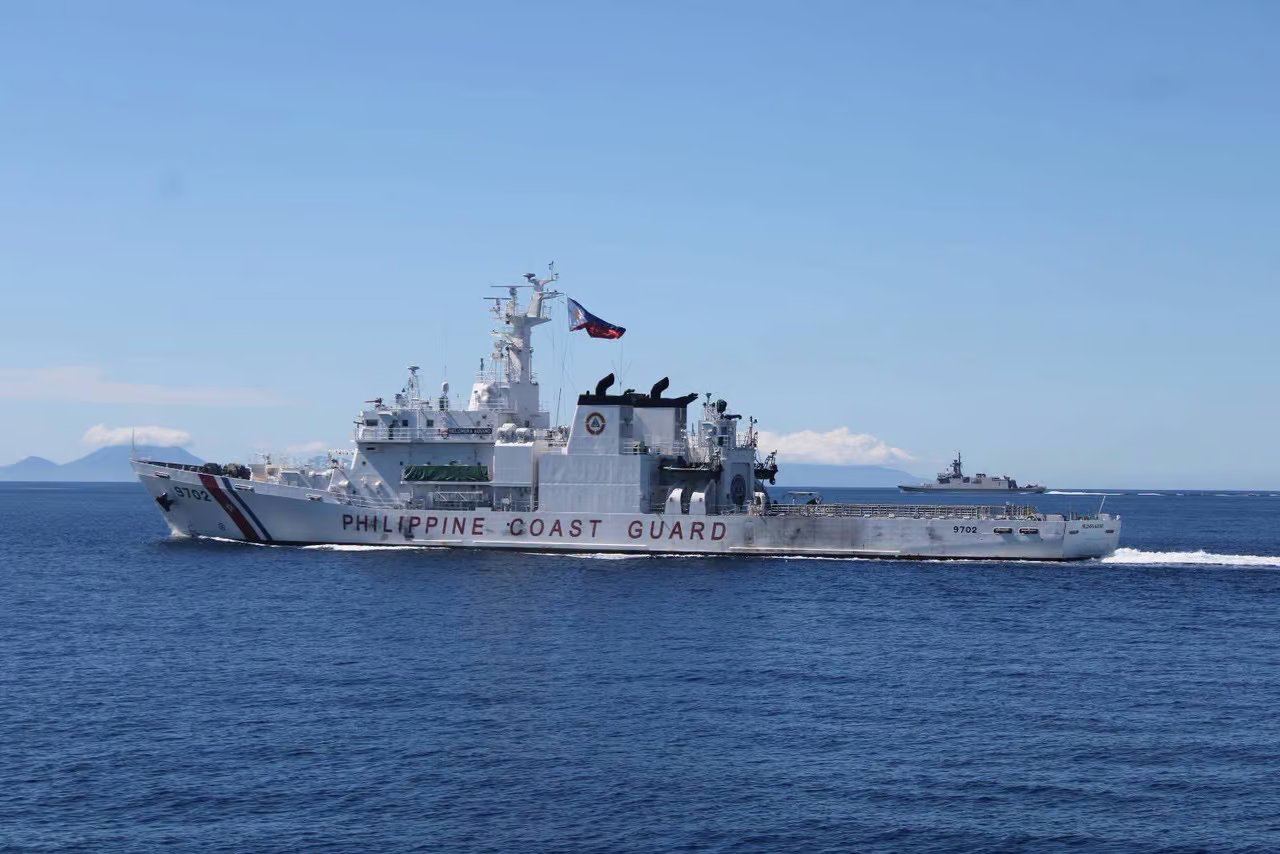
The Philippines has marked the 10th anniversary of the 2016 South China Sea Arbitral Tribunal Award issued by the Permanent Court of Arbitration, which found that China has no legal basis for claiming historic rights over much of the South China Sea under its so-called Nine-Dash Line.
Fourteen countries, including Australia, Japan, the UK and USA, issued a joint statement reaffirming the importance of the ruling and rejecting “any destabilising or unilateral actions, including by force or coercion, that threaten peace and stability in the region”.
“We underscore the importance of upholding freedom of navigation and overflight, as well as other internationally lawful uses of the sea, as reflected in UNCLOS,” the 14-nation joint statement said.
The European Union released a separate statement in support of the principles underpinning the award.
China, which declined to participate in the arbitration, has consistently rejected the ruling and has called on other countries to “respect China’s territorial sovereignty and maritime rights and interests,” while refraining from actions that it says undermine regional stability.
Despite the landmark ruling, confrontations in the South China Sea have continued and, in some cases, intensified over the past decade.
In June 2024, a confrontation between Chinese and Philippine personnel during a resupply mission to Second Thomas Shoal resulted in a Philippine sailor losing a thumb after China Coast Guard (CCG) personnel boarded and damaged Philippine rigid-hulled inflatable boats.
China has also increasingly deployed large coast guard cutters, some comparable in size to frigates, alongside People’s Liberation Army Navy (PLAN) warships to assert its illegal maritime claims and to challenge Philippine operations.
In another incident on 11 August 2025, a CCG cutter was reportedly severely damaged after colliding with the PLAN Type 052D destroyer Guilin while manoeuvring to obstruct the Philippine Coast Guard vessel BRP Suluan near Scarborough Shoal.
Meanwhile, the Philippine Navy (PN) continues its long-term modernisation programme, steadily expanding its fleet with frigates, corvettes and offshore patrol vessels built by the South Korean shipbuilder HD Hyundai Heavy Industries.
The fleet is set to grow further in coming years too. Following a meeting between Philippine Defense Secretary Gilberto Teodoro Jr. and his Japanese counterpart Shinjiro Koizumi, Teodoro said the long-discussed transfer of five Japan Maritime Self-Defense Force Abukuma-class destroyer escorts to the PN was effectively finalised.
“There are final administrative details still in the works, but consider it done,” he told local reporters, adding that the acquisition schedule and delivery timeline would be announced in coming weeks.
The PN’s amphibious capability is also expanding. Indonesian shipbuilder PT PAL recently launched the third Tarlac-class landing platform dock (LPD). The vessel carrying pennant number ‘603’ is the first of two follow-on ships ordered in 2022, with the fourth and final ship expected to be launched later this year.
The PN has operated the first two Tarlac-class LPDs since 2016.
The continued fleet expansion reflects Manila’s determination to strengthen maritime deterrence and improve its ability to sustain operations across its vast archipelagic waters, especially as tensions with China show little sign of easing.
by Chen Chuanren
