

Sypaq continues to expand its range of unmanned aerial vehicles (UAV), with the latest addition to its Corvo family being the tube-launched Vipera designed for intelligence, surveillance and reconnaissance tasks.
Australian-based Sypaq unveiled the Corvo Vipera at Land Forces 2026, held in Perth from 6-8 October. The name is Italian for “viper”, with the developer saying it embodies the qualities of speed, agility and precision. Despite its appearance at Land For es, it is still in early stages of development.
The 3D-printed Corvo Vipera can be launched from a vehicle, vessel or by dismounted troops. It is essentially a quadcopter with a folding boom. Options include a fibre-optic tethered command cable, and mesh IP-based radio frequency networking.
Sypaq stated, “Built on Sypaq’s combat-proven avionics, software and sensing technologies, Corvo Vipera delivers a powerful combination of autonomy, adaptability and mission-ready performance to meet the demands of the modern battlespace.”
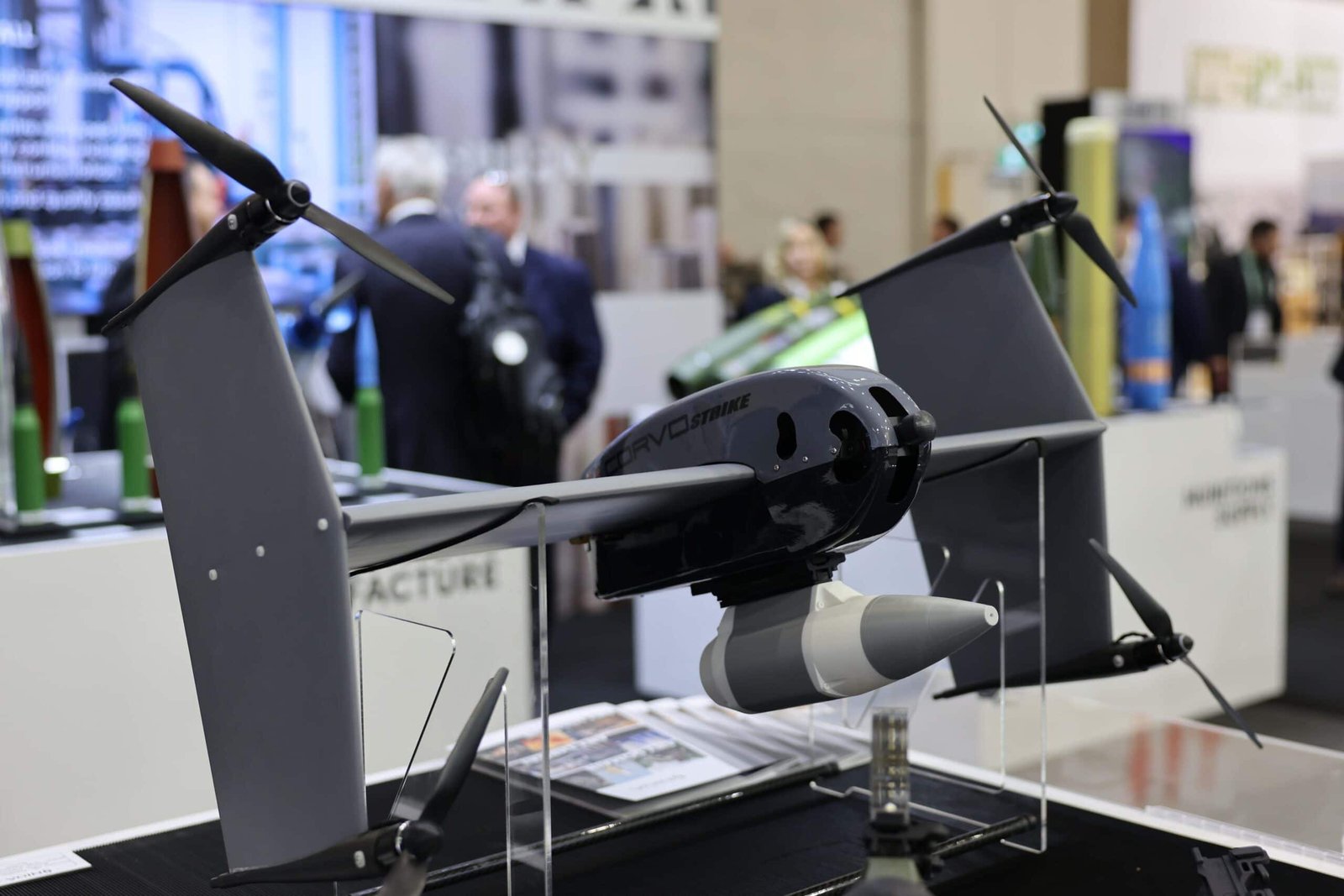
The company also has in development the Corvo Strike, which is designed to intercept hostile drones. It is being developed under Australia’s Mission Syracuse effort, and the programme is now around halfway through. Sypaq expects to demonstrate it in late 2027, and the complete system should be ready in Q1 of 2028.
It is not a hit-to-kill interceptor, but it employs a proximity fuse so that it detonates within metres of its target. Nioa will supply the warhead, fuse and the electronic safe and arm device for the Corvo Strike.

Also in Sypaq’s catalogue is the Corvo X, which started being distributed to the Australian Army earlier this year. Acquired under the DEF129 programme, the Corvo X with Guarda 70-DN day/night camera system weighs just 1.8kg and it folds down into a backpackable load.
The Corvo X is replacing the Wasp in army service, and Sypaq intends to continue evolving it over time to meet contemporary requirements.
Australia has not adopted the Corvo PDDS, but these low-cost, cardboard UAVs continue to be delivered to Ukraine to meet its voracious appetite for drones.
by Gordon Arthur, Perth
