

Sponsored by Blue Cross and Blue Shield Federal Employee Program
When is it quiet quitting and when is it playing it safe to keep your career?
When is it quiet quitting and when is it playing it safe to keep your career?
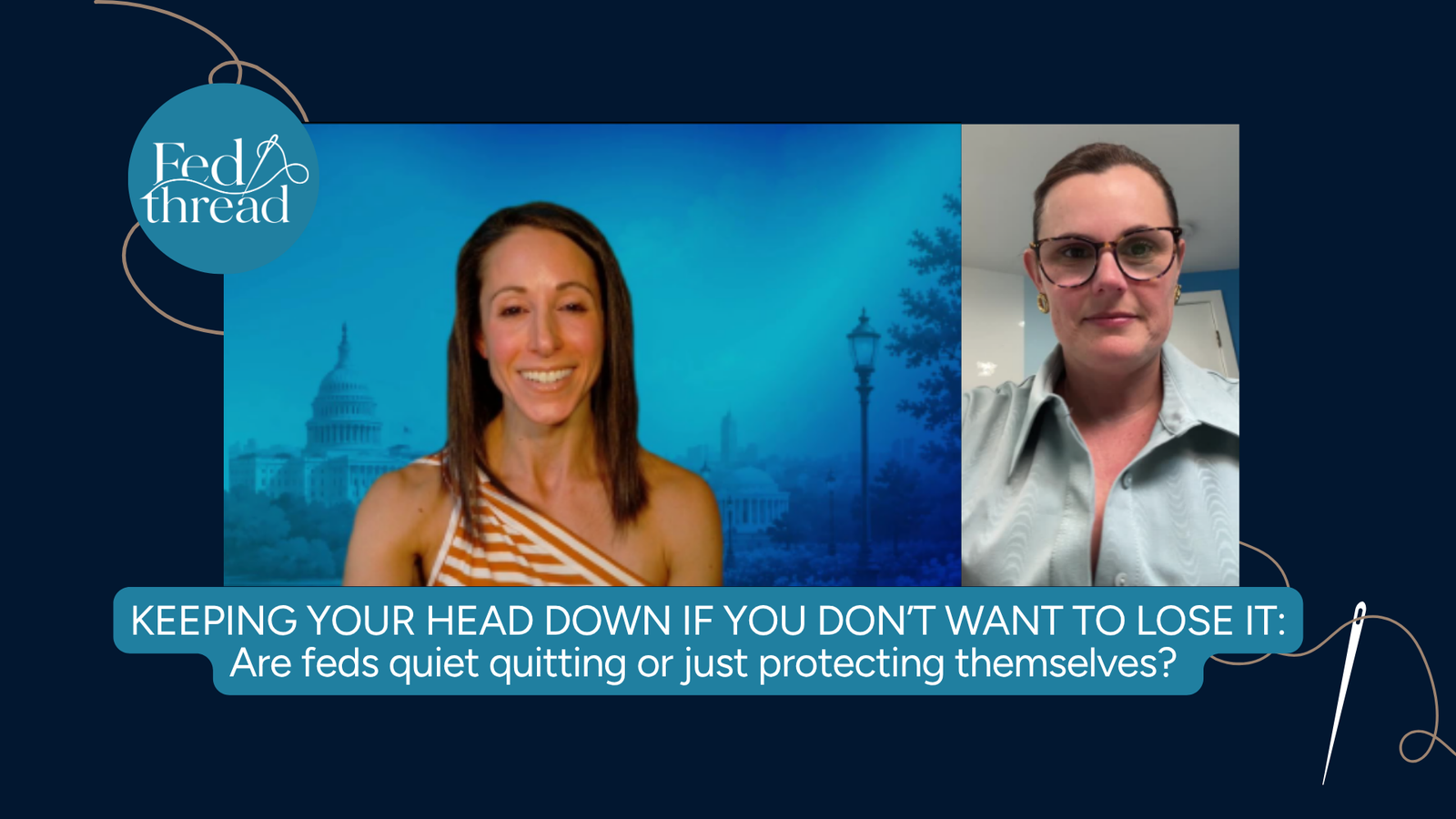
That’s the thread we pulled on this Fed Thread conversation with Love Rutledge, retired DoD senior executive and host of the FedUpward podcast. Federal employees can still care deeply about their mission while deciding it’s no longer worth sticking their neck out, she explains.
Rutledge says many feds are surviving more than thriving today, and when people feel less secure in their jobs, they may think twice before raising a red flag, volunteering for a difficult assignment or going the extra mile in their role. And when feds hold back to not rock the boat, it can come at a cost for the country.
The safer choice and its consequences
Rutledge says she doesn’t begrudge anyone for doing what they need to do to keep their job, as long as they aren’t being asked to do something unethical, immoral or illegal.
“You need a paycheck, you need health insurance,” she says. And when the perceived risk of speaking up is high, keeping your head down can feel like a rational choice.
But when employees stop taking risks or raising concerns, the consequences don’t necessarily stay inside the agency. Rutledge worries that well-informed public servants may be less likely to flag problems, which can affect policy development, implementation and ultimately the citizens government serves.
The Agency Brain Drain
Another layer to the problem is that the people who remain in government often shoulder much more of the workload. Rutledge says some federal employees are now doing the work of three or four people as agencies try to operate after significant departures. At the same time, the loss of experienced employees creates a gap in institutional knowledge that would have helped younger employees learn, train and grow.
When people lose the lived experience of what worked, what didn’t, and why, history has a tendency to repeat itself, says Rutledge, meaning government has to learn those lessons all over again. That can mean mistakes, rework, confusion and wasted taxpayer dollars.
Drawing your lines before you’re pushed past them
So what should a federal employee do when protecting their career starts to feel less like weathering a storm and more like compromising personal values? Rutledge’s advice is to decide where your boundaries are before you’re forced to question where they should be. She coaches clients to identify their personal and professional values, then think through what kind of work or circumstances would cross those non-negotiable lines. Having a plan, including how you’d support yourself if you eventually needed to leave, can make a difficult decision easier to make, without doing it in the middle of a crisis, Rutledge reasons.
She’ll be the first to tell you that sometimes keeping your head down is necessary. The key becomes knowing when to keep your head down, when to speak up, when to walk away, and how to make sure fear doesn’t make that decision for you.
For more of Rutledge’s take on the play-it-safe mentality reshaping the federal workforce and its unintended consequences, listen to the full Fed Thread episode.
Catch more conversations on podcast platforms, YouTube or on the Fed Thread hub page.
Copyright
© 2026 Federal News Network. All rights reserved. This website is not intended for users located within the European Economic Area.
