

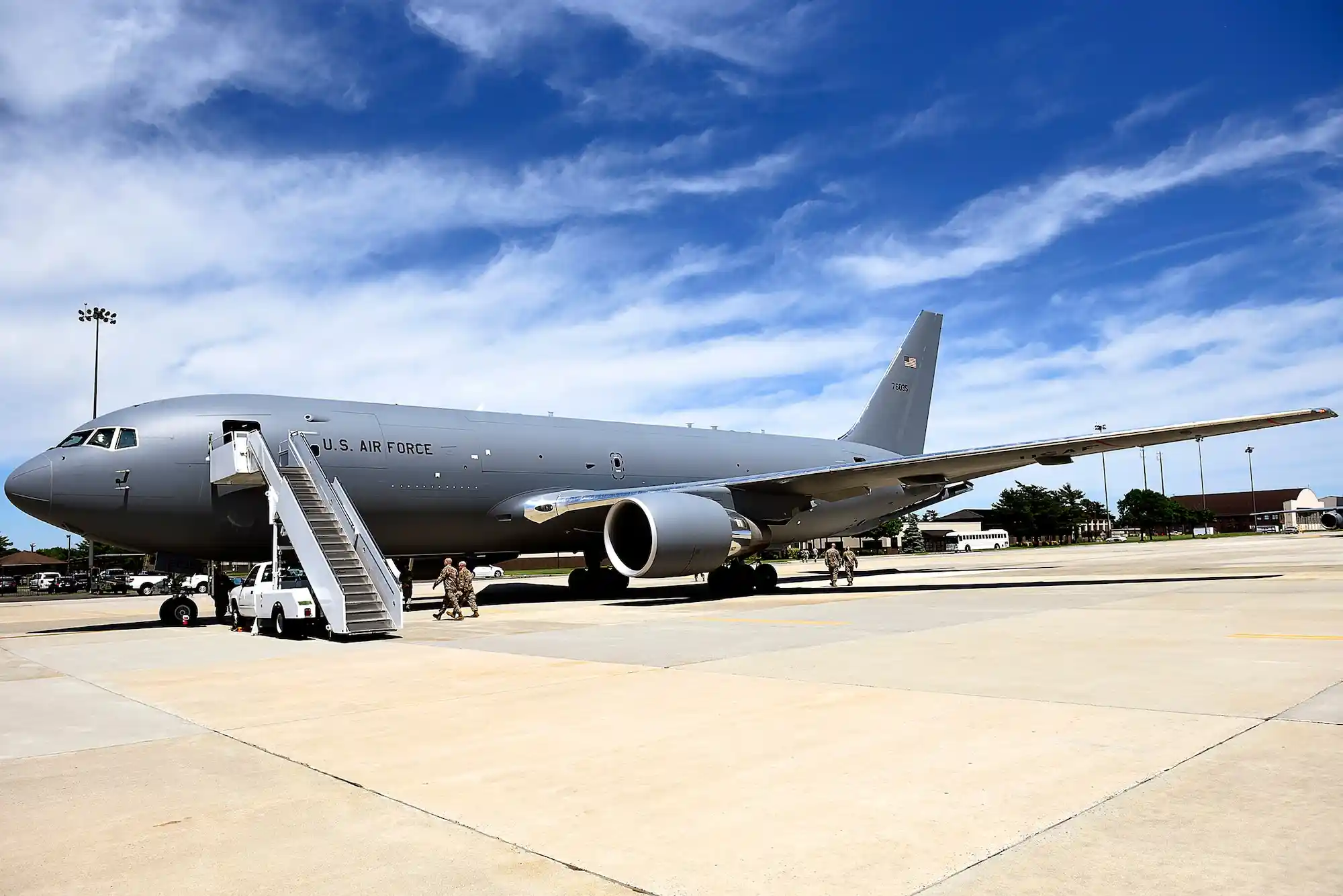
Defense Feeds, Washington — The U.S. Air Force has officially received its 105th KC-46A Pegasus tanker, marking another milestone in its ongoing modernization effort. This delivery reflects a broader push to strengthen global mobility and ensure sustained air operations across multiple theaters. As geopolitical tensions continue to rise, the importance of reliable aerial refueling capabilities has become more critical than ever.
Built by Boeing, the KC-46A Pegasus tanker is gradually replacing aging platforms like the KC-135 Stratotanker. Many of these legacy aircraft have been in service for decades, creating increasing maintenance challenges and operational limitations. The transition to a newer platform ensures improved efficiency, survivability, and long-term sustainability for U.S. airpower.
Expanding Global Refueling Capability
The KC-46A Pegasus tanker plays a critical role in extending the operational reach of U.S. and allied aircraft. By enabling mid-air refueling, it allows fighters, bombers, and surveillance platforms to remain airborne longer and operate far beyond their base locations. This directly enhances mission endurance and enables operations in regions with limited infrastructure.
This capability is especially important in regions like the Indo-Pacific, where distances between military bases are vast and logistical challenges are significant. Without tankers, sustaining continuous air operations in these areas would be extremely difficult. The KC-46A helps bridge that gap, ensuring aircraft can reach targets and return safely.
With 105 aircraft now delivered, the Air Force is steadily improving its ability to maintain a continuous global presence. This growing fleet supports both deterrence missions and rapid response scenarios. It also strengthens the U.S. military’s ability to operate simultaneously across multiple regions.
Advanced Systems and Multi-Role Flexibility
The KC-46A Pegasus tanker brings a significant upgrade over older refueling aircraft. It features modern avionics, secure communication systems, and improved fuel transfer technology designed for complex and contested environments. These enhancements allow it to operate more effectively in scenarios where older tankers would face limitations.
Beyond refueling, the aircraft offers true multi-role flexibility. It can transport cargo, carry personnel, and conduct aeromedical evacuation missions when needed. This versatility makes it a valuable asset not only in combat operations but also in humanitarian and disaster relief missions.
Its compatibility with a wide range of allied aircraft also strengthens coalition operations. This ensures seamless integration during joint missions involving NATO and other partner forces. In modern warfare, this level of interoperability is essential for coordinated and effective operations.

Overcoming Development Challenges
The KC-46A program has not been without its setbacks. One of the most notable issues involved the Remote Vision System, which is used by operators to guide refueling operations. Early versions of the system faced visibility and accuracy challenges, raising concerns during initial deployment phases.
In response, Boeing and the U.S. Air Force have worked extensively to implement upgrades and technical fixes. These improvements aim to enhance operator awareness and ensure safer, more precise refueling operations. The updated system is expected to significantly improve overall performance.
While these challenges slowed parts of the program, continued aircraft deliveries show growing confidence in the platform. The KC-46A is now steadily transitioning into a fully operational asset. This progress highlights the program’s long-term viability despite early obstacles.
Strategic Importance for Future Warfare
The KC-46A Pegasus tanker is more than just a support platform—it is a backbone of modern airpower. The ability to refuel aircraft mid-air allows the U.S. to project force globally without relying heavily on forward bases. This provides a significant strategic advantage in unpredictable and rapidly evolving conflict scenarios.
The Air Force plans to acquire a total of 179 KC-46A tankers, ensuring long-term sustainability of its refueling fleet. This expansion is essential as operational demands continue to grow across different regions. A larger and more capable tanker fleet ensures readiness for both current and future threats.
With the 105th aircraft now delivered, the program continues to gain momentum. The Pegasus tanker is set to play a central role in U.S. military operations for decades to come. It represents a critical investment in maintaining global reach, flexibility, and strategic dominance.
