

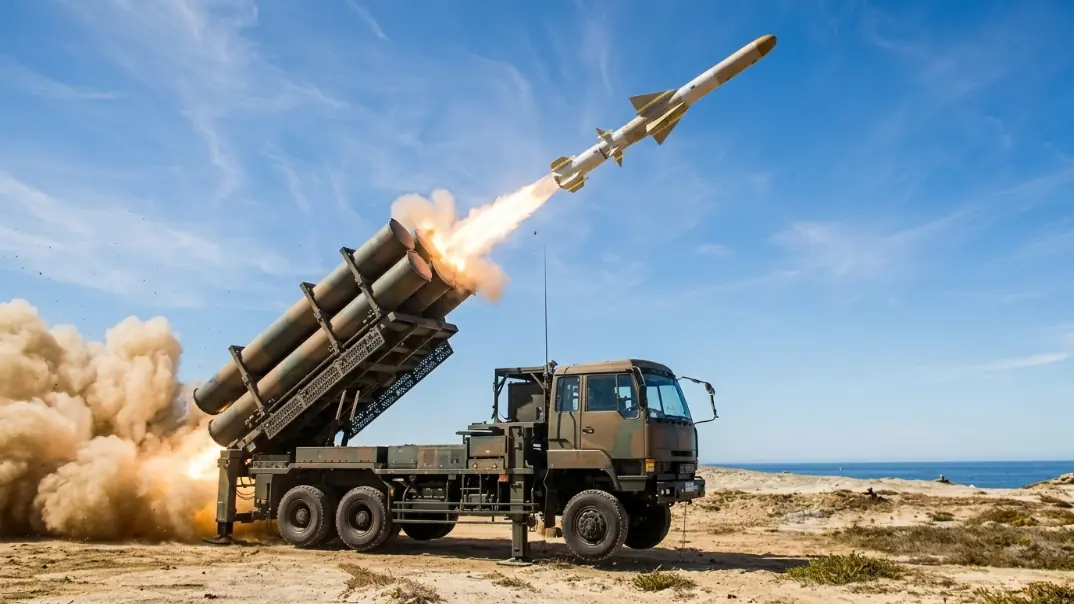
Defense Feeds, Manila — Japan has conducted its first overseas live-fire launch of the Japan Type 88 missile launch expands regional defense presence during the Balikatan 2026 military exercises in the Philippines. The event marks a significant milestone for Japan’s evolving defense posture and highlights growing security cooperation between Tokyo, Manila and the United States in the Indo-Pacific region.
The launch involved Japan’s Type 88 anti-ship missile system, a coastal defense weapon designed to target hostile naval vessels at extended ranges. Conducting the exercise outside Japanese territory reflects a broader shift in regional military cooperation as countries strengthen interoperability in response to growing maritime tensions.
Balikatan 2026 has become one of the largest multinational military exercises in the region, involving extensive land, air and maritime operations. Japan’s participation in live-fire missile drills demonstrates how Tokyo is expanding its operational engagement beyond traditional homeland defense activities.
Type 88 Missile System Demonstrates Coastal Defense Capability
The Type 88 anti-ship missile is a mobile coastal defense system developed for maritime denial operations. Mounted on transporter vehicles, the system is designed to rapidly deploy along coastlines and engage enemy surface vessels approaching strategic areas.
The missile provides Japan with a flexible anti-ship capability capable of defending key maritime routes and island territories. Its mobility allows units to reposition quickly, making targeting more difficult during conflict scenarios. This type of coastal missile defense has become increasingly important across the Indo-Pacific.
Conducting the launch in the Philippines also allowed participating forces to practice joint operational coordination. Modern military exercises increasingly focus not only on weapons performance but also on communication, logistics and integrated command structures between allied forces.
The exercise highlights how anti-ship missile systems are becoming central to regional defense planning. Many countries in the Indo-Pacific are strengthening coastal defense networks as concerns grow over freedom of navigation and maritime security.

Japan Expands Regional Security Cooperation
Japan’s participation in Balikatan 2026 reflects the country’s evolving defense policy and growing regional security engagement. In recent years, Tokyo has expanded military cooperation with partners across the Indo-Pacific while increasing defense investment and operational readiness.
The Philippines has emerged as one of Japan’s key regional security partners. Both countries share concerns regarding maritime security and the protection of strategic sea lanes. Expanding joint exercises helps improve interoperability and strengthens deterrence capability.
The overseas launch of the Type 88 missile also signals a shift in how Japan approaches military operations. Historically focused primarily on territorial defense, Japan is now taking a more active role in regional security initiatives alongside allied nations.
In addition, closer cooperation between Japan, the Philippines and the United States reflects broader efforts to build integrated defense networks across the region. Joint training and operational coordination are increasingly viewed as essential for responding to emerging security challenges.
Indo-Pacific Security Environment Continues to Evolve
The live-fire missile exercise comes at a time of rising strategic competition across the Indo-Pacific. Maritime disputes, expanding naval activity and growing missile capabilities are driving countries to strengthen defensive and deterrence measures throughout the region.
Coastal defense missile systems like the Type 88 are gaining renewed importance because they offer a relatively mobile and survivable means of controlling maritime access. Combined with surveillance and naval assets, such systems contribute to layered regional defense strategies.
Military exercises such as Balikatan are also becoming more sophisticated and multinational in scale. They increasingly simulate realistic operational scenarios involving missile defense, amphibious operations and joint force coordination. This reflects the changing nature of modern regional security planning.
Japan’s decision to conduct its first overseas missile launch carries symbolic as well as operational significance. It demonstrates growing confidence in participating more directly in multinational defense activities while reinforcing strategic partnerships in Southeast Asia.
Looking ahead, regional military cooperation is expected to continue expanding as countries adapt to evolving security challenges. The Type 88 launch during Balikatan 2026 highlights how defense collaboration in the Indo-Pacific is entering a more advanced and operationally integrated phase.
As strategic competition intensifies, exercises involving live-fire missile systems and multinational coordination are likely to become increasingly common. Japan’s participation signals a broader transformation in regional defense dynamics and alliance cooperation.
