

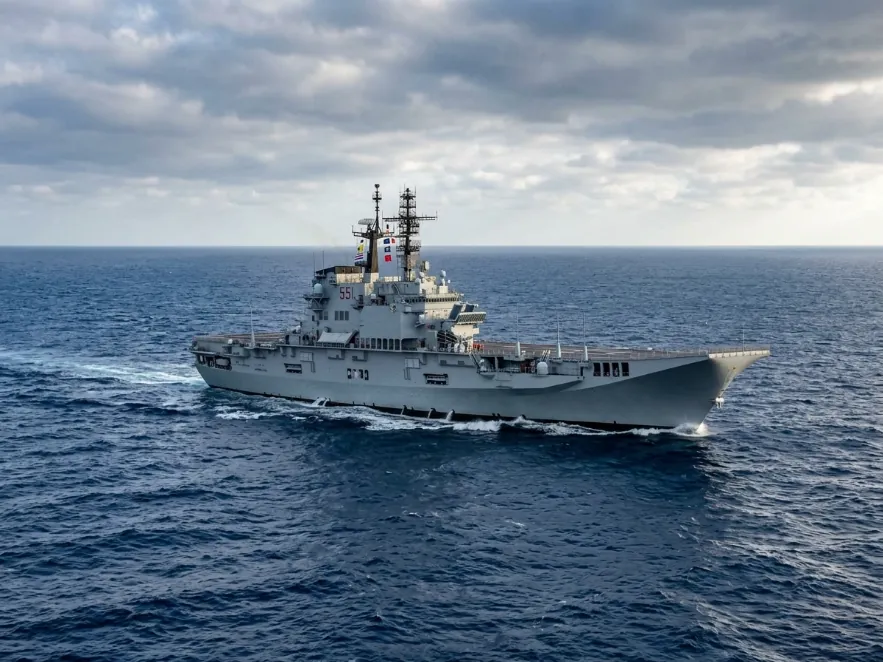
Defense Feeds, Rome — Italy has approved a major defense transfer as the Italy Giuseppe Garibaldi carrier transfer boosts Indonesia Navy following a final parliamentary vote.
The decision clears the way for the former Italian aircraft carrier to be handed over to Indonesia, marking a significant development in bilateral defense cooperation. The move reflects both countries’ strategic interests in strengthening maritime capabilities and expanding regional partnerships.
The Giuseppe Garibaldi, once a flagship of the Italian Navy, has served for decades as a key platform for air operations at sea. Its transfer to Indonesia represents a notable shift in capability for Jakarta, which has long sought to enhance its naval reach. The agreement also highlights the growing importance of naval assets in maintaining security across vast maritime regions.
For Italy, the decision to transfer the carrier comes as part of a broader effort to modernize its fleet. Decommissioning older platforms allows for investment in newer technologies while still contributing to allied capabilities through transfers. The focus now turns to how Indonesia will integrate the vessel into its existing naval structure.
A Major Capability Upgrade for Indonesia Navy
The acquisition of the Giuseppe Garibaldi is expected to significantly enhance Indonesia’s naval capabilities. As an aircraft carrier, the vessel provides the ability to project air power at sea, a capability that few countries in the region possess. This marks a major step forward in Indonesia’s efforts to modernize its navy.
The carrier can support a range of aircraft, enabling missions such as maritime patrol, surveillance and potentially combat operations. This adds a new dimension to Indonesia’s operational flexibility. It also strengthens the country’s ability to respond to both security threats and humanitarian missions.
Indonesia’s geographic position as an archipelagic nation makes maritime capability particularly important. With thousands of islands to manage, maintaining a strong naval presence is essential for national security. The addition of an aircraft carrier supports this objective by extending operational reach.
However, integrating such a platform will require careful planning. Training personnel, establishing maintenance systems and adapting operational doctrine will all be critical. Successfully incorporating the carrier into the fleet will determine its long-term effectiveness.

Strategic Cooperation Between Italy and Indonesia
The transfer of the Giuseppe Garibaldi reflects deepening defense ties between Italy and Indonesia. Such agreements go beyond simple equipment transfers, often involving training, technical support and long-term cooperation. This strengthens the relationship between the two countries.
For Italy, the deal provides an opportunity to support a partner nation while managing its own fleet transition. It also reinforces its role within the broader defense export and cooperation landscape. Sharing capabilities in this way contributes to collective security.
Indonesia benefits not only from acquiring the platform but also from access to expertise. Learning from Italy’s experience in operating the carrier will be essential for a smooth transition. This exchange of knowledge enhances the overall value of the agreement.
The partnership also reflects a wider trend in international defense cooperation. Countries are increasingly working together to address shared security challenges. Such collaborations help build trust and improve interoperability.
Implications for Regional Maritime Balance
The introduction of an aircraft carrier into Indonesia’s fleet is likely to have broader implications for regional security. Southeast Asia is an area of growing strategic importance, with increasing competition over maritime routes and resources. Enhancing naval capability can influence the balance of power.
Indonesia’s move may encourage other countries in the region to strengthen their own naval forces. This could lead to increased investment in maritime capabilities across Southeast Asia. At the same time, it highlights the importance of maintaining stability in the region.
From a strategic perspective, the carrier provides Indonesia with greater flexibility in responding to various scenarios. It can support both defense operations and non-military missions such as disaster relief. This versatility is a key advantage in modern naval strategy.
Looking ahead, the success of this transfer will depend on effective integration and sustained support. Ensuring that the vessel is fully operational and aligned with national strategy will be essential. If implemented successfully, the Giuseppe Garibaldi could become a central element of Indonesia’s naval power.
The approval of this transfer underscores the evolving nature of global defense cooperation. As nations seek to enhance their capabilities, partnerships like this play an increasingly important role. For Indonesia, the acquisition represents a significant step toward a more capable and modern navy.
