

Key Points
- SpearUAV says it has nearly 1,000 Viper 300 loitering munition drones ready for delivery worldwide, without naming specific customers or countries.
- The Israeli company disclosed a $20 million contract for the system in December 2024, with options to expand to about $60 million.
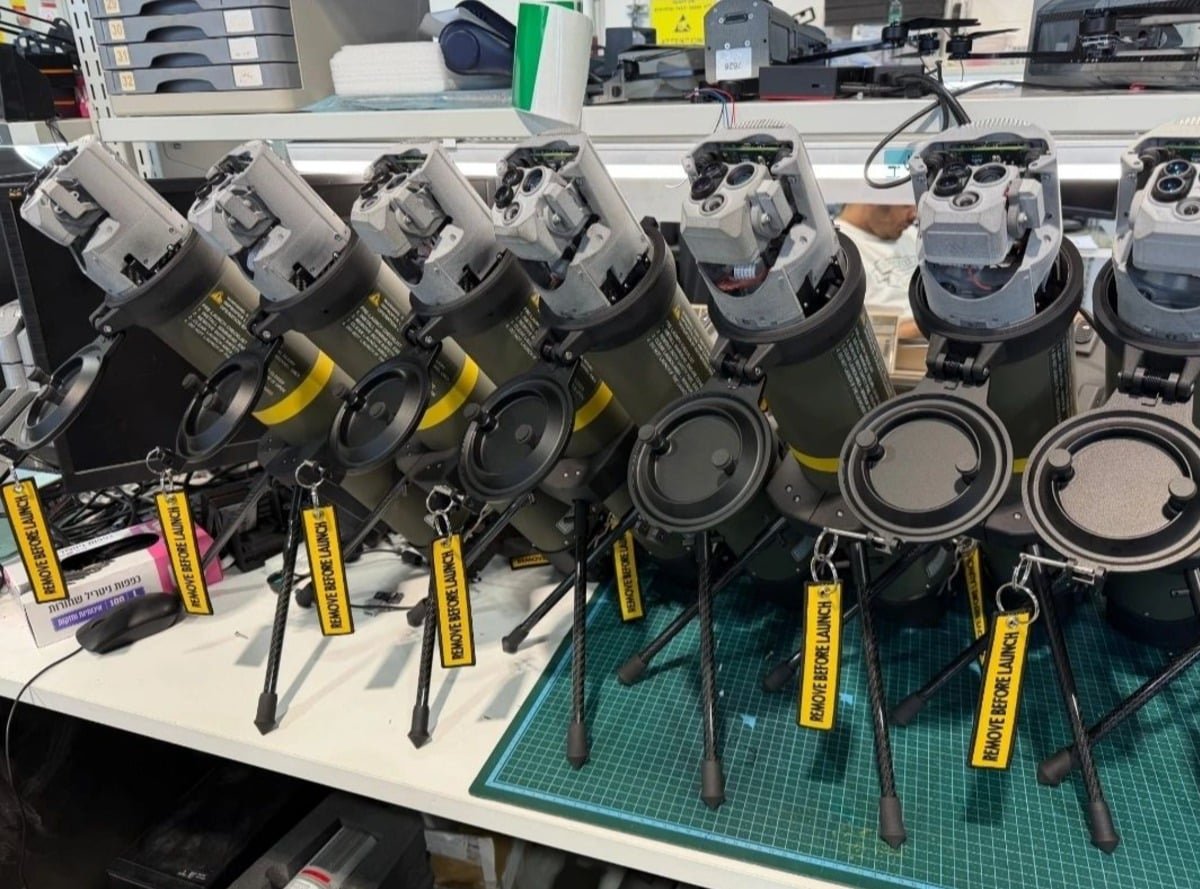
Israeli drone maker SpearUAV says it has nearly 1,000 Viper 300 loitering munition systems ready for delivery to customers around the world, a production milestone the Tel Aviv-based company announced without naming which countries or units are receiving the systems.
The Viper 300 is a small, capsule-launched drone that soldiers can fire either on foot or from an armored vehicle, then use to loiter over an area, identify a target using onboard artificial intelligence, and strike it directly.
SpearUAV designed the system for infantry squads and armored units, positioning it as an alternative to larger, fixed-wing attack drones for close-in engagements. The company said its production has reached “hundreds of systems a month,” though it did not specify an exact current output rate or break down the nearly 1,000-unit figure by customer or region.
– ADVERTISEMENT – CONTINUE READING BELOW –
The drone weighs 2.8 kilograms (6.2 pounds) including its launch capsule and payload, reaches speeds of about 27 meters per second (60 mph), and has a range of 5 kilometers (3.1 miles) with up to 20 minutes of flight time. Unlike fixed-wing drones, the Viper 300 uses a quadcopter design that lets it hover in place, which SpearUAV has said gives it an advantage in dense urban terrain or when tracking a moving target closely rather than flying past it.
SpearUAV disclosed its first major publicly confirmed contract for the system in December 2024, when it announced a $20 million deal with an undisclosed customer that included options to expand the agreement to roughly $60 million. The company said at the time it expected to begin deliveries under that contract in 2025 and described it as part of a record year for new orders. SpearUAV has also built a version of the launcher, called the Multi Canister Launcher, that lets militaries mount several Viper drones directly onto armored vehicles, and the Viper 300 has separately been included in Rafael’s pitch to the United Kingdom’s Ministry of Defence for an autonomous resupply program known as Project Theseus.
The Viper 300 sits within a broader family of SpearUAV systems that includes the smaller Viper 40, the larger Viper 750 built for naval use, and the Viper I, an interceptor version designed to shoot down drones and other aerial threats rather than strike ground targets. SpearUAV has not disclosed the total value of contracts tied to the nearly 1,000 Viper 300 systems it now says are ready for delivery, nor identified any of the international customers driving that order volume.
