


Imagine an aircraft crossing an entire country before conventional fighter jets can even reach the halfway point. No cockpit. No visible pilot. Just a hypersonic machine racing through the atmosphere at six times the speed of sound.
That is the idea behind the Lockheed Martin SR-72, a proposed aircraft designed to push American aerospace technology into a new era. Often associated with the nickname “Son of Blackbird,” this ambitious project could eventually succeed the legendary SR-71 Blackbird as a high-speed intelligence, surveillance, and reconnaissance platform.
But there is a twist.
The SR-72 became even more famous after audiences saw a remarkably futuristic aircraft in Top Gun: Maverick. The movie’s Darkstar looked convincing enough to spark questions about whether America already possessed a secret Mach 10 aircraft. Its connection to Lockheed Martin’s Skunk Works only added to the speculation.
So, is the SR-72 actually real?
The answer requires separating three things: a genuine aerospace development concept, the fictional Darkstar, and the aircraft’s still-unconfirmed operational status. Lockheed Martin publicly introduced its SR-72 concept in 2013, proposing an aircraft capable of reaching approximately Mach 6. However, no publicly verified operational aircraft has emerged.
Its proposed technology is fascinating, particularly the combination of turbine and scramjet propulsion. If successful, it could transform how the U.S. military collects intelligence across enormous distances.
And perhaps the biggest question isn’t simply how fast it can fly. It’s whether an aircraft traveling that quickly can remain useful, affordable, and practical in modern warfare.
What Is the Lockheed Martin SR-72 Darkstar?
The Lockheed Martin SR-72 is a proposed hypersonic aircraft designed to reach speeds approaching Mach 6, roughly twice the maximum speed of its famous predecessor, the SR-71 Blackbird.
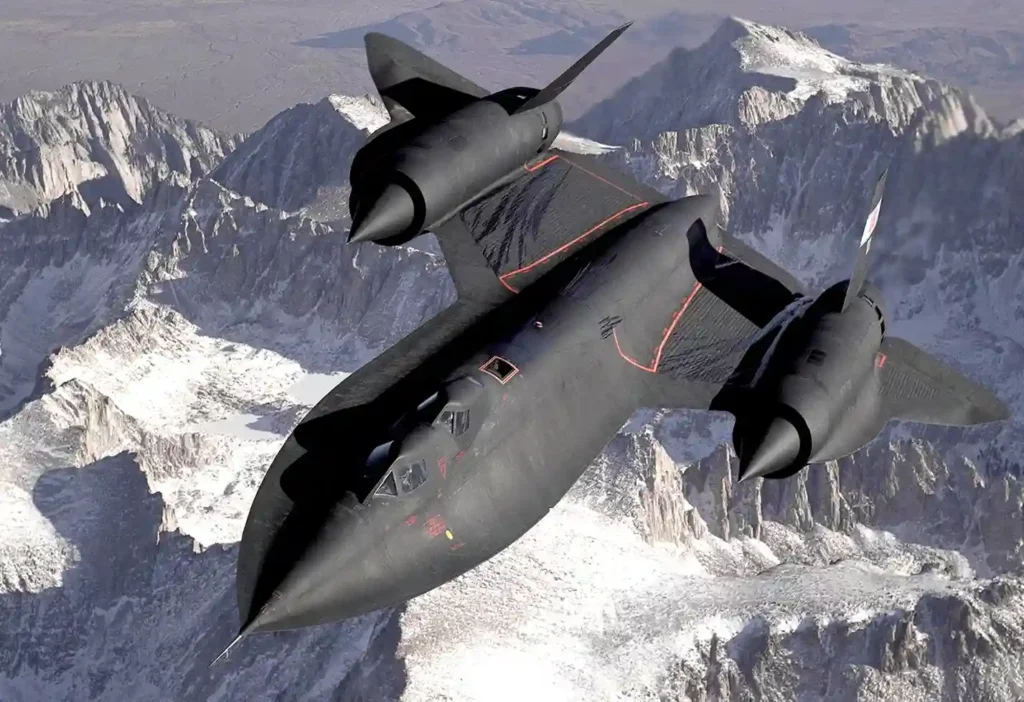
Developed as a concept by Lockheed Martin’s advanced development division, Skunk Works, it represents a potential new generation of high-speed military aviation.
But why does America need another reconnaissance aircraft?
The answer lies in the changing nature of modern warfare. Satellites provide valuable intelligence, while stealth drones can monitor hostile territory for extended periods. However, both have limitations. Satellites follow predictable orbital paths, and slower surveillance aircraft may struggle to operate inside heavily defended airspace.
The SR-72 concept approaches this problem differently. Instead of remaining over one location for hours, it would use extreme speed to reach distant areas, collect intelligence, and leave before conventional defenses could easily respond.
Lockheed Martin first publicly discussed the SR-72 in 2013. The company envisioned an aircraft capable of sustained hypersonic flight, using an advanced propulsion system combining turbine and scramjet technologies.
Its proposed missions extend beyond traditional reconnaissance. The aircraft could potentially support intelligence collection, surveillance, and high-speed strike operations, although these capabilities have not been publicly demonstrated.
Another important distinction concerns its crew. The SR-72 has been discussed as an uncrewed platform, eliminating the need to place pilots inside an aircraft exposed to extreme temperatures and acceleration.
Think of it as a reconnaissance aircraft built around one central advantage: arriving extraordinarily fast.
Still, the SR-72 remains a development concept rather than a publicly confirmed operational aircraft. Its eventual configuration, capabilities, and service timeline remain uncertain.
That distinction matters. The idea is real, but the finished machine has yet to be publicly verified.
Is the SR-72 Darkstar a Real Aircraft or Just a Movie Concept?
The SR-72 and Darkstar are often treated as the same aircraft. They aren’t. Although both are connected to Lockheed Martin’s Skunk Works, their origins and purposes are quite different.
The Lockheed Martin SR-72 is a genuine aerospace concept, publicly introduced in 2013. The company proposed a hypersonic aircraft capable of reaching approximately Mach 6, with reconnaissance and potential strike capabilities. However, its publicly confirmed development milestones do not establish that a completed aircraft has flown.
Darkstar, meanwhile, belongs to Hollywood.
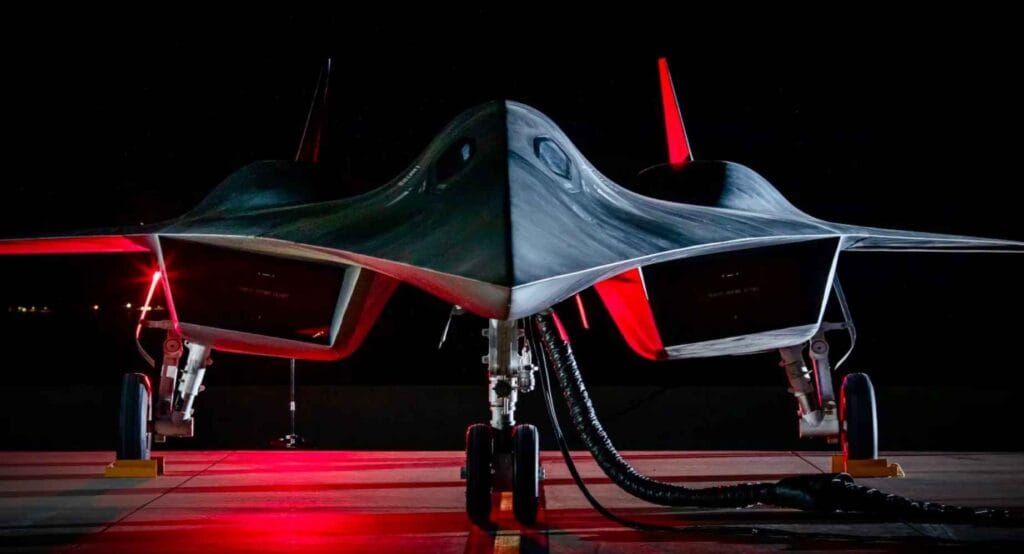
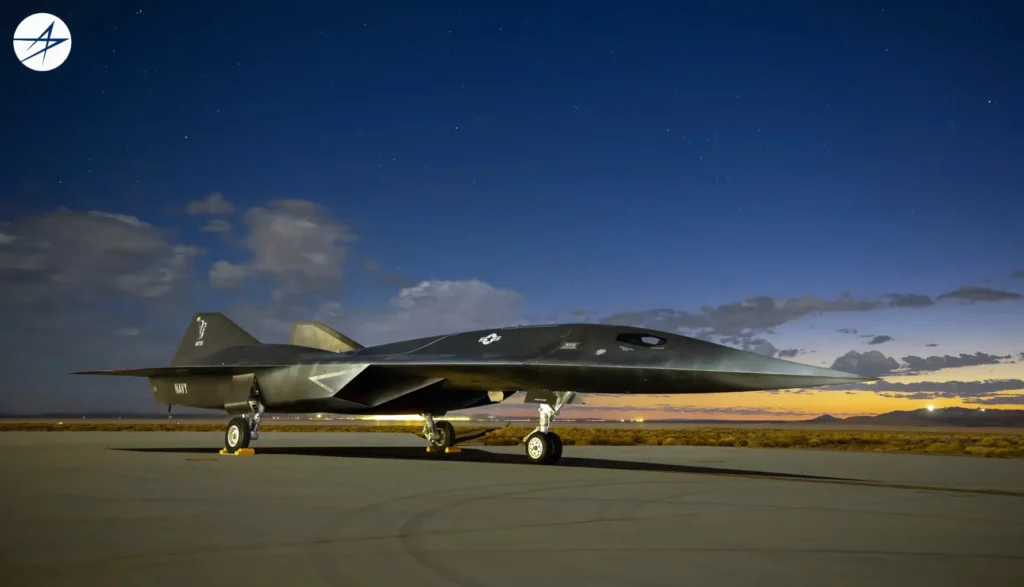
In Top Gun: Maverick (2022), Tom Cruise’s character pilots an experimental hypersonic aircraft called Darkstar. Its futuristic design looks remarkably convincing, particularly its long, blended fuselage and sharply sculpted nose.
Here’s where things get interesting.
Lockheed Martin’s Skunk Works engineers actually helped the filmmakers develop Darkstar’s appearance. Their involvement brought genuine aerospace engineering knowledge into the production, making the fictional aircraft look closer to a plausible next-generation military design.
But that doesn’t make Darkstar a working SR-72 prototype.
| Feature | SR-72 concept | Top Gun Darkstar |
| Origin | Lockheed Martin | Top Gun: Maverick |
| Status | Proposed aircraft | Fictional aircraft |
| Proposed speed | Mach 6 | Mach 10 |
| Crew | Uncrewed concept | Piloted |
| Main purpose | Reconnaissance and potential strike | Experimental flight testing |
The movie also takes considerable creative freedom. Its Mach 10 performance is a fictional achievement, not a verified capability of Lockheed Martin’s proposed aircraft.
So, what should you believe?
The SR-72 is not simply a Hollywood invention. It is a real hypersonic aircraft concept with publicly documented engineering ambitions. Darkstar is a cinematic interpretation inspired by similar aerospace ideas.
The distinction is important: engineering inspiration is not proof of an operational aircraft.
And that leaves one fascinating question: what would it actually take to build a jet capable of flying at Mach 6?
How Fast Is the SR-72, and Can It Really Reach Mach 6?
Six times the speed of sound. Let that sink in for a moment. The proposed Lockheed Martin SR-72 would reach approximately Mach 6, placing it firmly in the hypersonic flight category.
But what does that number actually mean?
At standard sea-level conditions, the speed of sound is approximately 1,235 km/h (767 mph). Multiplying that figure by six gives roughly 7,410 km/h (4,602 mph). However, the actual speed represented by Mach 6 changes with atmospheric temperature and altitude.
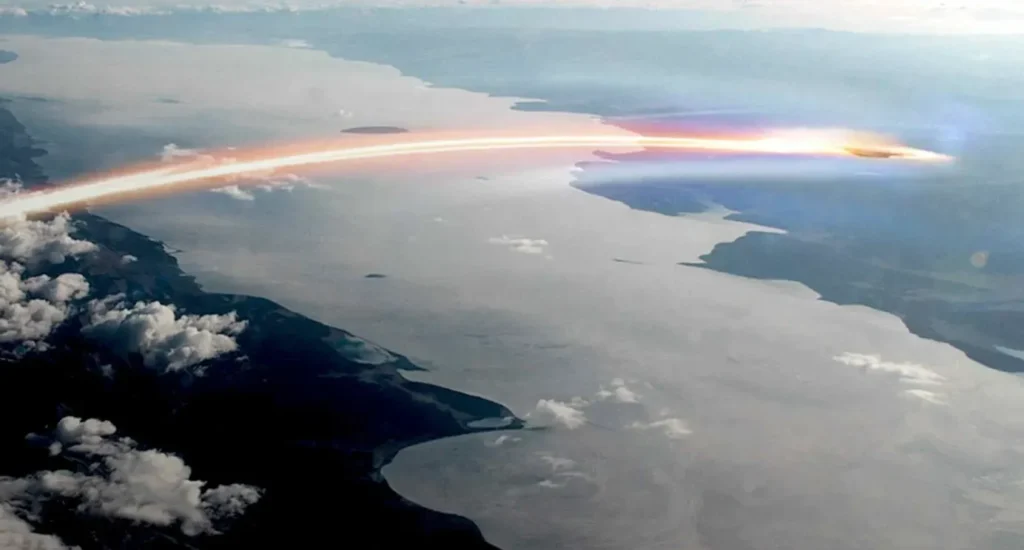
Lockheed Martin’s original 2013 announcement described Mach 6 as the aircraft’s intended performance target, approximately twice the speed of the SR-71 Blackbird.
Consider what that means operationally. An aircraft traveling at 7,410 km/h could theoretically cover 1,000 kilometers in just over eight minutes, assuming constant speed and a straight-line flight path. That’s an extraordinary advantage for time-sensitive reconnaissance missions.
SR-72 vs. SR-71: How Much Faster Would It Be?
The SR-71 already pushed conventional aircraft engineering to remarkable limits. Its successor concept aims considerably higher.
| Aircraft | Maximum speed | Approximate speed |
| SR-71 Blackbird | Mach 3.3 | 3,540 km/h |
| Proposed SR-72 | Mach 6 | 7,410 km/h |
| Top Gun Darkstar | Mach 10 | 12,350 km/h (fictional) |
Speed conversions are illustrative sea-level equivalents, not aircraft-specific measured speeds.
However, reaching Mach 6 involves more than installing powerful engines. Atmospheric friction creates enormous heat, while aerodynamic forces place extraordinary demands on the aircraft’s structure.
At these speeds, even small engineering problems can become serious.
The SR-72’s Mach 6 figure should therefore be understood as a proposed design objective, not a publicly demonstrated achievement. No verified SR-72 flight has established that performance.
Still, the ambition is significant. If engineers can make sustained Mach 6 flight practical, America’s next-generation reconnaissance aircraft could operate on an entirely different timetable.
And the secret behind that ambition lies in its unusual engine design.
What Engine Powers the SR-72? Understanding Its Scramjet Technology
Building an aircraft that flies at Mach 6 is difficult. Building an engine that can accelerate it from a runway to that speed is an entirely different challenge.
That’s why the Lockheed Martin SR-72 concept relies on an unusual propulsion arrangement called a turbine-based combined-cycle (TBCC) engine. Rather than depending on one conventional jet engine, this system combines turbine propulsion with a high-speed ramjet or scramjet configuration.
The idea is straightforward. Different engines perform better at different speeds.

Why Does the SR-72 Need a Combined-Cycle Engine?
Conventional turbine engines work well during takeoff and at ordinary supersonic speeds. However, their operating limits make them unsuitable for sustained Mach 6 flight.
Scramjets have the opposite problem. They are designed for hypersonic conditions but cannot independently accelerate an aircraft from a stationary position.
According to DARPA, traditional turbine engines reach their practical speed limits around Mach 2.5, while scramjets generally require speeds above approximately Mach 3.5 to operate effectively.
The SR-72’s proposed solution is to combine these technologies into one integrated propulsion system.
How the SR-72’s TBCC Engine Would Work
The proposed propulsion arrangement can be understood through three stages:
1. Turbine-powered acceleration
At takeoff and lower speeds, a conventional turbine engine provides thrust. It accelerates the aircraft through the runway departure and initial climb, gradually approaching the transition to high-speed propulsion.
2. Transition to ramjet propulsion
As the aircraft approaches the higher supersonic range, airflow is redirected through the high-speed propulsion system. The turbine’s contribution decreases as the ramjet takes over.
3. Scramjet-powered hypersonic flight
At extreme speeds, supersonic combustion becomes essential. The scramjet maintains airflow through its combustion chamber at supersonic velocity, supporting the proposed Mach 6 performance.
This arrangement aims to give the aircraft the flexibility of a conventional jet and the speed potential of hypersonic propulsion.
Why Is Scramjet Technology So Difficult?
A scramjet doesn’t use rotating compressor blades like a conventional jet engine. Instead, it relies on the aircraft’s forward motion to compress incoming air before combustion.
That sounds simpler, but the engineering is anything but.
At hypersonic speeds, incoming air becomes extremely hot. Engineers must manage combustion stability, pressure, airflow, and temperatures that can damage conventional materials. Even a small disruption can affect the entire propulsion system.
NASA continues researching these problems, particularly the transition between turbine and scramjet operating modes.
The real challenge isn’t simply making an engine produce enough thrust. It’s getting two fundamentally different propulsion systems to work together reliably.
If Lockheed Martin can overcome these obstacles, the SR-72 could demonstrate something remarkable: an aircraft capable of taking off like a conventional jet and eventually cruising at hypersonic speeds.
That’s the technology separating this ambitious concept from an ordinary high-speed aircraft.
How Does the SR-72 Compare to the SR-71 Blackbird?
The SR-71 Blackbird earned its reputation by doing something extraordinary: flying faster and higher than almost any aircraft before it. Decades later, the Lockheed Martin SR-72 concept aims to take that achievement considerably further.
But the relationship between these aircraft goes beyond speed. Both represent attempts to solve the same military problem: collecting intelligence in dangerous airspace without giving enemy defenses enough time to respond.
The original SR-71 emerged during the Cold War. Following the loss of a U-2 reconnaissance aircraft over Soviet territory in 1960, American planners wanted an aircraft that could operate at extreme altitude and outrun many contemporary threats.
The result was an engineering landmark.
The SR-71 first flew on December 22, 1964, and entered operational service in 1966. Powered by two Pratt & Whitney J58 engines, it could exceed Mach 3 while operating above 80,000 feet. Its crew consisted of a pilot and reconnaissance systems officer.
The proposed SR-72 takes a different approach.
| Specification | SR-71 Blackbird | SR-72 concept |
| Manufacturer | Lockheed | Lockheed Martin |
| First flight | 1964 | Not publicly confirmed |
| Maximum speed | Mach 3+ | Mach 6 target |
| Propulsion | Two J58 engines | Proposed combined-cycle system |
| Crew | Two | Uncrewed concept |
| Primary mission | Strategic reconnaissance | ISR and potential strike |
| Operational status | Retired | Not publicly confirmed |
The biggest difference is propulsion. The SR-71 used sophisticated turbo-ramjet technology, while the SR-72 proposes combining turbine and scramjet propulsion for hypersonic flight.
There’s also a potential shift in mission flexibility. An uncrewed SR-72 could avoid exposing pilots to the extreme temperatures and pressures associated with hypersonic flight.
However, the SR-71 has something its proposed successor cannot yet claim: decades of operational experience.
The Blackbird proved what high-speed reconnaissance could accomplish. The SR-72 must prove that the next generation can go considerably further.
What Missions Could America’s Mach 6 Spy Plane Perform?
Speed alone would make the Lockheed Martin SR-72 impressive. Its real military value, however, could come from what that speed allows it to accomplish.
The aircraft was primarily envisioned as a high-speed intelligence, surveillance, and reconnaissance (ISR) platform. In practical terms, that means collecting information over distant or heavily defended areas before an adversary can react.
1. Rapid Intelligence Gathering
The SR-72 could potentially monitor military installations, airfields, naval facilities, and missile deployments. Traveling at approximately Mach 6 would allow it to cover enormous distances in a relatively short period.
This matters when intelligence becomes outdated quickly. A mobile missile launcher, for example, might relocate before a slower surveillance aircraft reaches the area. A hypersonic platform could shorten that collection window and deliver more timely information to military commanders.
2. Reconnaissance in Contested Airspace
Another possible mission involves collecting intelligence near advanced enemy air-defense networks. High speed could reduce the time an aircraft spends inside a defended region, making interception more difficult.
However, Mach 6 would not make the SR-72 invisible or invulnerable. Modern radar networks, infrared sensors, and advanced interceptors could still present serious challenges. Survivability would depend on the aircraft’s altitude, signature, flight profile, and the capabilities of opposing defenses.
3. Potential High-Speed Strike Missions
Lockheed Martin’s concept has also been associated with potential strike capabilities. A future version might carry weapons against time-sensitive targets, although its actual armament and mission configuration have not been publicly confirmed.
Such a capability could complement conventional bombers, fighters, and long-range missiles rather than replace them.
Ultimately, the SR-72’s biggest advantage could be time. By collecting intelligence and potentially responding faster, it could compress the gap between detecting a threat and acting on it. That possibility explains why America’s Mach 6 aircraft has attracted so much attention.
When Will the SR-72 Enter Service? Latest Development Status and Challenges
The biggest mystery surrounding the Lockheed Martin SR-72 isn’t its proposed speed. It’s whether the aircraft will actually enter service.
Lockheed Martin introduced the Mach 6 concept publicly in 2013. Since then, however, the company has provided limited publicly verifiable information about a completed aircraft, flight testing, or an operational deployment schedule.
As of November 2026, there is no publicly confirmed SR-72 first flight or service-entry date. This does not rule out classified development, but it means claims about an operational aircraft should be treated cautiously.
Why Is the SR-72 Taking So Long?
Developing a reusable hypersonic aircraft presents several engineering challenges.
- Propulsion: The proposed turbine-based combined-cycle system must operate across dramatically different speed ranges. Making the transition to hypersonic propulsion reliably is a major technical challenge.
- Extreme temperatures: At Mach 6, aerodynamic heating places enormous stress on the aircraft’s structure, leading edges, engines, and other components.
- Materials and durability: Engineers must develop materials that withstand repeated high-temperature flight without excessive maintenance or structural damage.
- Development costs: Building, testing, and maintaining a reusable hypersonic aircraft could require substantial investment.
These challenges extend beyond the SR-72. The U.S. military continues testing other hypersonic technologies, including reusable test vehicles. In 2025, the Pentagon reported successful Mach 5-plus flights of Stratolaunch’s Talon-A vehicle. However, those tests do not demonstrate that the SR-72 has flown.
What Happens Next?
The future of the SR-72 depends on whether its propulsion, thermal protection, and overall operating costs can meet military requirements.
Lockheed Martin continues to describe its broader hypersonics work, but its public materials do not confirm an operational SR-72 program.
For now, America’s proposed Mach 6 spy plane remains an ambitious aerospace concept rather than a publicly verified military aircraft.
