

Amazon’s move to open up its transportation, distribution and fulfillment services to any company won’t wipe out FedEx, UPS and other logistics providers any time soon, but it will still cast a large shadow over the industry, experts told Supply Chain Dive.
On Monday, the company announced the launch of Amazon Supply Chain Services, which offers freight transportation, parcel shipping and distribution and fulfillment by tapping into the company’s expansive network of U.S. fulfillment centers, trailers, intermodal containers and aircraft.
Amazon Supply Chain Services capabilities
| Service name | Capabilities |
|---|---|
| Amazon Air Cargo | Delivery within several regions using 100-plus aircraft and 250-plus daily flights, along with international charter services |
| Amazon Global Logistics | Inbound shipping from China into Amazon’s fulfillment network in the U.S., United Kingdom, European Union and Japan. Also includes ocean freight from Vietnam to the U.S. |
| Amazon Freight (Intermodal) | Available for inbound shipments to Amazon facilities and external destinations, using 24,000-plus owned containers and rail partnerships in thousands of U.S. lanes |
| Amazon Freight (Less than truckload) | LTL coverage across parts of the U.S. for inbound shipments to Amazon facilities |
| Amazon Freight (Truckload) | Available for inbound shipments to Amazon facilities and external destinations, leveraging 80,000-plus trailers across the U.S. for 53-foot dry van transport |
| Amazon Shipping | Two-to-five day ground parcel shipping across the contiguous U.S. |
| Amazon Warehousing and Distribution | Low-cost bulk storage providing replenishment to multiple sales and distribution channels |
| Multichannel Fulfillment | Picking, packing and shipping customer orders across sales channels |
Amazon had already offered ASCS’ various capabilities to sellers on its marketplace through Supply Chain by Amazon, but the launch expanded the portfolio’s availability to any business. While Matthew Hertz, CEO and founder of Third Person, a third-party logistics matchmaker for brands, doesn’t see the announcement as an immediate game changer, he said Amazon has been steadily winning new business within offerings like Amazon Shipping and Multichannel Fulfillment.
“I think over the next three years, organically they’ll continue to grow, and this business will continue to take more share as their customers grow,” Hertz said.
Supply Chain Dive spoke with Hertz and several other logistics and e-commerce industry observers about how ASCS could impact competitors in the near future, what kinds of customers may be best suited for its services, and potential obstacles in the early stages of its launch. Here’s what shippers should know.
How Amazon Supply Chain Services stacks up to industry giants
ASCS offerings encroach into territory occupied by established logistics providers, but some industry players may be more vulnerable to disruption than others.
Amazon Shipping, the two-to-five-day parcel delivery service offered within ASCS, could pose a threat to parcel delivery companies primarily in terms of pricing, according to Nate Skiver, parcel analyst and founder of LPF Spend Management. Smaller alternative carriers that focus on wooing customers through lower rates are more likely to lose volume to Amazon Shipping, he added.
“Those providers, really the only retention tool they have is pricing,” Skiver said. “There’s not enough to differentiate their service, generally speaking, that they can’t respond with anything other than just price.”
FedEx and UPS are also susceptible to increased pricing competition from Amazon Shipping, Skiver said. However, both of those carriers have been prioritizing lucrative deliveries in verticals such as healthcare that call for more complex logistics services. Meanwhile, lower-value e-commerce shipments to residences — an area Amazon already has an established presence in — has become less of a focus for both delivery giants.
“They’ve made it very clear — both of those carriers — that they’re not going to really, really aggressively discount lightweight e-commerce volume most of the time, and that’s where Amazon is focusing,” Skiver said.
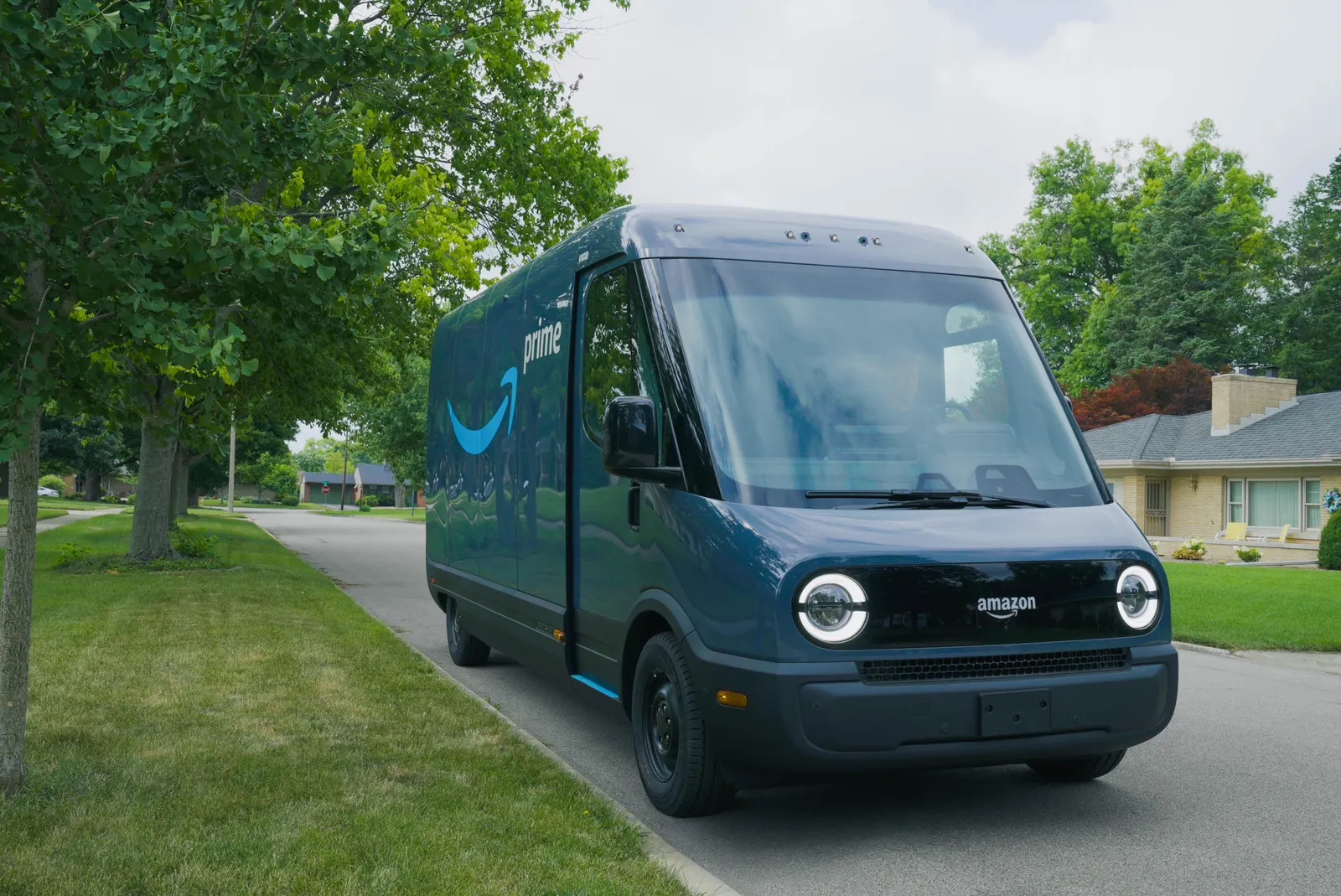
An Amazon delivery van is parked in a neighborhood. The company has opened up Amazon Shipping to all businesses, a move that could challenge competing parcel carriers.
Courtesy of Amazon
As for ASCS’ trucking services, Amazon is still limited in terms of its ability to match less-than-truckload industry giants like FedEx Freight and Old Dominion Freight Line, Scooter Sayers, an LTL trucking consultant with Sayers Logistics, said. Currently, Amazon Freight has LTL coverage in parts of the U.S. for inbound shipments to Amazon facilities, per its website. The company would need to build up its existing infrastructure and driver base to service a wider range of shipments and better compete with other carriers, Sayers said.
ASCS also offers distribution and fulfillment services, but Amazon has already been an established heavyweight in that space for years with Fulfillment by Amazon for its third-party sellers, experts noted. Additionally, Amazon Warehousing and Distribution and Amazon Multichannel Fulfillment have offered storage and fulfillment for products going either into the e-commerce giant’s network or outside channels.
“Amazon’s already fulfilling billions and billions and billions of parcels for third parties,” Derek Lossing, founder of Cirrus Global Advisors and a former logistics leader at Amazon, said.
While the individual components of ASCS may not be entirely new or a threat to all logistics incumbents, the bundling of those different services into one package — and marketing it to a wider range of prospective customers — could provide additional value to businesses and pose a greater competitive challenge, Lossing said.
“None of these things in and of themselves are transformational,” he said of the ASCS portfolio. “I think the announcement, though, is if you can truly bundle it all together, it’s powerful, and it’s more powerful than what any individual company offers.”
Using Amazon Supply Chain Services: Customer fits, risks
Even if ASCS can’t topple every other logistics player just yet, the service might still be an appealing option for brands.
Currently, ASCS is serving a mix of companies, including 3M and Procter & Gamble for trucking, Lands’ End for inventory positioning and American Eagle Outfitters for parcel shipping. Prior to the ASCS launch, companies like cookware seller Avacraft have leveraged Amazon Warehousing and Distribution to improve inventory management. Similarly, brands like children’s subscription box company KiwiCo and BarkBox owner Bark have tapped into Amazon Shipping for speed and cost benefits.
Fast-growing brands that need help scaling their supply chains quickly to meet demand are prime candidates to join ASCS’ customer roster, as they would likely be seeking a one-stop shop for logistics offerings from manufacturing origin to the end consumer, according to Lossing.
“None of these things in and of themselves are transformational. I think the announcement, though, is if you can truly bundle it all together, it’s powerful, and it’s more powerful than what any individual company offers.”

Derek Lossing
Founder of Cirrus Global Advisors and a former logistics leader at Amazon
Amazon Shipping specifically is a natural addition for retailers already using Amazon for inventory placement and fulfillment, LPF Spend Management’s Skiver said. Direct-to-consumer shippers are likely to be interested in Amazon Shipping, along with enterprise and omnichannel retailers that ship a lot of lightweight and residential volume, he added.
However, brands should weigh the potential pros and cons of ASCS for their business prior to onboarding, experts said. For example, experts said it’s unclear how Amazon will allocate capacity to inventory being sold on its own marketplace versus products from customers only using the company as a logistics partner. An Amazon spokesperson said in an email to Supply Chain Dive that the company ensures all customers have options to maintain healthy stock levels regardless of whether they’re selling on Amazon or across multiple sales channels.
While capacity constraints aren’t uniquely an Amazon risk, the potential for challenges could compound ahead of the peak holiday shipping season as sellers fill Amazon’s warehouses with inventory to prepare for an expected surge in order activity. In years past, the e-commerce giant has advised sellers to bring Black Friday inventory in early to avoid capacity limitations.
“That’s already really hard to deal with,” Lossing of Cirrus Global Advisors said. “So to go find a bunch of big enterprise brands that want to triple their volume with you that same month, there becomes points where there’s ceilings even at Amazon as to what they can actually do.”
How Amazon handles data from businesses tapping into its services also continues to be a question, experts told Supply Chain Dive. The e-commerce giant can compete with a wide range of brands through its private label business — an area it’s faced regulatory scrutiny over before.
The Amazon spokesperson said the company uses the data logistics customers share to operate and improve its services, adding that Amazon prohibits using sales data received or collected from ASCS customers to make sourcing, inventory level or pricing decisions for products in its own store.
Despite concerns, Amazon has a reputation for figuring out shortcomings in offerings and addressing outstanding issues, even if they may take time to solve, Ninaad Acharya, CEO of Fulfillment IQ, said.
“I wouldn’t want to be the early-stage customer, but I definitely see really good value coming on the other side,” he said of ASCS.
Editor’s note: This story has been updated with comments from an Amazon spokesperson, and additional information regarding Amazon Global Logistics.
