

Employees at the IRS and the Social Security Administration – both led by the same official – are no longer able to tap into reserves of annual leave or sick leave time they haven’t accrued yet.
Federal employees are generally allowed to use “advanced” annual or sick leave for several reasons – including major medical emergencies, family care and bereavement of an immediate family member – if they have already exhausted their annual leave or sick leave. With advanced leave, employees are essentially borrowing from a reserve of leave hours they will eventually earn.
Human resources officials told IRS and Social Security Administration employees last Friday that they will no longer grant advanced annual leave or advanced sick leave until further notice.
In nearly identical emails, the IRS and SSA told employees this policy change will ensure both agencies are providing a high level of customer service to the public and address several individual cases where employees took excessive amounts of advanced leave.
“Just spent the last two hours talking to employees impacted,” an SSA official told Government Executive last Friday, as the email hit employees’ inboxes. “It’s going to be hard on those employees who already have negative leave balances.”
Pending requests for advanced leave at both agencies will be denied. Employees at both agencies can still donate their unused annual leave to coworkers through the Voluntary Leave Transfer Program, or go on unpaid leave through the Family and Medical Leave Act.
These changes have no impact on an employee’s ability to use accrued annual and sick leave.
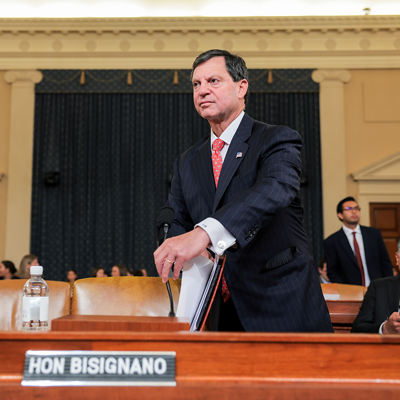
Both agencies are led by Frank Bisignano, the Senate-confirmed SSA commissioner and the first chief executive officer of the IRS. Bisignano, speaking at an industry conference last month, compared leading both agencies as “like running a large company.”
“If you think about these two organizations, I view them as businesses – the business of collecting taxes and administering and upholding the law on taxes, and the business of paying out Social Security payments,” Bisignano said at the Government Service Delivery summit.
The IRS and SSA told staff that the suspension will remain in effect, pending efforts to reduce “existing significant advanced leave balances.” Both agencies wrote that in several cases, employees are unlikely to earn back the large amounts of advanced leave hours they’ve already used.
“This is debt carried against the future work of all our employees, work that has not yet occurred, and work the public expects us to deliver. This constrains our ability to invest in the people, tools, and resources our mission requires,” both emails state.
SSA told employees that “the American people depend on SSA to deliver on its mission every day, and that mission depends on a workforce that is present and performing the public service they rely on us for.”
“Advanced leave, which is leave granted before it is earned, means employees are compensated for time away from our mission before the work has been done,” SSA wrote. “The cumulative effect over the years of this policy is significant and unsustainable and impacts our service to the public.”
AFGE Council 220 President Jessica LaPointe, whose union represents field office and teleservice center employees, said advanced leave functions as a sort of short-term or long-term disability insurance program for federal employees.
“We have workers going through cancer treatment. We have workers that have been the victim of car accidents, unexpected emergencies. We have caregivers of sick children, sick parents, elderly parents. We have been able to use this — not abuse it — to supplement our low wages. And now that we don’t have it, federal workers that are administering disability and retirement benefits are being forced to not get paid when disaster strikes,” LaPointe said.
A report from the Strategic Organizing Center, a research partner for AFGE, found that 54% of the 36,000 frontline SSA employees represented by the union were paid less than a living wage for their geographic region. A living wage is the minimum income needed for an individual to afford the minimum standard of living in their community.
In a survey of more than 800 current SSA employees, 17% of respondents with over 20 years on the job told SOC they are working a second job. Nearly two-thirds of survey respondents said they were struggling to provide at least one necessity for their families.
“We have workers at this agency that don’t make a living wage, that can’t pay their bills,” LaPointe said. “If we go into leave without pay and can’t pay our bills, can’t pay our health insurance premiums, can’t pay for food, rent, all those things, that stresses you out. And when you’re stressed, and you have a preexisting condition, it gets worse and so you have more leave without pay.”
SSA employees told Government Executive that managers previously approved employee requests for advanced leave, as long as they had a documented reason for needing it — but up until recently, all requests had to go through the agency chiefs of the components for approval.
“The administration is using the ‘fraud, waste and abuse’ phrase,” a second SSA employee said. “Management were the ones to approve with documents. Then they forced everyone to be approved by the chief of field operations. That lasted a month. Now [it’s a] full stop.”
Both agencies oversaw major staffing losses last year. The IRS shed more than a quarter of its employees largely through voluntary separation incentives. About 7,000 SSA employees took those same incentives last year, bringing the agency to its lowest staffing level in about 50 years.
Bisignano, however, has touted the performance metrics at both agencies, telling lawmakers that SSA and IRS don’t need more employees to meet public expectations. Both agencies have relied on widespread employee reassignments to address acute staffing shortages across their operations.
According to the Office of Personnel Management, agencies may grant a maximum of 240 hours of advanced sick leave to a federal employee, although the total number of hours permitted varies depending on the circumstances.
A third SSA employee said she has a chronic history of migraines and had advanced leave pending approval before the agency’s policy went into effect. Having exhausted her other leave options, she said she must now go on unpaid leave for the time she’s requested.
“It’s just disheartening and really lowers the morale when we run into things like this,” the employee said. “We’re dealing with people who have disabilities, and you have to be sympathetic and empathetic to them – which we are, because we’re living with it ourselves sometimes. But the agency is not giving us the same respect that we give to the community.”
Federal employees replenish their annual and sick leave over time. Federal employees who leave government service with a negative leave balance must refund the cost of that advanced leave, and agencies may deduct it from their final paycheck.
“The leave transfer program, it’s great if you have friends and family that have leave available and that are willing to donate it to you. I’m not in that boat, and a lot of people I work with aren’t,” the third SSA employee said. “There’s only so much leave that people are going to give up and give away to people.
An SSA spokesperson told Government Executive in a statement that “this change ensures that SSA’s workforce is available to deliver the high-quality service the American people rely on and deserve.”
An IRS spokesperson said the policy change “aligns with the agency’s efforts to build a high-performing, highly engaged workforce operating as One IRS to deliver a world-class customer experience and aligns to our commitment to be responsible stewards of taxpayer dollars.”
“The IRS continues to offer a comprehensive and competitive benefits and leave program that promotes employee well-being, flexibility, and long-term financial security,” the IRS spokesperson added.
LaPointe said AFGE has filed a grievance about these changes. The union alleges SSA has repudiated a provision of its collective bargaining agreement with the union.
“We have workers today going on a leave-without-pay status. We have workers today who are stressed about how they’re going to pay their health insurance premiums. How are they going to put food on the table? How do you recover from an illness or an injury without getting a paycheck?” LaPointe said.
Doreen Greenwald, national president of the National Treasury Employees Union, said in a statement that “NTEU will vigorously challenge this move and continue defending our members’ rights under the law and our contract.”
“This is not only an illegal violation of the collective bargaining agreement, but it’s unnecessarily cruel and harmful to IRS employees who either themselves are facing a medical crisis or caring for an ill family member,” Greenwald said. “Any insinuations that IRS employees are abusing their leave or assertions that taking such leave would harm public services are completely unfounded.”
