

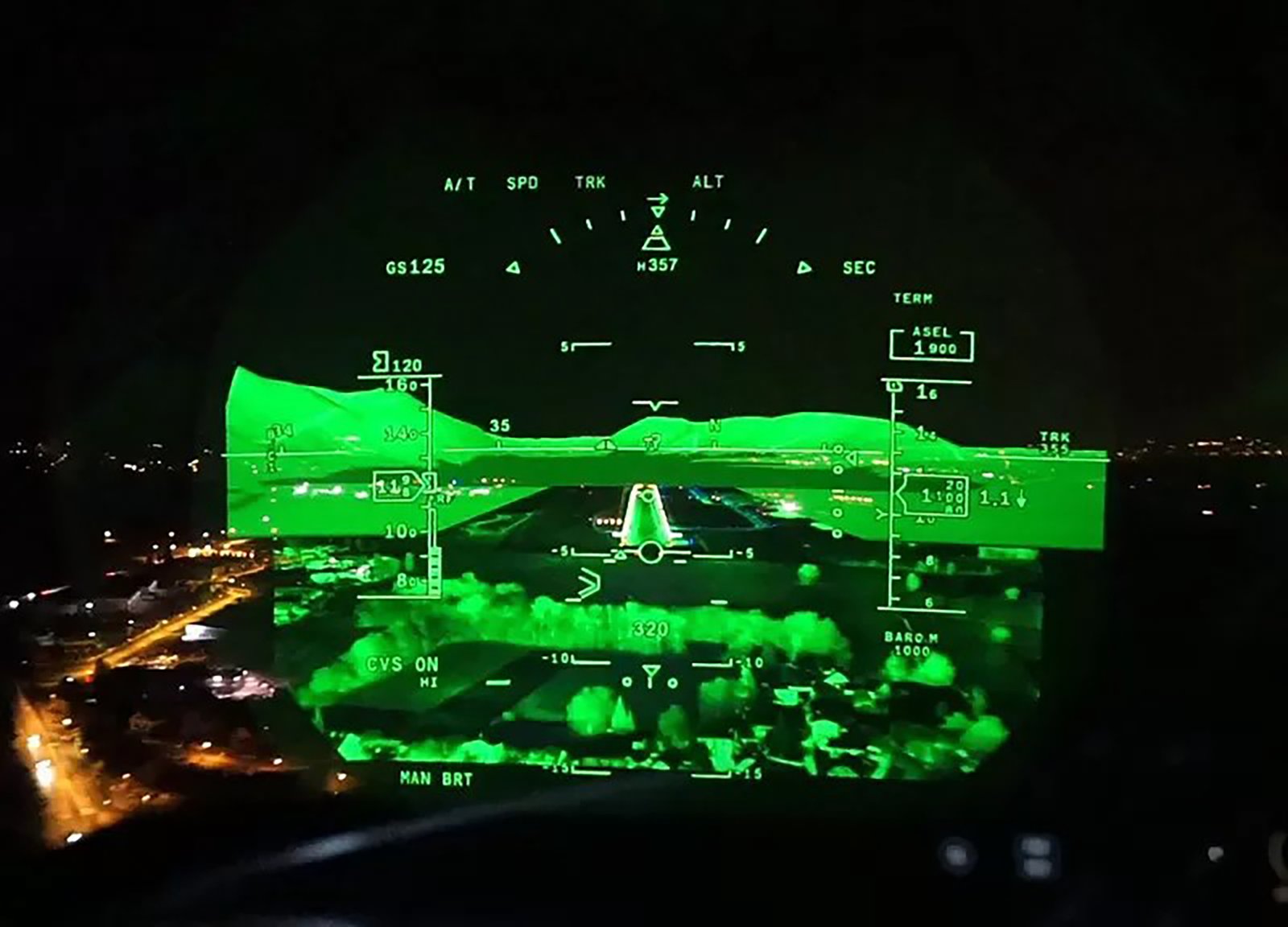
Ireland’s decision to exclude an Israeli-developed cockpit system from its new Dassault Falcon 6X is drawing renewed attention to the operational impact of political decisions on defense procurement. By adhering to its policy of avoiding new contracts with Israeli defense companies, Dublin has left its new government aircraft without the advanced FalconEye vision system—potentially reducing its ability to operate in poor weather and low-visibility conditions.
Political Decision Shapes Ireland’s Procurement
Ireland has yet to identify a replacement for the Israeli-developed FalconEye navigation and landing system that was originally expected to equip its new government aircraft. According to defense sources, the decision reflects Dublin’s policy of avoiding new procurement contracts with Israeli defense companies — a move that could limit the operational capabilities of the country’s new official jet.
Ireland has ordered a new Dassault Falcon 6X government aircraft at a cost of approximately €53 million, but without the FalconEye enhanced vision system.
The decision follows the Irish government’s August 2024 policy prohibiting new direct procurement contracts with Israeli defense companies.
Although the FalconEye system is integrated into the Falcon 6X, its installation requires a separate procurement agreement with Elbit Systems, the Israeli defense company that developed the technology together with French aircraft manufacturer Dassault Aviation. Signing such a contract would have conflicted with Ireland’s procurement policy.
A Proven Vision System
FalconEye is regarded as one of the most advanced cockpit vision systems currently available for business and government aircraft. It is the first Head-Up Display (HUD) system to combine synthetic vision, generated from a digital terrain database, with real-time enhanced video imagery provided by a multispectral Enhanced Vision System (EVS).
By merging these two technologies, FalconEye gives flight crews a significantly improved picture of their surroundings in daylight, at night, and in adverse weather conditions.
According to the manufacturer, the system provides an unprecedented level of situational awareness during all phases of flight.
Reduced Capability in Poor Weather
Without FalconEye, pilots operating Ireland’s new Falcon 6X will have fewer visual aids available during approaches and landings in challenging weather. Under conditions such as dense fog or reduced visibility, the aircraft may be forced to divert to an alternate airport rather than continue its approach.
So far, Ireland has not announced an alternative system capable of replacing the operational capabilities provided by FalconEye.
The case illustrates how political decisions on defense procurement can have direct operational consequences, particularly when advanced technologies developed through international industrial partnerships are affected.
Author: Arie Egozi, Israel Correspondent
Click here to read the latest issue of ESD.
