

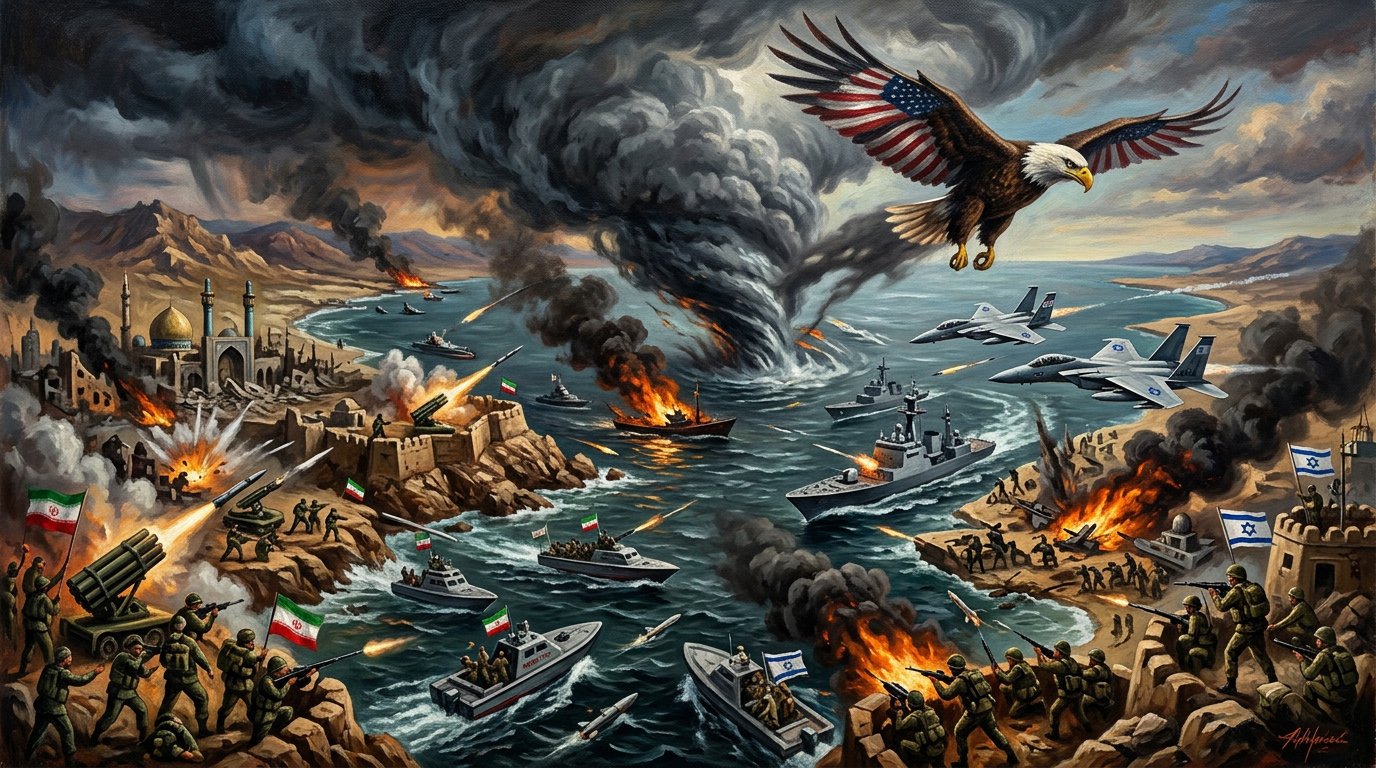
Growing doubts about Washington’s approach to Tehran are fueling concern within Israel’s defense establishment. Israeli officials increasingly believe that mixed signals from the White House are encouraging Iran to act more aggressively — not only in the Middle East but beyond. As tensions continue to rise, some in Israel fear that any future effort to eliminate Iran’s nuclear threat may ultimately fall to Israel alone.
Israel Fears It May Have to Face Iran Alone
Israeli security officials are expressing growing concern that the United States continues to believe Iran remains a viable partner for diplomatic engagement, despite Tehran’s increasingly aggressive regional behavior.
According to Israeli sources, the perception of restraint and openness to dialogue projected by Washington has emboldened the Iranian regime, encouraging it to expand its threats beyond the immediate confrontation with the United States and Israel. “The many conflicting declarations made by President Trump have led Israel to conclude that it may ultimately have to solve the Iranian nuclear problem on its own,” one Israeli source told ESD.
Within Israel’s defense establishment, there is an increasing belief that the United States has underestimated both the strategic objectives of the Iranian regime and its willingness to absorb military and economic pressure while continuing to pursue its long-term goals.
Israeli officials argue that Tehran interprets inconsistent political messaging from Washington as a sign that military pressure will remain limited and that diplomatic channels remain open regardless of its actions. According to the Israeli analysts, this perception risks encouraging further assertiveness.
Threats Beyond the Middle East
Recent developments illustrate what Israeli officials describe as Iran’s growing readiness to project power beyond its traditional sphere of influence. Following a Ukrainian drone strike against an Iranian cargo vessel in the Caspian Sea, Tehran reportedly considered launching a retaliatory ballistic missile strike against a Ukrainian port on the Black Sea. Although diplomatic efforts ultimately prevented such an attack, intelligence assessments indicate that Iranian decision-makers seriously examined the option.
According to the reports, the proposed strike would have involved a ballistic missile carrying a relatively small warhead and was intended primarily as a symbolic demonstration of Iran’s willingness to retaliate outside the Middle East.
The Shadow Fleet Connection
The incident also drew renewed attention to Teheran’s so-called shadow fleet. This network of oil tankers operates largely outside established international maritime regulations in order to circumvent Western sanctions imposed on Iranian oil exports.
The International Maritime Organization (IMO) defines shadow or “dark” fleets as vessels engaged in activities intended to evade sanctions, avoid safety or environmental regulations, reduce insurance obligations, or facilitate other unlawful operations. Many of these ships are aging tankers operating with questionable maintenance standards, limited safety equipment, and little or no verifiable insurance coverage.
According to maritime experts, Iran pioneered many of the deceptive shipping techniques that have since been adopted on a much larger scale by Russia and other heavily sanctioned states.
Drone Strike Escalates Tensions
On July 25, 2026, Ukrainian long-range drones struck vessels in the Caspian Sea that Kyiv said were transporting military cargo between Iran and Russia. The attack reportedly killed one civilian sailor aboard a commercial vessel, prompting strong reactions from Iranian officials and renewed threats of retaliation.
According to intelligence reports, Tehran subsequently examined options for a limited ballistic missile strike against Ukrainian infrastructure before diplomatic efforts helped defuse the immediate crisis. Israeli analysts argue that these developments reflect a broader pattern. In their view, Washington has repeatedly misjudged Teheran’s strategic calculations, its ability to withstand external pressure, and the internal dynamics that shape decision-making within the Islamic Republic.
As a result, American expectations of influencing Tehran through a combination of military pressure and diplomacy have frequently failed to match developments on the ground.
Against this backdrop, concern is growing in Israel that any future effort to permanently eliminate Iran’s nuclear threat may ultimately depend on Israeli capabilities rather than on direct American military involvement. For many within Israel’s defense establishment, that possibility is no longer viewed as a distant contingency — but as a scenario that may require serious preparation.
Author: Arie Egozi, Israel Correspondent
Click here to read the latest issue of ESD.
