

For much of its history, surveillance automation has followed a straightforward formula. Set the rules, define the zones, wait for the triggers. If someone crosses a boundary, the alarm sounds. If a vehicle overstays, issue a warning. These systems work to a point, but as defence facilities grow more complex and threat profiles more dynamic, the rule-based approach is showing its age.
Australian company SenSen Networks is pushing a different model through its SenTRACK 2.0 platform, and it’s one built around role-based analytics rather than static conditional logic. For defence agencies tasked with protecting sensitive infrastructure such as data centres, logistics hubs, and perimeter zones, the distinction matters.
The Problem with Rules
Conventional video analytics operate on simple if-then parameters. Define a restricted zone, programme a response, wait for the trigger. The simplicity is appealing, but it comes with serious trade-offs in defence environments.
Personnel move through multiple security clearance zones throughout a single shift. Authorised vehicles operate alongside civilian contractors. Operational tempos change with threat levels. A rule-based system tuned for peacetime routine becomes a liability if conditions shift, and could result in either flooding operators with false positives or missing genuine anomalies that fall outside its rigid parameters.
The resource burden compounds as systems scale. More cameras mean more alerts, which means more personnel required to separate signal from noise. And critically, rule-based systems do not learn. They require constant manual tuning to remain effective, and they never improve beyond their original programming.
What Makes Role-Based Different
Where rule-based systems respond to predefined events, role-based automation understands what should be happening in a given context and identifies deviations from expected behaviour.
SenTRACK 2.0 deploys adaptive AI agents powered by vision-language models and generative AI. Rather than functioning as passive detectors, these agents operate like trained security personnel, and are watching with purpose. Rather than simply asking “did someone cross a line?” these systems are instead asking “what are they doing, and is it acceptable for this context and time?”
The system learns what “normal” looks like for specific roles, tasks, and locations across a facility. A maintenance contractor moving through a server room at 1400 hours behaves differently than the same movement at 0200. An authorised vehicle following its designated route presents a different pattern than one deviating toward restricted infrastructure. SenTRACK understands these distinctions and responds accordingly.
For data centre protection, this capability translates into identifying whether personnel are authorised for specific zones, detecting when vehicles deviate from approved routes or overstay in sensitive areas, and recognising behavioural patterns that may suggest reconnaissance or pre-operational activity. It does all of this without requiring operators to anticipate and pre-program every possible scenario.
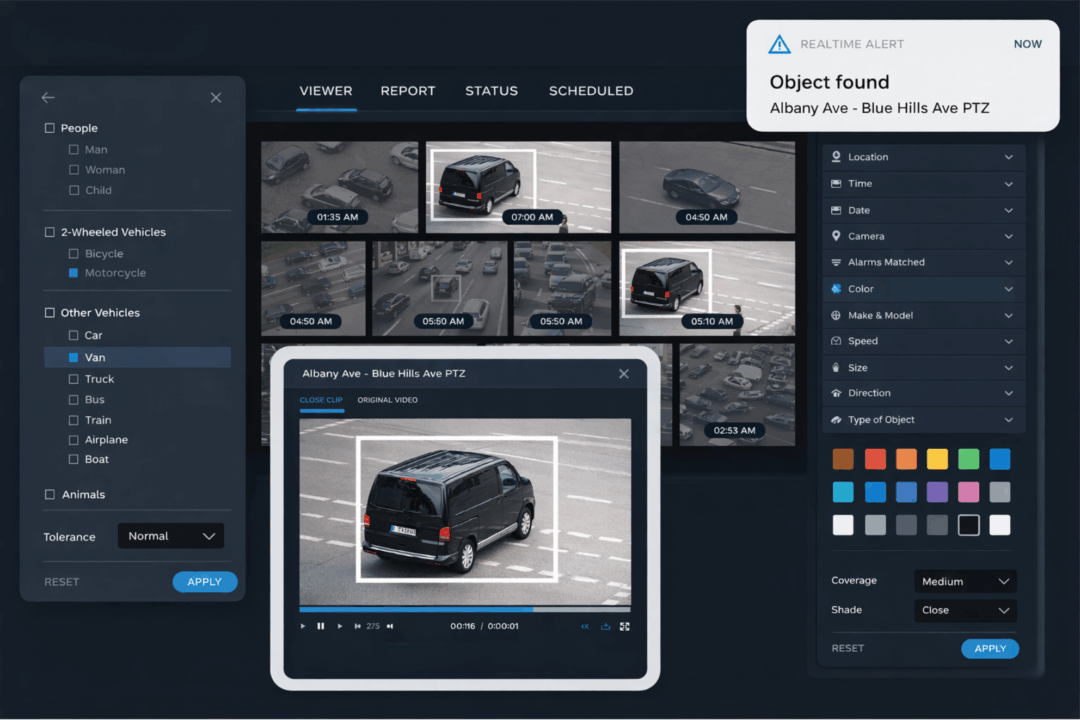
The platform also offers natural-language interfaces, allowing operators to query footage and create custom alerts using plain English rather than navigating complex configuration menus. Need to identify all personnel who accessed the northern perimeter between 0300 and 0600 over the past week? Ask the system directly.

Scaling to Enterprise Demands
Defence infrastructure protection rarely involves a handful of cameras. SenTRACK 2.0 is architected to manage over 1,000 cameras across distributed sites, providing unified situational awareness without the exponential increase in operator workload that legacy systems demand.
Edge processing capabilities ensure the system continues operating even when connectivity is compromised, which is a critical requirement for defence installations where network resilience cannot be guaranteed. Analysis happens locally, with insights delivered in seconds rather than hours.
SenSen’s development roadmap includes sound analytics and facial recognition integration, extending the platform’s detection capabilities beyond visual surveillance. For defence applications, this means the ability to correlate audio signatures with visual events, enhance personnel identification across clearance zones, and build comprehensive intelligence pictures from multiple sensor inputs.
The platform integrates with existing security infrastructure, requiring no wholesale replacement of camera networks or control systems. This deployment flexibility reduces implementation risk and accelerates time to operational capability.

From Reactive to Proactive
The fundamental shift that role-based analytics enables is one from reactive monitoring to proactive threat identification. Traditional systems tell you what happened after the fact. SenTRACK provides the situational awareness to intervene before incidents escalate.
Through its partnership with Fonda, SenSen is extending these capabilities to defence agencies requiring next-generation infrastructure protection. The combination of proven operational performance, Australian ownership, and continuous capability development positions the platform as a compelling alternative to legacy analytics systems.
For more information on SenTRACK 2.0 and defence infrastructure protection solutions, contact Fonda or visit sensen.ai
