

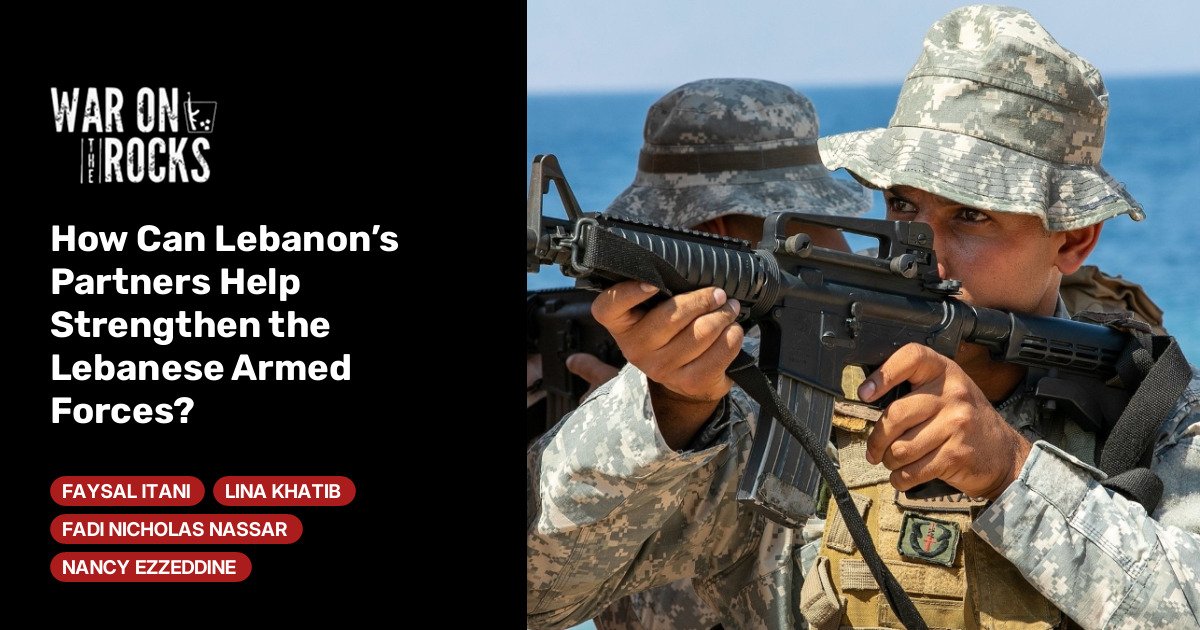
The Lebanese state’s lack of effective sovereignty is a crucial problem in efforts to negotiate with Israel and disarm Hizballah. In response to intensified fighting between Israel and Hizballah, the United States began hosting talks between Israel and the Lebanese government in April. However, fighting has continued, and Hizballah recently rejected a proposed ceasefire deal.In 2025, in a historic move, the Lebanese government made plans for the Lebanese Armed Forces to disarm Hizballah. However, the military made slow progress, partly due to fears that more aggressive moves might splinter the Lebanese forces. Meanwhile, Israeli attacks have killed dozens of members of Lebanese security forces — further complicating relations between the Lebanese government and Israel.The United States provides support to the Lebanese Armed Forces, and many countries — and many Lebanese — share Washington’s interest in establishing a capable and sovereign Lebanese military. We asked four experts what realistic steps the United States and other partners could take to strengthen the Lebanese government and Lebanese Armed Forces.Read more below.Faysal Itani Senior Fellow at the Middle East Policy CouncilThe Lebanese Armed Forces need assistance that allows them to deter or defeat Hizballah. They are more capable than often assumed, but they face serious financial difficulties. They cannot pay soldiers’ salaries, forcing them — including officers — to take second jobs. Unpaid soldiers are obviously less likely to commit to difficult, politically fraught confrontations. Hizballah has no such problems. The Lebanese Armed Forces need the basics: money, ammunition, and training.However, ultimately, the question of confronting Hizballah is complicated less by limited capabilities and more by the political and social configuration in Lebanon. A quarter of Lebanon’s military is Shiite — the religious community that forms Hizballah’s base. They might refuse orders to fight their compatriots or even turn their guns on their fellow
Members-Only Content
This article is reserved for War on the Rocks members. Join our community to unlock exclusive insights and analysis.
The Lebanese state’s lack of effective sovereignty is a crucial problem in efforts to negotiate with Israel and disarm Hizballah. In response to intensified fighting between Israel and Hizballah, the United States began hosting talks between Israel and the Lebanese government in April. However, fighting has continued, and Hizballah recently rejected a proposed ceasefire deal.In 2025, in a historic move, the Lebanese government made plans for the Lebanese Armed Forces to disarm Hizballah. However, the military made slow progress, partly due to fears that more aggressive moves might splinter the Lebanese forces. Meanwhile, Israeli attacks have killed dozens of members
