

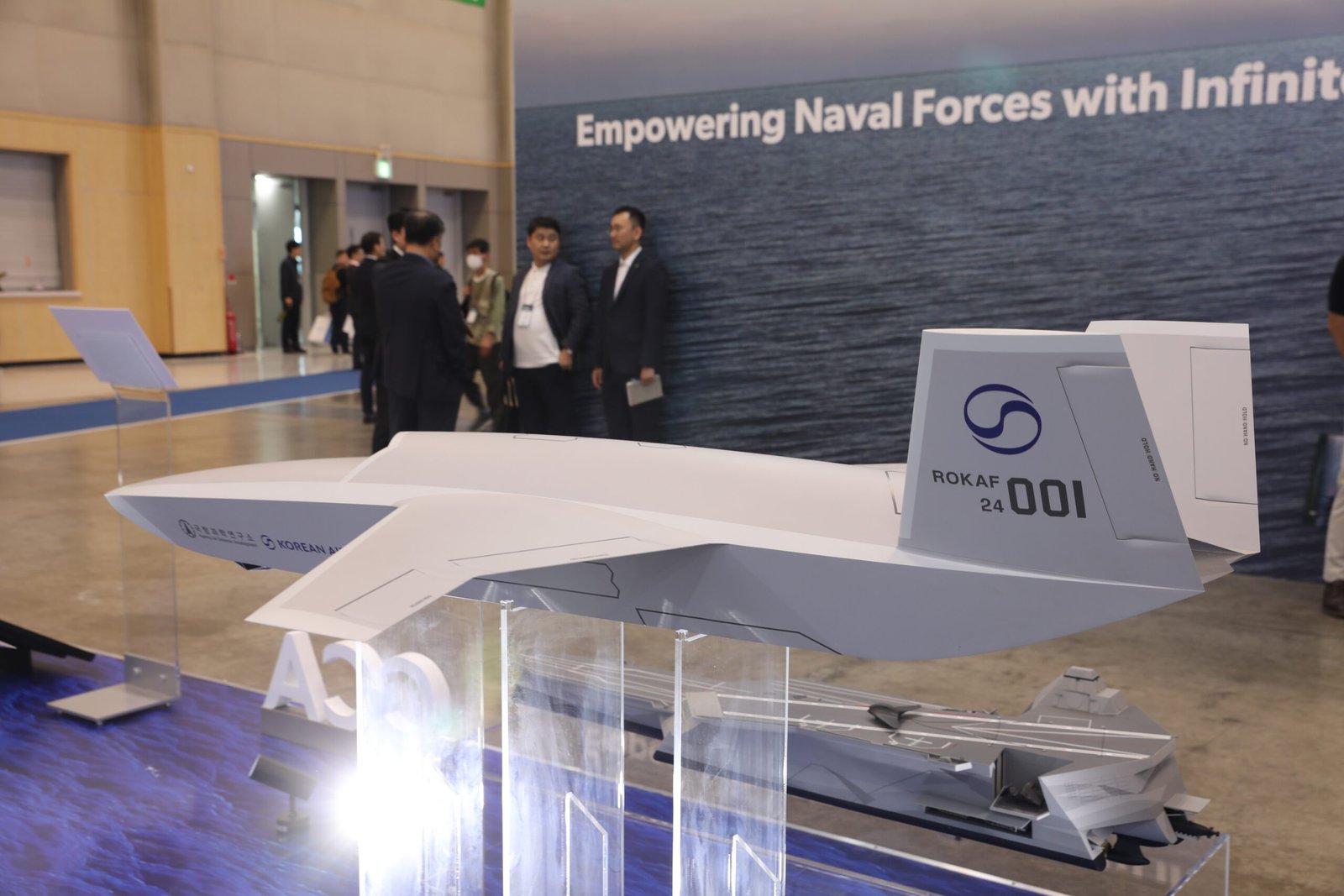
Hanwha Aerospace revealed on 26 May that it would work with the Korea Aerospace Administration (KASA) to develop a 4,500lb-thrust turbofan engine destined for sophisticated unmanned aircraft such as collaborative combat aircraft (CCA).
Hanwha will lead this engine development project, and it will invest in engine design, core component development, test infrastructure and production readiness.
Matching each other in funding, Hanwha Aerospace and KASA will jointly develop the engine by 2029. The former said it would invest around KRW750 billion (US$500 million) in UAV platforms, engine development and related facilities.
The propulsion unit will include a starter-generator too, the first time a South Korean-developed drone engine integrates a starter-generator on the engine shaft. It will supply up to 100kW of electrical power. This is important, because CCAs need significant levels of power for their computing, radar, sensor and electronic warfare equipment.
In a press release, Hanwha Aerospace shared, “The engine developed under this programme is a high-bypass turbofan designed for fuel efficiency and for both military and civil use. It could also be adapted for small business jets and other commercial aircraft.”
This 4,500lb-class engine is just one of several UAV engines that Hanwha is developing on behalf of the South Korean government. Others include a 1,400hp turboprop for medium-altitude UAVs, a 5,500lb-class low-bypass turbofan, and core technologies for a 10,00lb-class turbofan for stealth platforms.
It is unclear which South Korean CCA this engine will end up on, but the aforementioned 5,500lb-class engine is believed to be destined for South Korea’s Low Observable Unmanned Wingman System (LOWUS). This engine entered ground testing in January.
Developed jointly with South Korea’s Agency for Defense Development (ADD), the Hanwha-developed engine will replace the Ukrainian-made AI-222 used by the LOWUS so far. The LOWUS is 10.4m long and has a 9.4m wingspan, and will be able to accompany fighters like the KF-21 Boramae.
A Hanwha Aerospace official said, “As global demand for CCA and unmanned platforms grows, propulsion will be central to fielding these systems at scale. This programme puts Hanwha Aerospace in a position to deliver the performance, affordability and delivery speed that customers need.”
The company added that it will “apply additive manufacturing and other advanced production methods to shorten development cycles and reduce cost, producing lightweight, electrified propulsion systems for global customers”.
Its aim is to give customers “faster delivery times and greater affordability,” reinforcing the notion that the new engine will be offered for export as well as fitted on indigenous unmanned aircraft.
Meanwhile, Park Hee-ho, Chief Technology Officer of the aviation division at Hanwha Aerospace, said: “The global unmanned aircraft engine market is still in its early stage, with the competitive landscape not yet set. With preemptive technology acquisition, we will not only help strengthen the unmanned aircraft power of the Korean military, but also do our best to rise as a leading company in the global market.”
by Gordon Arthur
