

George Washington’s army had the will to fight. It did not always have the powder, weapons or ammunition needed to survive.
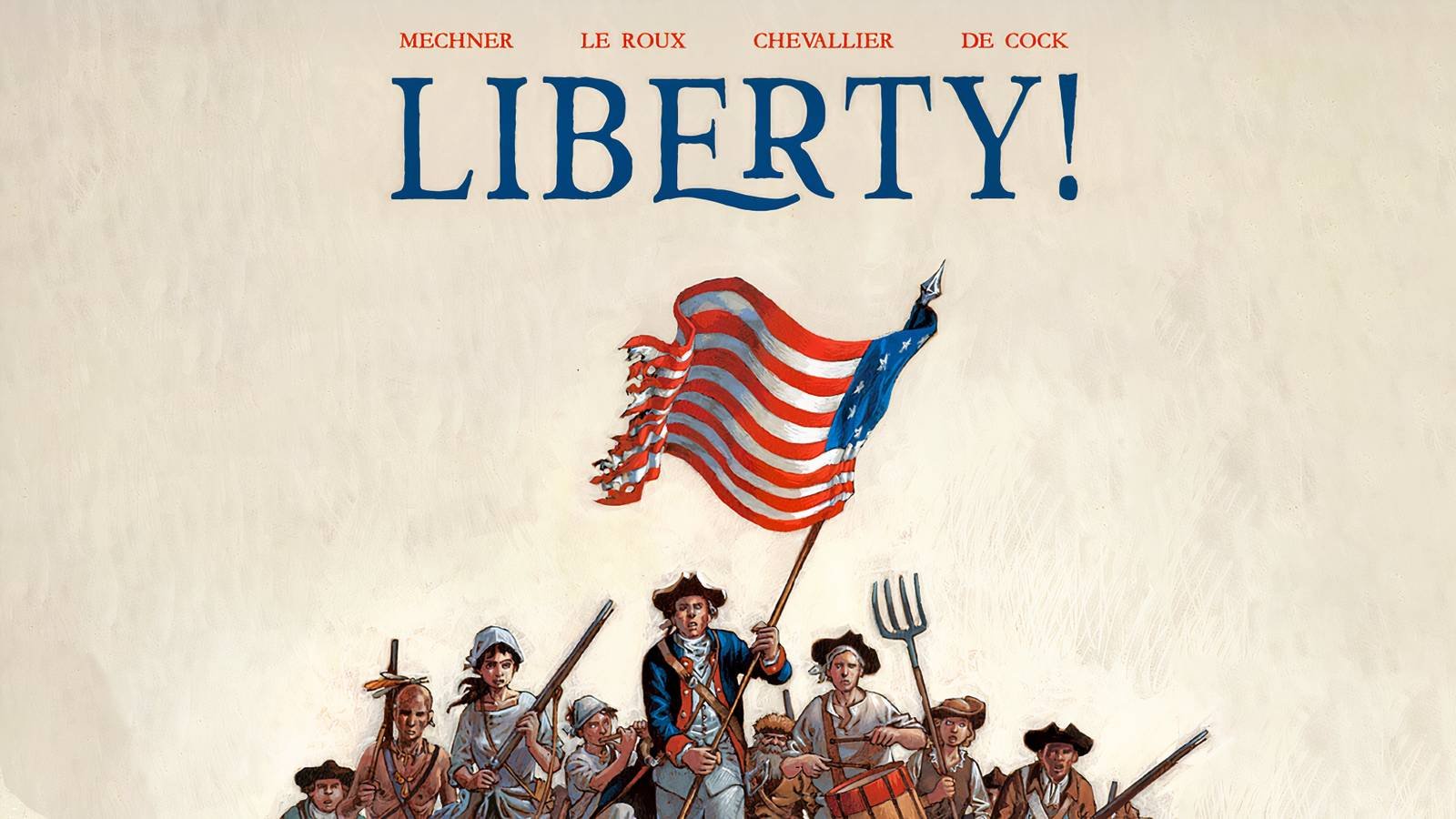
That shortage, and the covert effort to solve it before France openly backed the American Revolution, is at the center of Liberty, a new graphic novel from Prince of Persia creator Jordan Mechner and artists Étienne Le Roux, Loïc Chevallier and Elvire De Cock.
Timed to the country’s 250th anniversary, the book looks beyond the familiar battlefield story of the Revolution to the spies, smugglers, secret agents and civilians who helped keep the rebellion alive when its future was anything but certain.
A Hidden War Behind the Revolution
The project, from Oni and Magnetic Press, is set to launch on Kickstarter on July 1. But Mechner told Military.com the story began not with the Founding Fathers or a famous battle, but with a French playwright he thought he already knew.
“I happened to pick up a biography of Beaumarchais, whom I knew only as the French playwright who wrote The Marriage of Figaro, my favorite Mozart opera,” Mechner said. “I was fascinated to discover that he’d played a pivotal role in supporting the American rebel army, creating a fictitious company to illegally ship arms from France, in the early days when the revolution’s survival hung by a thread.”
Pierre-Augustin Caron de Beaumarchais is not usually the first name Americans learn when they study the Revolution. Neither is Silas Deane, a Connecticut businessman and secret agent sent by Congress to obtain foreign support. For Mechner, that was part of the appeal.
“The more I read, the more I became convinced that Beaumarchais and his partner Silas Deane are two great unsung heroes of the American Revolution,” Mechner said. “I found their story incredibly resonant and relevant to today’s world, and it deserves to be told.”
Soldiers, Spies and Supply Lines
Liberty opens through the eyes of Samuel Webb, a young American soldier at Bunker Hill. Webb gives readers the ground-level view of a rebellion that had courage, but not nearly enough supplies.
“The rebels are desperately short of gunpowder, ammunition, weapons, everything an army needs,” Mechner said. “This was a huge problem and a big reason most people thought the British would easily crush the rebellion in a matter of months.”
That shortage drove the secret effort at the heart of the book. France was not yet ready to openly provoke Britain by backing the Americans, Mechner said. So Beaumarchais and Deane created a company called Roderigue Hortalez as a front to buy arms from French depots and ship them across the Atlantic despite a royal ban.
The Americans had the will to fight, but not the ammo, Mechner said.
In preview pages reviewed by Military.com, Liberty opens with that shortage on the battlefield. At Bunker Hill, rebel fighters are shown being ordered to save their powder before the fighting collapses into close combat.
Soon after, members of Congress describe Washington’s army as short on cannons, clothing, blankets and gunpowder, then send Deane to France undercover as a private merchant equipped with invisible ink and a cipher. The book’s spy-story machinery grows from a basic military problem: the rebellion could not survive on courage alone.

The graphic novel’s cast includes familiar names, including a young Marquis de Lafayette, but Mechner said he was drawn to lesser-known figures because they help make the larger history feel less embalmed. Webb, for instance, may sound like the kind of fictional soldier a writer might invent to connect the battlefield and the spy story. He was real.
Mechner said Webb fought at Bunker Hill, was with Washington at New York and Trenton, was wounded, captured by the British and later released. He also happened to be Deane’s stepson, giving the book a personal thread between the man trying to send arms from Europe and the soldiers who needed them.
“While Deane spent three years in France, doing everything to send arms to America, he had a son in the army, a soldier on the ground, desperately in need of those supplies,” Mechner said. “I was delighted when my research uncovered that connection.”
History, Art and Modern Echoes
Mechner said he wanted the book to remain close to documented history. He cited David McCullough’s 1776, Rick Atkinson’s The British Are Coming, Russell Shorto’s Revolution Song, Stacy Schiff’s A Great Improvisation and Maurice Lever’s biography of Beaumarchais as part of the reading that shaped the project.
He also used published and digitized papers and correspondence from Deane and Webb.
“For a writer of historical fiction, primary sources are like gold,” Mechner said.

The graphic novel format, he said, allowed the team to move between the intimate and the epic: letters, battles, political intrigue and private doubt sharing the same visual language. The French and American artists also did their own research to make the settings, uniforms and military sequences feel accurate, he said.
“The Battle of New York and crossing the Delaware sequences take my breath away,” Mechner said.
Although Liberty is set in 1776, Mechner said the story took on a modern echo while the artists were working on the Battle of New York sequence and Russia invaded Ukraine in 2022. The comparison, he said, sharpened the book’s sense of occupation, resistance and the civilian cost of war.
“When your hometown is attacked and occupied by a foreign army, do you survive? Enlist? Join the resistance? What happens to your family?” Mechner said. “Whatever your sympathies or political persuasion, the themes of war are universal.”

The Kickstarter campaign for Liberty is scheduled to launch on July 1, with preview pages and the cover available through the campaign. Mechner said he hopes readers come away with more than a revived footnote from Revolutionary War history.
“The terrible personal toll of war, the price paid by civilians and soldiers for resisting, fighting for a better future, is as present today in the world as it was in the American Revolution,” Mechner said. “I hope readers will not only find Liberty entertaining, but come away feeling they’ve gained a better understanding and empathy for people in that time, and in ours.”
As America approaches its 250th birthday, Liberty argues that the Revolution was not sustained only by famous speeches or battlefield heroics. It also depended on ships, invoices, aliases, secret cargo and people willing to risk ruin in the gray space between diplomacy and war.
