

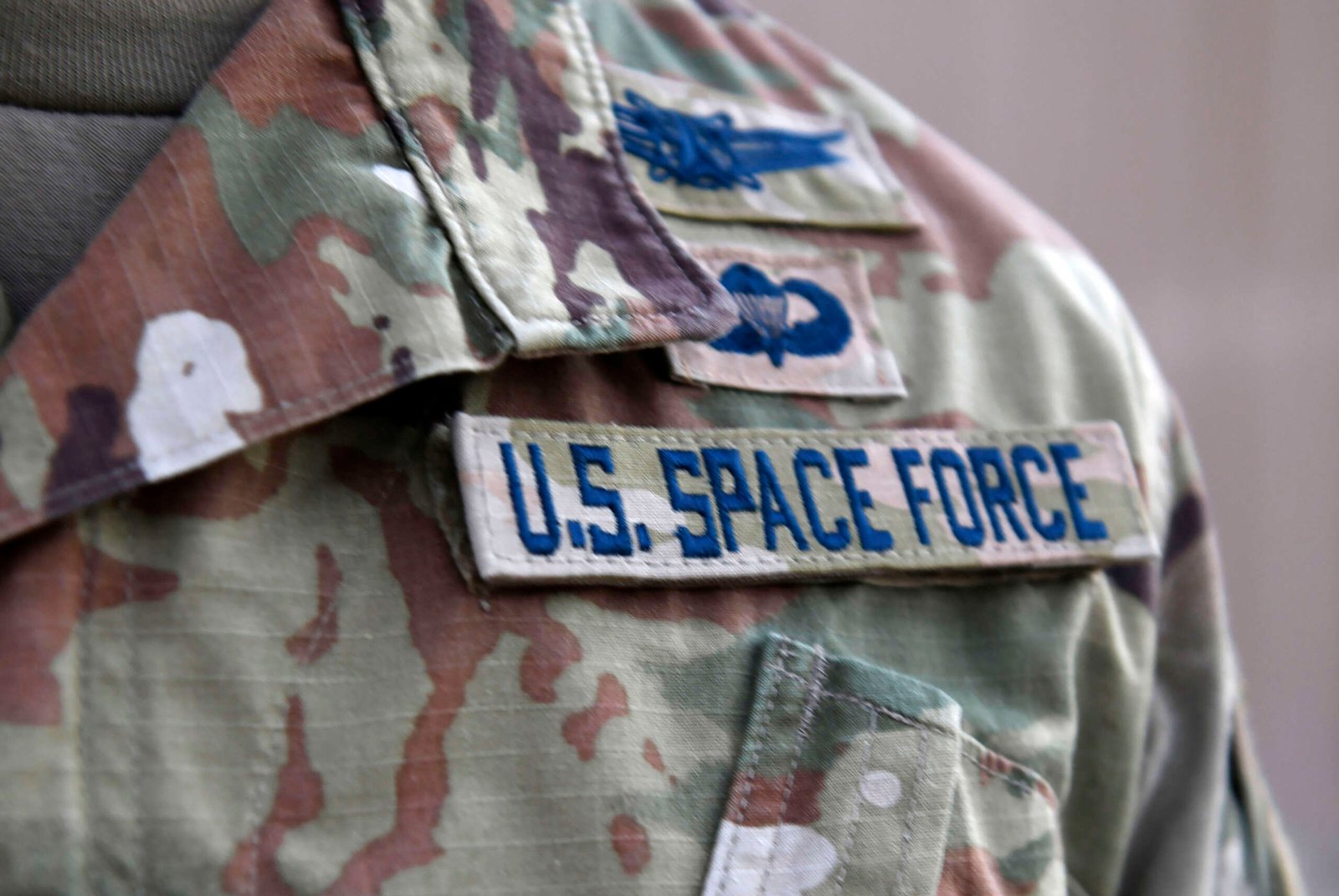
“Everybody’s recognized that we needed to grow and it looks like the resourcing is going to now match those aspiration,” Gen. Chance Saltzman said.
The White House is expected to roll out its budget proposals for fiscal 2027 this Friday, with all signs pointing to a $1.5 trillion defense budget request, which is a $600 billion increase from the department’s fiscal 2026 levels.
While military spending grows every year, President Donald Trump’s potential request would be the highest year-over-year increase since World War II — the president said the massive increase in spending is required to build a “dream military” during “troubled and dangerous times.” But the administration has yet to provide strategic reasons for a budget increase of this magnitude, and there are concerns about the Defense Department’s ability to spend such an extraordinary sum.
Space Force officials, however, say not only is the newest military branch prepared to absorb a significant influx of funding, it is also in urgent need of a large funding boost.
Chief of Space Operations Gen. Chance Saltzman said this is also the first time there is a broad consensus that the service not only needs to grow — it needs to accelerate that growth to effectively fulfill its mission.
“First and foremost, our team has done a really good job of explaining why Space Force capabilities are so critical. We were able to make that case. And the leadership in the Department of War, the leadership in [Office of Management and Budget], certainly the leadership in the White House and the president agree with us, agree with our advocacy, that space capabilities need to grow, that the Space Force’s capacity needs to grow, and I think the budget is going to reflect that agreement,” Saltzman said Wednesday during the Spacepower Security Forum event.
“We’re going to get resources to enhance those capabilities that everybody’s going to expect,” he added.
Saltzman said the service’s strategy for ensuring it can spend the extra money will “focus on just adding more.”
“I know that sounds simple, but we’ve done so much of the foundational work to put in place the concepts to do the force design work. We know the systems that are required. We know the kinds of resiliency that’s needed. We know the training capacity that we have to add, and we worked hard,” Saltzman said.
“The acquisition workforce in particular has worked hard to put on contract the starting point for all of these capabilities. So now, hopefully, with just the new resources, it’s just more money onto existing programs to more rapidly expand those capacities. That’s going to be our strategy. Can we spend it? I ask the same question every day, and I think we’ve got a good strategy to spend that money,” he added.
Space Force officials have also previously warned that the service needs to increase its infrastructure and double its size in order to meet growing national security demands.
“I won’t say it’s long overdue, because everybody’s recognized that we needed to grow. You can’t wait five, six, seven years to do what we need to do, we need to be there in two, three years, and it looks like the resourcing is going to now match those aspiration,” Saltzman said.
The number of satellites the Space Force oversees has more than doubled — from 225 when the service was stood up to about 515 today. The service’s budget has also surged, rising from $15 billion in 2020 to nearly $40 billion in 2026, partly due to the reconciliation bill passed into law last July. Vice Chief of Space Operations Gen. Shawn Bratton told lawmakers in February that the current workforce is now too small to manage the mission effectively.
With the potential huge influx of money it is unclear whether the service has the acquisition workforce to execute the work. Maj. Gen. Stephen Purdy, former acting assistant secretary for space acquisition and integration at the Department of the Air Force who is now serving as a senior advisor to Secretary Troy Meink, warned last year that the “looming increase in acquisitions” will require the service to double down on its acquisition workforce, but the service “barely has enough acquirers to do all of the work” that it has now.
The Space Force lost at least 14% of its civilian workforce last year following the Trump administration push to reduce the size of the federal workforce — much of it came from Space Systems Command, the Space Force’s acquisition hub.
“I think it’s fair to say there is a shortfall. We’ve identified what we think is a baseline need back to the system. And if there’s a lamp that I can turn on that says, ‘Now hiring,’ — we’re ready. We recognize that it’s something we have to address,” Saltzman said.
If you would like to contact this reporter about recent changes in the federal government, please email anastasia.obis@federalnewsnetwork.com or reach out on Signal at (301) 830-2747.
Copyright
© 2026 Federal News Network. All rights reserved. This website is not intended for users located within the European Economic Area.
