

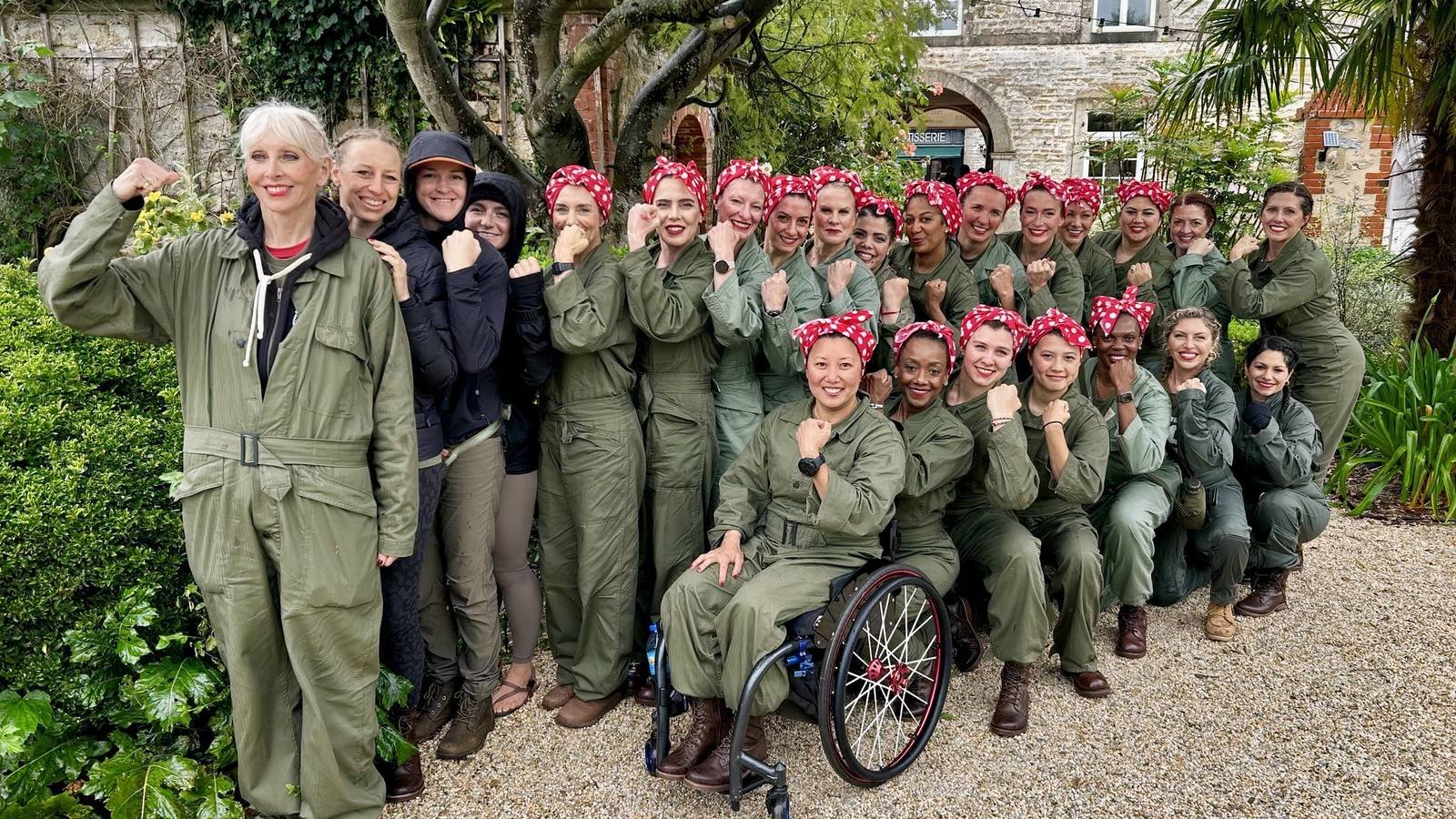
A group of eight brave, bold women took to the sky for a historic parachute jump to mark the 82nd anniversary of D-Day in early June.
The group included veterans, first responders, law enforcement officials and women working in intelligence, making history as the first all-female unit to leap over Normandy, France.
The “chalk” not only commemorated D-Day, one of the most important military operations in American history, but also brought recognition to the role of women in the World War II resistance movement, a vital group that often gets overlooked.
The group included Carol Whitmore, the first female commander-in-chief of the Veterans of Foreign Wars (VFW). The event was sponsored by the Fox Force Foundation, a veteran-led nonprofit organization that promotes women’s leadership opportunities and resilience, and VFW. Toni Lavery, founder and executive director of Fox Force, also joined the mission.
“This is recognition for the dozens of women who jumped behind enemy lines to ensure the war effort and D-Day ended and went as well as possible,” Whitmore told Military.com. “Bad ass warriors with little to no recognition!”
Lavery, a sergeant major with over 25 years of experience in the military, said D-Day is a time to pause and reflect on the courage, selflessness and sacrifice of the thousands of brave soldiers who died on that fateful day defending the free world.
“Even if I wanted to, I could not fathom putting myself in the shoes of these giants upon whose shoulders we walk,” Lavery told Military.com. “The obstacles, near-certain death (and sometimes torture), and sheer hell they faced were unimaginable; standing on such sacred ground where they infilled, fought and bled, helps offer a glimmer of perspective and an immense amount of gratitude.”
Due to bad weather, Lavery’s planned jump on June 5 was canceled, but she did jump last year, and the thrill impressed her so much that she couldn’t wait to plan the 2026 jump.
“After planning, prepping and training for a year to complete this mission, seeing the women of Fox Force commemorate the Virginia Halls, Violette Szabos, and like-minded women of the past, brought overwhelming pride and joy,” Lavery said. “Watching them cross the drop zone together, helmets tilted, kit bags and reserves over shoulders, smiles and tears on their faces, and even a little cow paddy on some boots, gave me a sense of fulfillment and purpose and the ultimate reverence to the heroes and heroines of our past.”
Three Major Battle Sites
The event included three landing locations, including Gonneville, France, the location of the D-Day drop zone and bombing target on June 6, 1944. Of the nearly 10,000 Allied casualties on D-Day, the 9th Parachute Battalion was especially hit hard here. Out of 750 men in the unit, only 150 reached the assembly point and about 75-80 soldiers were left standing to keep fighting.

Other landing spots were Carentan, secured by the 101st Airborne Division and a place that proved critical to Allied success, connecting Utah and Omaha beachheads to forge a continuous front, and Angoville-au-Plain, where Robert Wright and Kenneth Moore, two airborne medics, transformed a centuries-old church into a makeshift emergency room to treat wounded soldiers.
Whitmore said the experience she had with the other women jumpers will not be forgotten.
“I was proud to be with a new generation of warriors,” she said. “I have lots of respect for all of them.”
Women Key to War’s Success
Whitmore built a highly decorated 36-year career in the Army; 15 years on active duty and 21 in the Reserves. As a master sergeant, she spent time overseas in Germany, Guatemala and Honduras and was deployed to Iraq during the Global War on Terror.
While women in World War II served mostly under the radar, their contributions helped turn the tide toward victory for Allied forces.
“Women were largely dismissed as being able to contribute to the war effort by the enemy,” Whitmore said. “Making it highly successful to be a spy.”
Lavery, who was deployed seven times to the Middle East, said women risked “everything” to fight for freedom during World War II.
“We don’t often educate ourselves on the contributions of the women whose roles enabled the major milestones of the war, such as conducting drop zone and beach landing site surveys (so that larger male elements could infill), running resistance networks, propaganda campaigns and so much more,” she said. “And I think it is so cool they did all this without need for recognition or thanks and especially knowing they would be tortured and executed if caught. Despite this, they did it because it needed to be done and to be on the side of good against an abhorrent entity and ideology.”
