

TOYKO—Japan, the main partner of the United States in the Asia-Pacific, is seeing the basic tenets of its economic prosperity and geopolitical alignment called into question. Meanwhile, a steady flow of official delegations from equally uneasy US allies keeps flying in, eager to learn how the country is dealing with the harsh realities of the geoeconomic era. Researchers who believe they understand the country will tell you there is no homegrown model ready for export. Yet, when this author recently returned to Tokyo to speak at a fintech conference and check in on how the country was faring, he couldn’t help but notice just how relevant Japan is as a geoeconomic case study.
In October 2025, Sanae Takaichi became Japan’s first female prime minister. By the time I visited in late February and early March, geoeconomic challenges seemed to be coming in from all directions. Comments made on the campaign trail over her preparedness to defend the status quo in Taiwan led to a loosely coordinated boycott by Chinese tourists and then new export controls by China targeting Japan’s defense sector. The US Supreme Court’s February 20 decision to strike down President Donald Trump’s International Emergency Economic Powers Act tariffs led to criticism of Takaichi’s party for yielding to US pressure to make $550 billion in foreign direct investment commitments, with returns heavily lopsided against Japan.
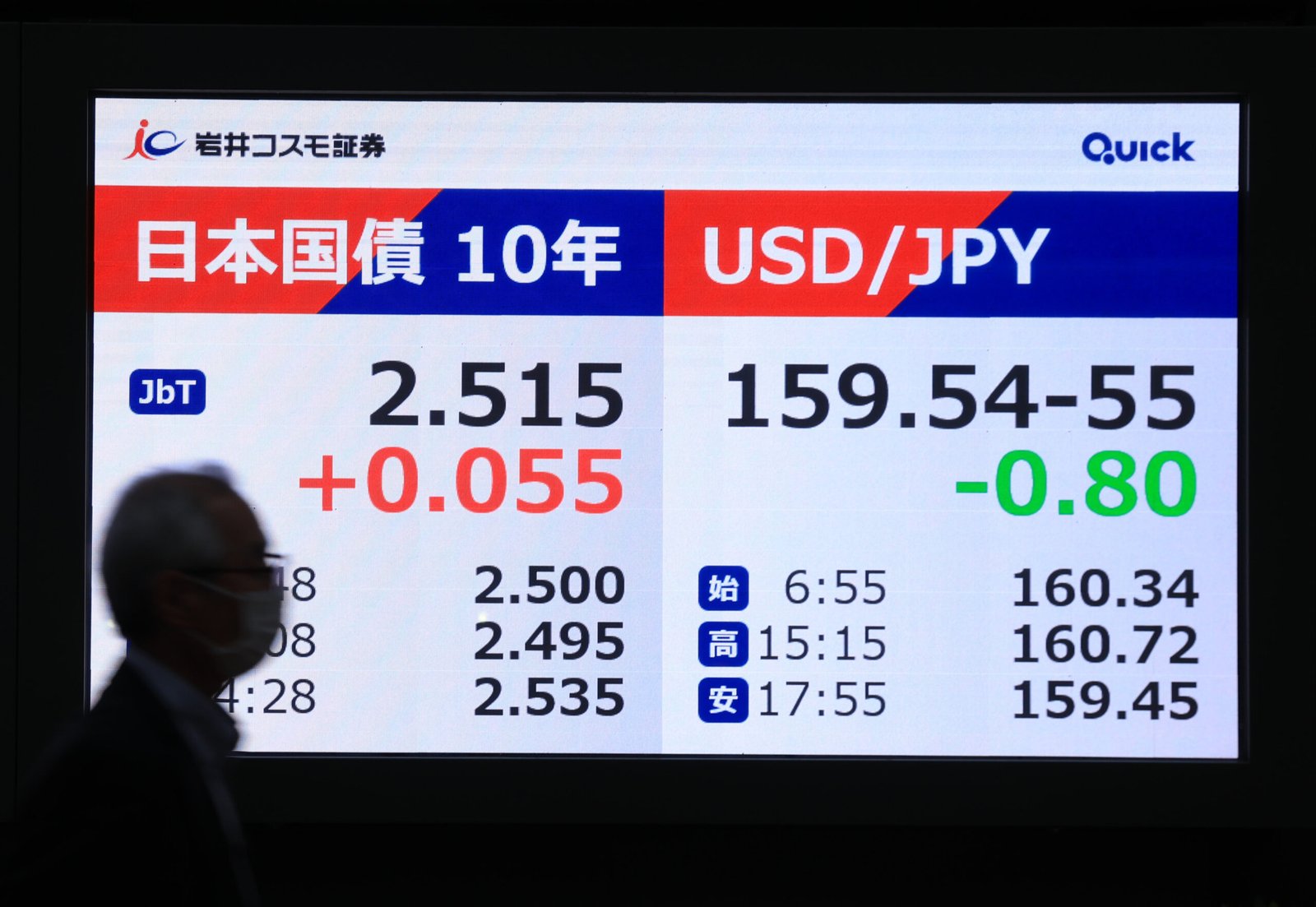
This week is another case in point. On Thursday morning, the government expended an estimated $35 billion in currency markets to prevent the yen from crossing 160 per dollar. Even after this sizable (though not record-breaking) intervention, speculation against the yen will continue to be driven by three factors.
First, the carry trade (borrowing yen then swapping these for dollars) will remain attractive as long as Japanese interest rates stay lower than those in other Group of Seven markets. The Bank of Japan is likely to raise rates at its next board meeting after holding at 0.75 percent, but there’s still a long way to go—nearly 300 basis points to catch up with the United States. Japan’s debt burden, though not as scary as it looks when you net out the Japanese government’s lucrative assets at home and abroad, prevents aggressive rate hikes.
Second, Takaichi’s anticipated fiscal stimulus has also driven speculation against the yen, especially since she won her landslide majority on February 8. Her two nominees to the Bank of Japan’s board are known doves. But the market consensus expects rate rises. This has led to growing criticism of Takaichi’s version of Abenomics, which had its merits when inflation was basically at zero but may not be appropriate now.
Third, as if all that wasn’t enough, Japan has a well-publicized dependence on oil, natural gas, and other byproducts usually shipped through the Strait of Hormuz. The country’s terms of trade shift negatively whenever oil prices increase, but the current blockade is particularly painful and hurts Japan’s economic outlook more than a mere increase in prices usually would. In addition to its currency market intervention, the Finance Ministry has also signaled it is prepared to intervene in crude futures markets to keep prices somewhat more affordable as Tokyo hopes for a resolution.
The Japanese government has some experience with market interventions, but the current cocktail of issues is taking its toll on borrowing conditions. Markets are now asking for a 2.5 percent yield on government bonds (up from 2.1 percent in February) to account for inflation, depreciation, and other risks.

It’s fair to say Takaichi will have to focus on other parts of her agenda as the energy crisis plays out. In the past few weeks, she has passed two milestone security reforms. The lower house has approved her plans to authorize Japanese exports of weapons—a long-overdue step that will help firms make economies of scale. It has also expanded the role of intelligence agencies, which until this reform were not meant to gather intelligence abroad. Partner institutions have always been impressed by their knowledge of China, so in this case the previous rule must have been interpreted liberally. It is still good news that Japan is giving itself the means to identify threats to security as early as possible.
Don’t expect much more on security for the next two years. The next big prize for Takaichi would be to reform Japan’s pacifist constitution. She has more than enough votes in the lower house after her landslide, but such a step would also require a majority in the upper house, which faces elections in 2028, by which point the prime minister is likely to be less popular. Younger voters, among whom Takaichi is popular, tend not to feel bound by the pacifist stance which emerged from Japan’s World War II defeat. But two years is a long time.
On the other hand, global events seem to keep justifying the need for a more assertive Japan. The Hormuz crisis has seen Trump call for assistance from Tokyo although Japan’s constitution currently prevents this. The US president has also threatened to reduce the US naval presence in Japan. When stakes weren’t as high, Japan could tell itself that the Free and Open Indo-Pacific strategy first formulated by the Abe administration could deliver through trade and development aid. But this is no longer sufficient. In early July, Takaichi will probably attend at least part of the NATO Summit in Ankara to show goodwill and demonstrate how Japan is shifting.
There is more Tokyo could do to advance its position. While it briefs allies constantly in private, Japan could make a stronger public case for the damage that China’s targeted and often unofficial export controls are inflicting on Japanese manufacturing. The argument it should be pressing more forcefully is that markets at the top of the value chain—including the United States—will ultimately feel the same pain. Tokyo is well placed to make this case precisely because several of its firms are indispensable links in the middle of global supply chains, sitting between raw materials and finished products. On the contested question of the $550 billion in US-bound investment commitments, the grumbling is unlikely to fade. But Takaichi can reframe it by casting those outflows not as tribute extracted under duress but as a Japanese resilience story, anchored by projects such as Alaska liquefied natural gas export terminals. Japan should also lean more fully into Group of Seven (G7) discussions on global imbalances, where its own record has improved enough that it can apply pressure on China without obvious hypocrisy.
The scenario Tokyo most fears is a Trump-Xi summit that opens the door to a “Group of Two” dynamic, with Washington and Beijing carving out arrangements over Japan’s head. Avoiding that outcome requires Tokyo to keep demonstrating its indispensability through its supply-chain centrality and investment firepower. The problem set remains daunting, even for Takaichi, a former economic security minister, who built credibility with business leaders by forcing them to think through exactly these contingencies. Even a self-interested Trump administration recognizes it needs Japan on board, and Tokyo hasn’t struggled to secure invitations into the administration’s flagship initiatives, such as Project Vault and Pax Silica. This can’t be said for all European powers.
