

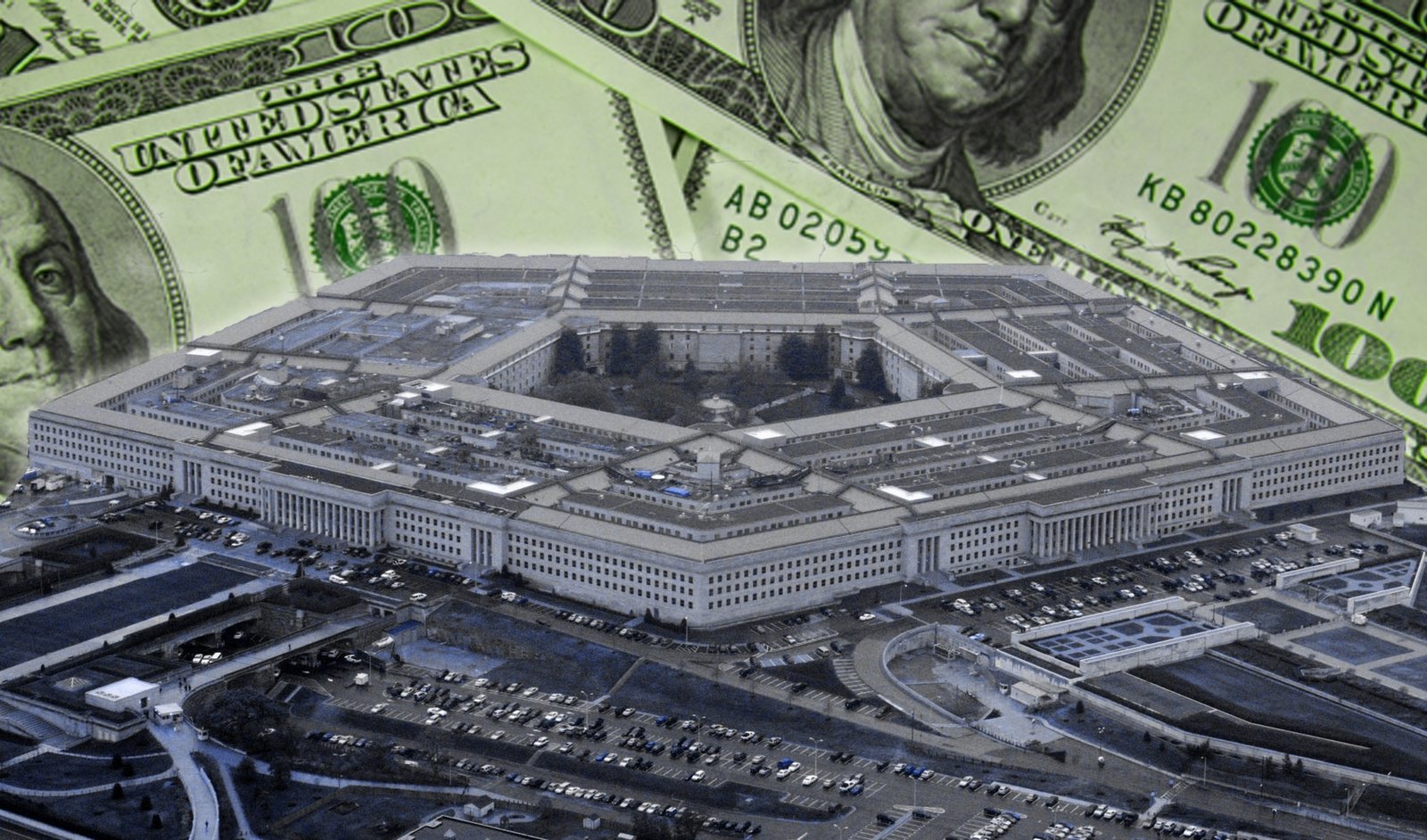
The Defense Department’s recently released class deviation leaves defense contractors with many of the same questions they previously had about how they should comply with a series of restrictions aimed at severing ties with companies the Pentagon says support Beijing’s military. In fact, it adds even more ambiguity.
Several China-related contracting restrictions enacted by Congress took effect on June 30, including banning the Defense Department from contracting with companies that retain consultants lobbying on behalf of companies designated by the Pentagon as Chinese military companies under its Section 1260H list, as well as prohibiting DoD from entering into, renewing or extending a contract for the procurement of goods, services or technology with those blacklisted firms.
The Defense Department was supposed to issue a Defense Federal Acquisition Regulation Supplement rule explaining what contractors would need to certify that their consultants do not work with companies blacklisted by the Pentagon, but submission of the draft rule has already been delayed multiple times.
In the absence of rulemaking, the Defense Department issued a class deviation to allow the Pentagon to immediately implement new restrictions, leaving industry no opportunity to comment on the rules before they were announced or took effect.
Notably, the rule significantly expands the definition of a Chinese military company beyond entities identified on the Pentagon’s Section 1260H list. The definition now also includes companies on the Treasury Department’s non-specially designated nationals Chinese military industrial complex companies list, entities identified by the Commerce Department, and companies owned, controlled by or affiliated with those entities.
But it is not exactly clear how this impacts defense contracts.
As for Sec.851 of the fiscal 2025 defense authorization bill, which bars the Pentagon from contracting with companies that retain consultants lobbying for firms blacklisted by the DoD, it appears that the certification that contractors have to present still refers back to the 1260H list only — contractors are required to certify that they do not do business with a “covered lobbyist,” which is defined as an entity engaged in lobbying activities on behalf of companies designated under Section 1260H.
“It does not appear to encompass the broader definition of Chinese military company, but again, that’s a little bit of a gray area, and it’s not entirely clear what the rulemakers were intending here,” Tracye Howard, government contracts partner at Wiley Rein LLP, told Federal News Network.
“What the DoD contractor has to do is essentially the same here — reach out, get these representations from people saying, ‘I’m not a covered lobbyist.’ I think the potential for greater vetting is on the people who are being asked to make those representations, and does that go beyond just representing people on the 1260H list, or does it encompass these other categories that are in the DFARS?” she added.
Making a ‘reasonable inquiry’
The class deviation also leaves unresolved another key issue — what exactly constitutes a “reasonable inquiry” when it comes to complying with the new restrictions.
The law created a safe harbor for companies that make “reasonable inquiries regarding the lobbying activities of another entity and determined such entity was not a covered lobbyist.” But neither the provision nor the class deviation defines what qualifies as a reasonable inquiry.
“I don’t think you can rely on the [Federal Acquisition Regulation] definition here, I don’t think it would make sense. Because it’s not defined, it’s going to be up to companies to determine what they think is reasonable,” Howard said.
“Most contractors who I’ve spoken to have decided that it is going to involve getting representations from people who might be covered lobbyists. It could also involve reviewing public disclosures from lobbying or the Foreign Agents Registration Act. Those could also be activities one would consider to be reasonable inquiries, but it’s not at all defined, and so the rulemakers haven’t given us much to go on here,” she added.
In addition, Howard said contractors must ensure they are complying with the new requirements when they are submitting their proposals since those submissions effectively serve as certifications of compliance to the government.
“Anytime contractors are making representations to the government, whether standalone or by virtue of submitting a proposal, that’s creating False Claims Act risk, and we’ve seen a lot of emphasis over the last few years on scrutinizing contractors and the representations that they make to the government, and using the False Claims Act to police that. This is one additional area that contractors need to be concerned about,” Howard said.
It appears that the Defense Department closed its proposed rulemaking process after issuing the class deviation.
“It is part of the larger FAR and DFARS overhaul process, so this is a class deviation on the same page as all the other DFARS overhaul class deviations. They are all in effect now. Now, my assumption is after we go through the FAR notice and comment process, there will be a smaller DFARS notice and comment process, and this would be part of that,” Howard said.
If you would like to contact this reporter about recent changes in the federal government, please email anastasia.obis@federalnewsnetwork.com or reach out on Signal at (301) 830-2747.
Copyright
© 2026 Federal News Network. All rights reserved. This website is not intended for users located within the European Economic Area.
