

With limited time to act and no guarantee of success, Democrats are eyeing government spending negotiations as their best shot at still getting a 2027 federal pay raise across the finish line.
In a press conference Wednesday, leaders of the Federal Workforce Caucus outlined options for attempting to override the Trump administration’s currently planned pay freeze for most civilian employees.
Joined by several federal union officials, the lawmakers called for a 4.1% raise beginning in January under the FAIR Act, introduced earlier this year. The members suggested that the most likely option for enacting the legislation would be to include it as a policy rider in a congressional appropriations package.
In the coming months, Rep. James Walkinshaw (D-Va.), an original cosponsor of the FAIR Act, vowed to push for the bill to be included in 2027 spending legislation, once Congress heads into its lame duck session following the midterm elections.
“We’re going to fight for as much as we can get as soon as we can get it,” Walkinshaw told reporters. “But federal workers should know that this is going to be a fight, and there’s not a guaranteed outcome.”
Congress is expected to negotiate government spending levels for the remainder of the fiscal year in the weeks leading up to the current continuing resolution’s deadline. The short-term measure, enacted in early September, funds agencies generally at current levels through Dec. 11. It gives lawmakers more time to find compromise on a full-year spending measure, though that will likely be difficult.
After the midterm elections, Congress will have limited time in session to negotiate federal spending. Lawmakers said Wednesday they hoped to see action prior to January, when the federal pay raise — or lack thereof — is expected to take effect.
“We have about a little over five or six weeks to get this done, and hopefully it will be done,” Rep. Steny Hoyer (D-Md.) said.
While most civilian federal employees are currently on track to see a pay freeze in 2027, federal law enforcement personnel and uniformed service members will see pay increases beginning in January, according to the president’s alternative pay plan. President Donald Trump recommended a 3.8% raise for law enforcement personnel and a 5-7% raise for military members, commensurate with experience.
At the very least, Democrats and union officials said, all civilian federal employees should get a 3.8% pay raise. That would match the president’s planned increase for law enforcement.
“No president has pursued ‘divide and conquer’ quite like this president we have today,” said Everett Kelley, national president of the American Federation of Government Employees. “Up until now, every single president, Democrat and Republican, has treated the whole federal workforce more or less the same … But not this one, and it’s wrong. It is the final insult.”
Hoyer pointed to what would become a pay disparity between civilian and military personnel working at the Defense Department, some of whom perform similar or the same duties.
“Yes, the sergeant over at the Pentagon, who is sitting there at a computer and doing a job, needs to be compensated in a fair and effective way,” the congressman said. “But by the way, the person sitting next to that sergeant in civilian garb, not in the military, who’s doing exactly the same thing, ought to be comparably compensated.”
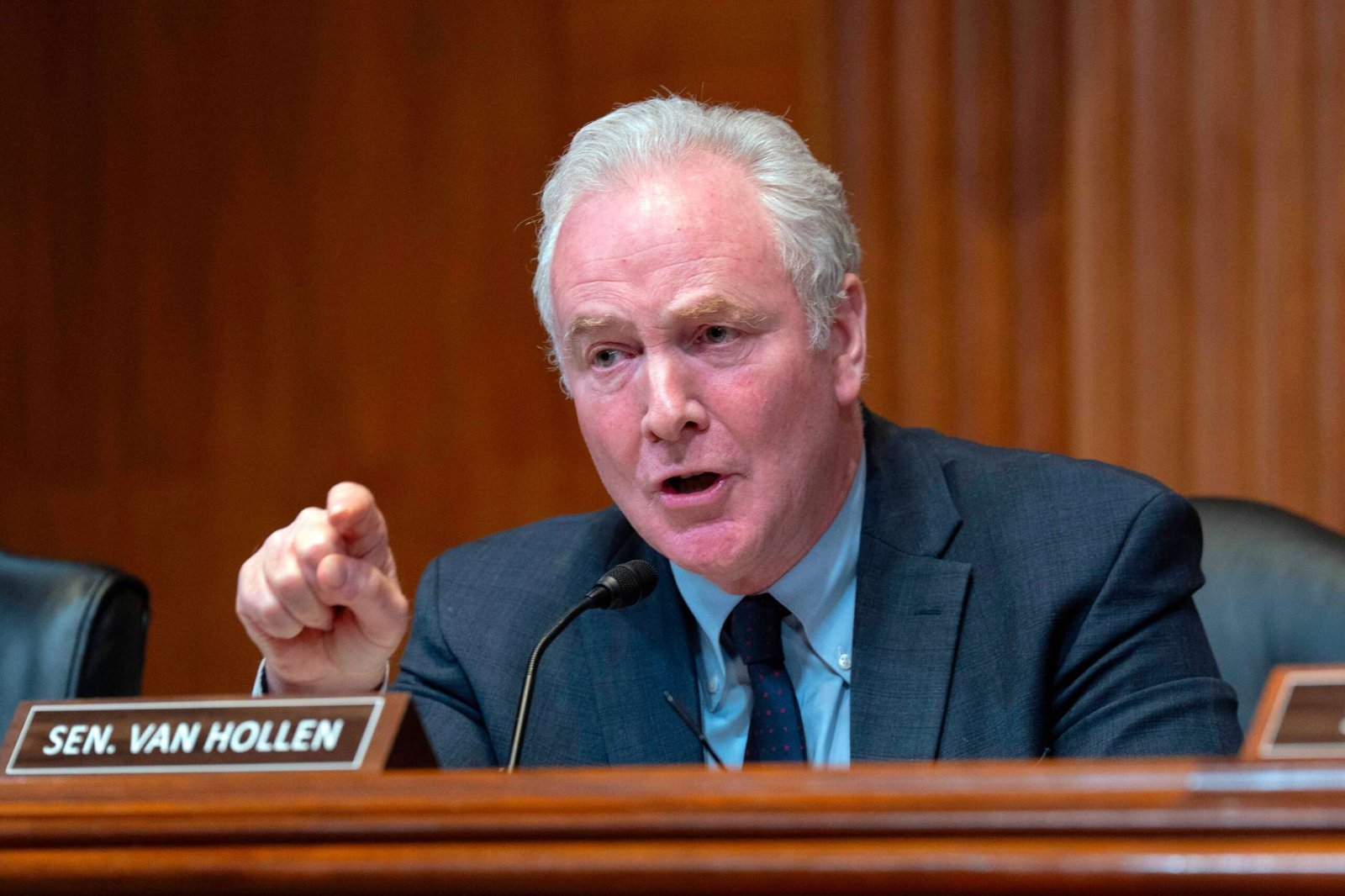
“The president is talking about giving one a pay increase and the other one a pay cut,” Sen. Chris Van Hollen (D-Md.) added. “So we’re going to push back — and we have been successful at pushing back before.”
So far, GOP-led appropriations committees have not indicated any intention of deviating from the president’s planned pay freeze. But if congressional support for a pay raise becomes widespread enough, there may be a chance of using spending negotiations to change the current trajectory, said John Hatton, staff vice president at the National Active and Retired Federal Employees Association (NARFE).
“There’s always a give and take in those negotiations over what funding levels different agencies have, what the top line funding levels are,” Hatton told Federal News Network. “This will be another point of negotiation.”
The last time Congress intervened in federal pay raise plans was during the 2018-2019 government shutdown. Once lawmakers reached an agreement on appropriations to end the shutdown in February 2019, the spending deal included a 1.9% pay increase for civilian federal employees.
The legislated pay raise for federal employees overrode a pay freeze that Trump, at the time, had implemented just months earlier. The salary increase was offered to federal employees retroactively, dating back to the first full pay period in January.
“Even if there is a delay to reaching a spending deal in December of this year, and it’s reached in January, February, March, there’s the possibility that the pay raise could be retroactive,” Hatton said.
Union leaders expressed strong support for a federal pay raise next year, urging Congress to take action and override the president’s planned freeze.
“So many years, Congress has done their own thing when the president suggested a certain pay adjustment,” Randy Erwin, national president of the National Federation of Federal Employees, said. “This Congress needs to find its backbone and check President Trump with this reprehensible plan that he has proposed.”
The press conference this week follows a Sept. 15 letter, signed by more than 100 House and Senate Democrats, along with one Republican. The letter, led by Walkinshaw, Hoyer and Van Hollen, as well as Sen. Brian Schatz (D-Hawaii), urged congressional leaders to intervene in the pay freeze plan, warning that it would hurt recruitment and retention.
Trump used a similar argument in his August alternative pay plan, writing that a 3.8% raise to eligible federal law enforcement members was necessary for recruitment and retention.
“The same rationale applies to all federal workers,” lawmakers contended. “If competitive compensation is necessary to recruit and retain qualified federal law enforcement officers, it is also necessary to recruit and retain qualified employees throughout the federal government.”
Democrats and union leaders also argued that a federal pay freeze effectively amounts to a pay cut because of rising costs of living and more modest pay increases over the last couple years.
“Prices continue to rise, and inflation is now up to 3.5%,” Walkinshaw said. “A pay freeze is a pay cut.”
Doreen Greenwald, national president of the National Treasury Employees Union, argued that a federal pay freeze is more than simply a workforce issue; it would lead much broader negative impacts on federal services.
“A pay freeze would force them to absorb these rising costs with a shrinking paycheck. It would also make it harder for federal agencies to recruit qualified candidates and retain the skilled employees needed to serve the public,” Greenwald said. “When federal pay falls behind, agencies lose experienced workers and struggle to replace them. That means fewer skilled employees to process benefits, protect public health and safety, enforce the law and carry out the other services Americans count on.”
If you would like to contact this reporter about recent changes in the federal government, please email drew.friedman@federalnewsnetwork.com or reach out on Signal at drewfriedman.11
Copyright
© 2026 Federal News Network. All rights reserved. This website is not intended for users located within the European Economic Area.
