

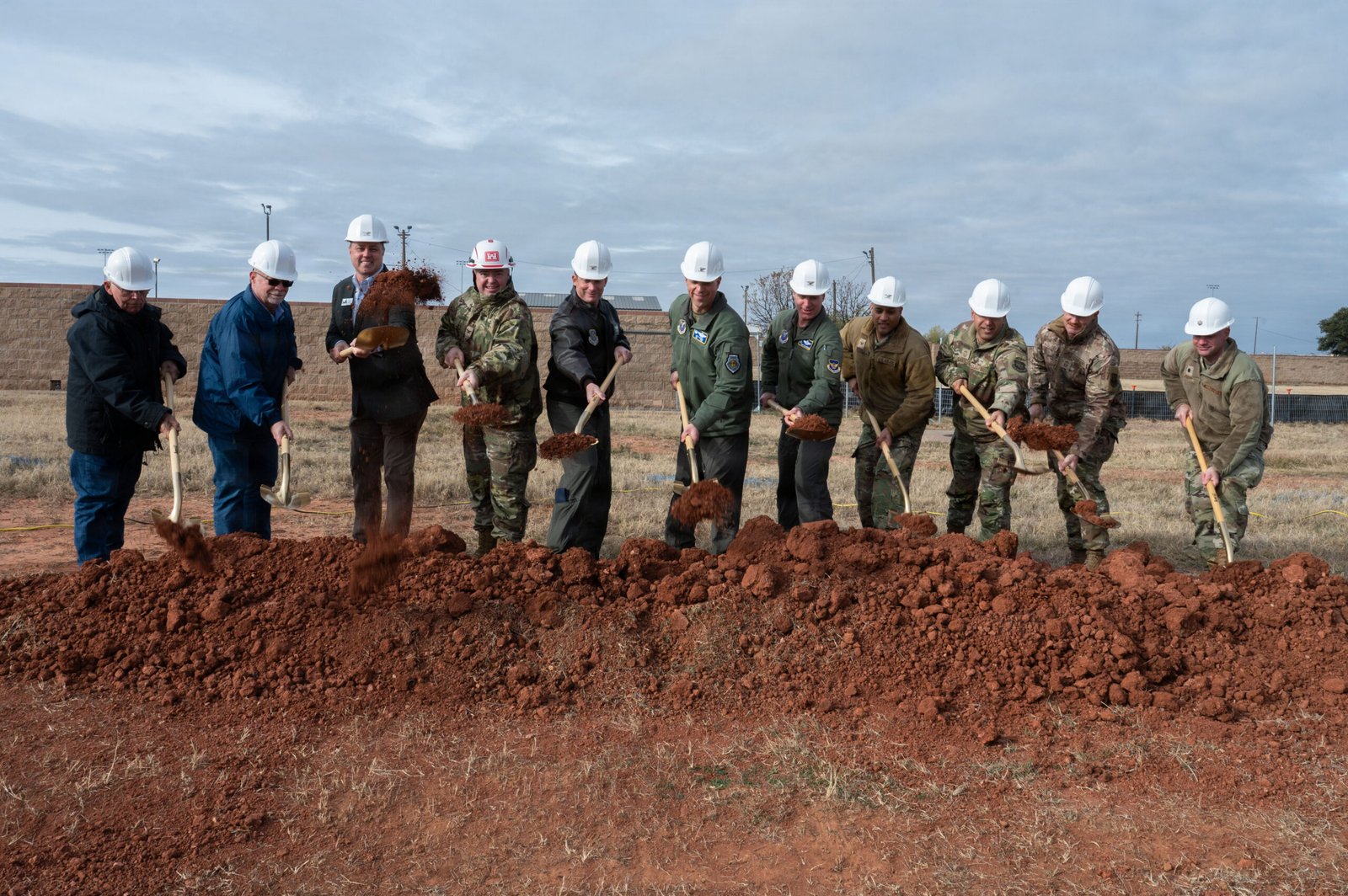
The Department of the Air Force wants to launch a construction boom with its fiscal 2027 budget, more than doubling its request over 2026, according to budget documents.
The combined military construction and facilities sustainment, restoration, and modernization budgets fund infrastructure costs for everything from hangars and runways to family housing. The department’s 2027 budget request asks for about $26.7 billion, up from $13 billion in 2026, including:
- $730 million for new hangar and support spaces for the F-47 fighter. The facilities, to be built at Nellis Air Force Base, Nev., anticipate the F-47’s first flight in 2028.
- $1.33 billion for modernized nuclear weapons facilities to support B-21 Raider beddowns at two air bases and for missile silos and related facilities for the Sentinel intercontinental ballistic missile.
- $1 billion to build new operations centers at four Space Force bases.
New projects for Active-Duty Air Force, Air National Guard, Air Force Reserve, and Space Force facilities total $11.15 billion—more than double the $5.33 billion all components are budgeted to spend in 2026. Viewed another way, that’s almost exactly four times what the department asked for five years ago.
Facilities Sustainment, Restoration, and Modernization spending would also double under this plan, from $5.7 billion in 2026 to nearly $11.5 billion in ’27. Include in that is a tripling of Space Force spending, which would rise from $570 million to nearly $1.8 billion. Guard and Reserve funds would rise by about 24 percent, $771 million in 2026 to about $1 billion in 2027.
Finally, the request for funding for family housing construction for the entire department more than doubled, going from around $644 million to $1.3 billion.
Department of the Air Force Construction Accounts (dollars in thousands)
| ACCOUNT | 2026 | 2027 |
|---|---|---|
| Active Air Force/Space Force MILCOM | $4,911,373 | $10,601,180 |
| Family Housing | $643,995 | $1,300,545 |
| Guard MILCON | $303,546 | $525,221 |
| Reserve MILCON | $116,468 | $22,172 |
| Air Force FSRM | $5,738,712 | $11,496,138 |
| Space Force FSRM | $570,682 | $1,798,640 |
| Reserve FSRM | $193,802 | $264,919 |
| Guard FSRM | $578,069 | $743,372 |
| TOTAL | $13,056,647 | $26,752,187 |
Taken together, it is one of the DAF’s biggest swings yet to address a deep backlog in infrastructure maintenance and repair that Assistant Secretary of the Air Force for Energy, Installations, and Environment Michael Borders wrote in testimony to Congress now is “now valued at $55 billion,” up from $30 billion in 2022.
Big Projects
The Air Force is looking to go move quickly to operate its sixth-generation fighter, the F-47, which officials have predicted will fly by 2028. The first aircraft is now under construction at Boeing’s facilities and Nellis is adjacent to the Nevada Test and Training Range, “the largest contiguous air and ground space available for peacetime military operations in the free world,” according to the Air Force. Among the planned facilities: a maintenance hangar, weapons storage, fuel station, simulator, washracks, a special low-observable corrosion repair facility, training facilities and—the biggest expense of all—$192.5 million for an “apron complex.”
What is not yet clear is whether this construction is an indicator of any intention to permanently locate F-47s in Nevada. Edwards Air Force Base, Calif., has long been the Air Force’s main testing hub, but the size of the range in Nevada may argue for a different approach for this next-gen jet. Details should emerge when the Air Force releases its budget this coming week.
Also coming on fast is the B-21. The Air Force previously began constructing new facilities at Ellsworth Air Force Base, S.D., which will be its first bed-down location. The 2027 budget request expands that work to new more bases, with $329 million for new B-21 facilities at Whiteman Air Force Base, Mo., now home to the B-2 fleet, and Dyess Air Force Base, Texas, home to B-1s.
Whiteman is scheduled to get B-21 after Ellsworth, where they would replace its B-2s. Construction for the new bomber would ramp up this year, starting with $169 million for weapons and training facilities. Dyess, meanwhile, would get $160 million to build a simulator and low-observable corrosion control facilities.
Ellsworth is scheduled to get its first B-21 in 2027; Whiteman and Dyess are unlikely to see the new planes until 2030 or later.
The biggest Air Force construction program looming ahead, however, is for the Sentinel ICBM, which needs 450 new silos and associated facilities across five states, including hundreds of miles of cabling and utilities lines. Air Force leaders have called the Sentinel the most complex program in the history of the service. For 2027, officials are seeking a little more than $1 billion to support Sentinel construction at three bases:
- $632 million at F.E. Warren Air Force Base, Wyo., for an operations group facility and a utility corridor
- $232 million at Minot Air Force Base, N.D., for security forces and maintenance facilities
- $138.5 millon at Malmstrom Air Force Base, Mont., for an operations and maintenance complex
The department is also asking for $700 million to begin construction at Redstone Arsenal, Ala.—$450 million for a new U.S. Space Command headquarters building there, so it can relocate from Colorado, and $250 million for a “Space Force Operational Facility” to support USSPACECOM, according to budget documents. Three other $250 million Space Force facilities are planned for Kirtland Air Force Base, N.M.; Grand Forks Air Force Base, N.D., and Schriever Space Force Base, Colo.
