

Key Points
- BL Harbert International was awarded a $37,607,122 contract to build an F-35 Special Access Program Facility at Ebbing Air National Guard Base in Fort Smith, Arkansas.
- The U.S. Army Corps of Engineers in Fort Worth, Texas, is managing the contract, with completion estimated by January 31, 2029.
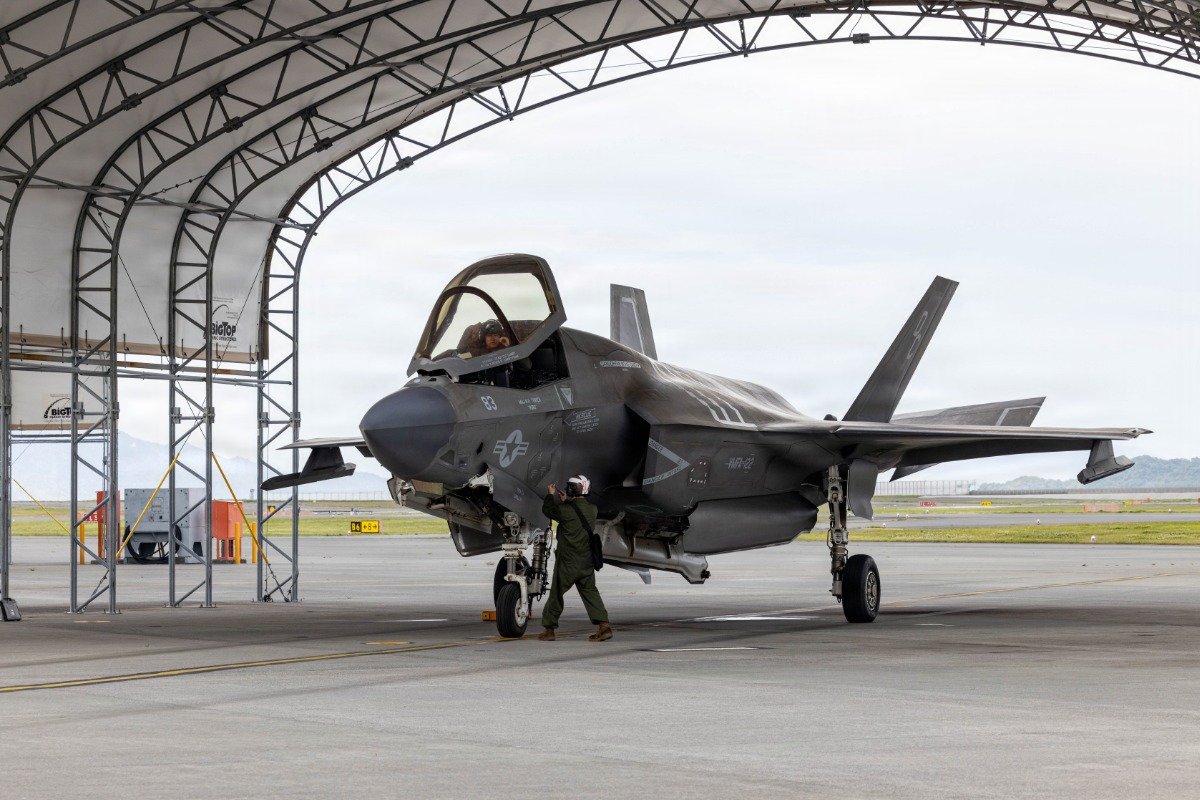
A construction company has won a $37.6 million contract to build a facility so secure it needs its own classification category, part of a sprawling effort to turn a small Arkansas Air National Guard base into an international training hub for the world’s most advanced fighter jet.
BL Harbert International LLC, based in Birmingham, Alabama, has been awarded a contract worth $37,607,122 to construct an F-35 Special Access Program Facility, according to a Department of War contract announcement.
The total cumulative value of the contract, including previously awarded amounts, reaches $38,958,927, and the deal drew six competing bids submitted through the government’s online solicitation process before the Army selected BL Harbert. Work will take place in Fort Smith, Arkansas, with an estimated completion date of January 31, 2029.
– ADVERTISEMENT – CONTINUE READING BELOW –
A Special Access Program Facility, often shortened to SAPF, is a building constructed to meet strict federal security standards under Intelligence Community Directive 705, requirements governing physical construction, electronic shielding, and access control for spaces where personnel handle classified information tied to specially compartmented programs. In plain terms, it’s a facility built specifically to keep the most sensitive information about the F-35’s capabilities, mission planning, and tactics locked away from anyone without proper clearance, complete with hardened walls, controlled entry points, and technical countermeasures against electronic eavesdropping. According to a description of the project published through federal contracting records, the facility will function as a squadron operations mission planning center, providing controlled workspace for secure flight planning and training, along with administrative space and equipment storage for aircrew, work the Army has described as critical to supporting combat crew functions and ensuring operational readiness.
The facility is being built at Ebbing Air National Guard Base, home to the Arkansas Air National Guard’s 188th Wing, nicknamed the Flying Razorbacks, a unit that currently flies the MQ-9A Reaper drone and conducts intelligence, surveillance, and reconnaissance missions rather than crewed fighter jets. That is about to change dramatically. The U.S. Air Force selected Ebbing in March 2023 to serve as the long-term pilot training center supporting F-35 and F-16 fighter jets purchased through the Foreign Military Sales program, an arrangement where the United States sells American-made military equipment to allied nations, by countries including Singapore, Switzerland, Poland, Germany, and Finland. Under the current plan, the base is expected to host up to 36 F-35s and 12 F-16s, with earlier reporting indicating officials have explored expanding that further to as many as 48 total fighter jets as the program has developed.
That expansion carries a price tag well beyond this single SAPF contract. Officials previously estimated the conservative total cost of building out Ebbing’s full pilot training center infrastructure at roughly $765 million, a figure covering hangars, flight simulation facilities, an academic training center, and the secure facility now under construction, alongside runway and support infrastructure upgrades needed to handle international training operations at that scale. Construction on a separate 44,000-square-foot (4,088 sq m) academic training center at Ebbing began earlier in 2026, carrying its own estimated cost of roughly $74 million and designed to house classrooms supporting the multinational pilot training mission once foreign F-35s and F-16s begin arriving.
Singapore’s F-35s are expected to reach Ebbing in late 2026, with the country’s F-16 fighters following in the summer of 2027, a timeline that would bring up to 400 additional personnel to Fort Smith once all of Singapore’s aircraft are stationed there. That kind of sustained international presence explains why Congressman Steve Womack, whose district includes Fort Smith, has previously described the training center as a once-in-a-generation opportunity for the city, one expected to bring lasting economic activity as foreign military personnel and their families live, work, and spend money in the local community for years, if not decades, to come.
Funding for this specific SAPF contract comes from Fiscal Year 2026 military construction funds allocated to the Army National Guard, with the full $37,607,122 obligated at the time of the award. The U.S. Army Corps of Engineers’ Fort Worth, Texas district is managing the contract on the government’s behalf, overseeing construction under contract number W9127S-26-C-A009, part of a broader Army Corps portfolio managing military construction projects across multiple states.
