

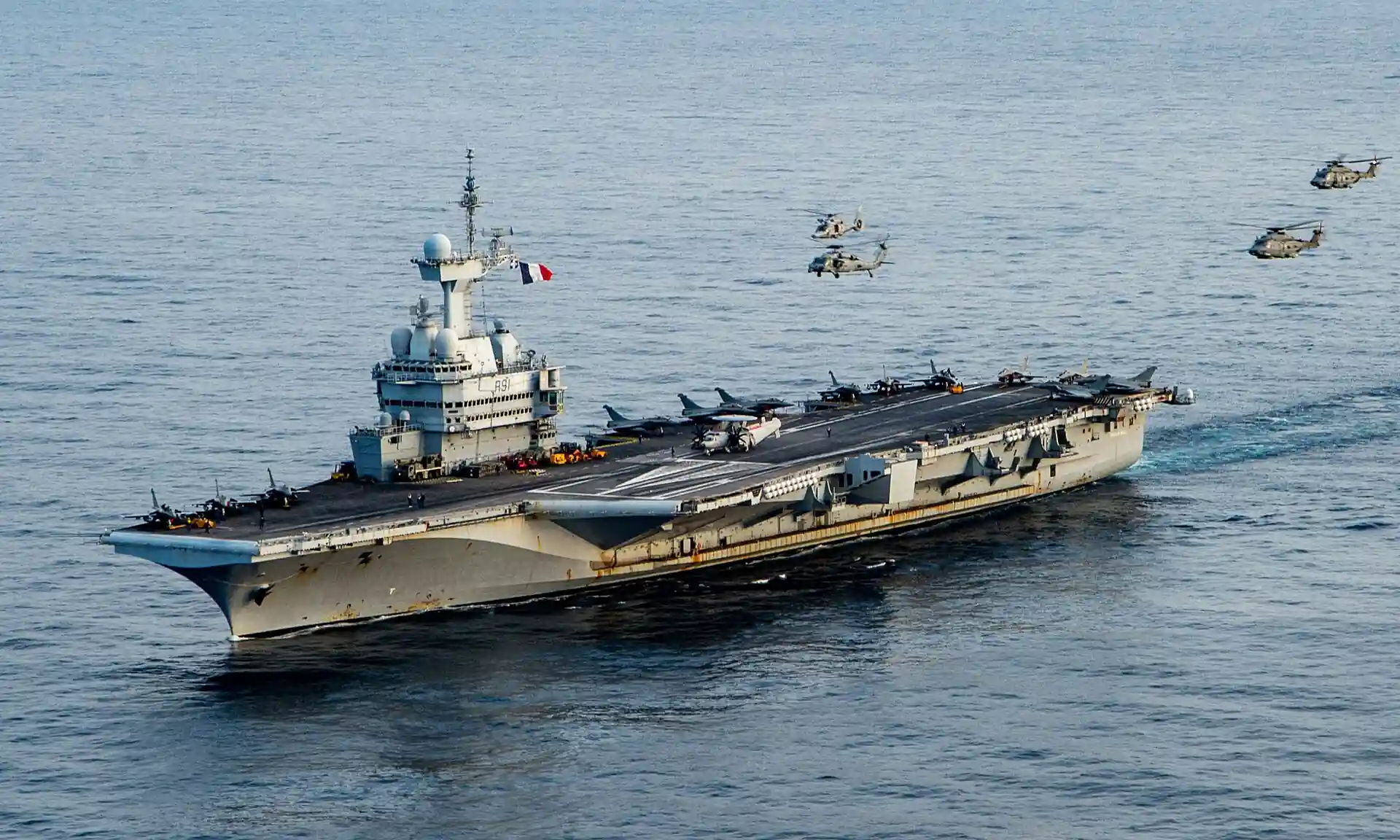
Imagine a 42,000-ton floating runway slicing through the Mediterranean at nearly 27 knots. Fighter jets roar off its deck before breakfast. Radar arrays spin like watchful eyes. And somewhere deep inside, two nuclear reactors hum quietly, turning seawater into steam and steam into power.
That’s the reality aboard Charles de Gaulle, France’s only nuclear-powered aircraft carrier, and one of the most strategically important warships in Europe.
If you’ve searched for Charles de Gaulle aircraft carrier, you’re probably wondering what makes this ship different. Is it comparable to U.S. supercarriers? How powerful is it really? And why does France, alone in Europe, operate a nuclear-powered carrier?
Here’s the short version: Charles de Gaulle (R91) is the flagship of the French Navy, designed to project air power thousands of miles from home without relying on foreign bases. It carries up to 30–40 aircraft, including the formidable Dassault Rafale M, and uses a CATOBAR launch system similar to American carriers. That means catapults. Arrestor wires. Full-throttle launches.
But beyond the specs lies something more interesting. This ship represents French strategic independence, a floating symbol of sovereignty. When it deploys to the Persian Gulf or the Indo-Pacific, it’s not just conducting air operations. It’s sending a geopolitical message.
And here’s what most casual readers miss: unlike larger U.S. carriers, Charles de Gaulle was built with European constraints in mind, tighter budgets, different doctrine, and a focus on multi-role flexibility rather than sheer scale.
History & Development of Charles de Gaulle
The story of Charles de Gaulle doesn’t begin in a shipyard. It begins with a dilemma.
In the late Cold War years, France faced a hard truth: its aging carrier, the Clemenceau, was nearing retirement. And in a world dominated by American supercarriers and Soviet naval ambitions, France had to decide, remain a regional naval power or build something that could operate independently, anywhere on the globe.
So in 1986, Paris made a bold call. Instead of constructing a conventional carrier like most navies, it approved a nuclear-powered design. That decision wasn’t just about speed or endurance. It was about autonomy. Nuclear propulsion meant fewer refueling stops, longer deployments, and strategic freedom.
Read also: How Powerful Is HMS Queen Elizabeth?
Construction began in Brest in 1989. The process wasn’t smooth. Budget overruns, technical hiccups, and even a famously short flight deck (yes, they had to extend it after realizing certain aircraft couldn’t safely land) slowed progress. Critics questioned the cost. Supporters called it an investment in sovereignty.
Here’s a quick timeline to anchor it:
| Milestone | Date |
| Ordered | 1986 |
| Keel laid | 1989 |
| Launched | 1994 |
| Commissioned | 2001 |
When it finally entered service in 2001, Charles de Gaulle (R91) became the first nuclear-powered aircraft carrier outside the United States. That fact alone reshaped Europe’s naval balance.
And the name? It honors Charles de Gaulle, the wartime leader who championed French independence on the global stage. Fitting, really. The ship carries forward his philosophy: France decides for France.
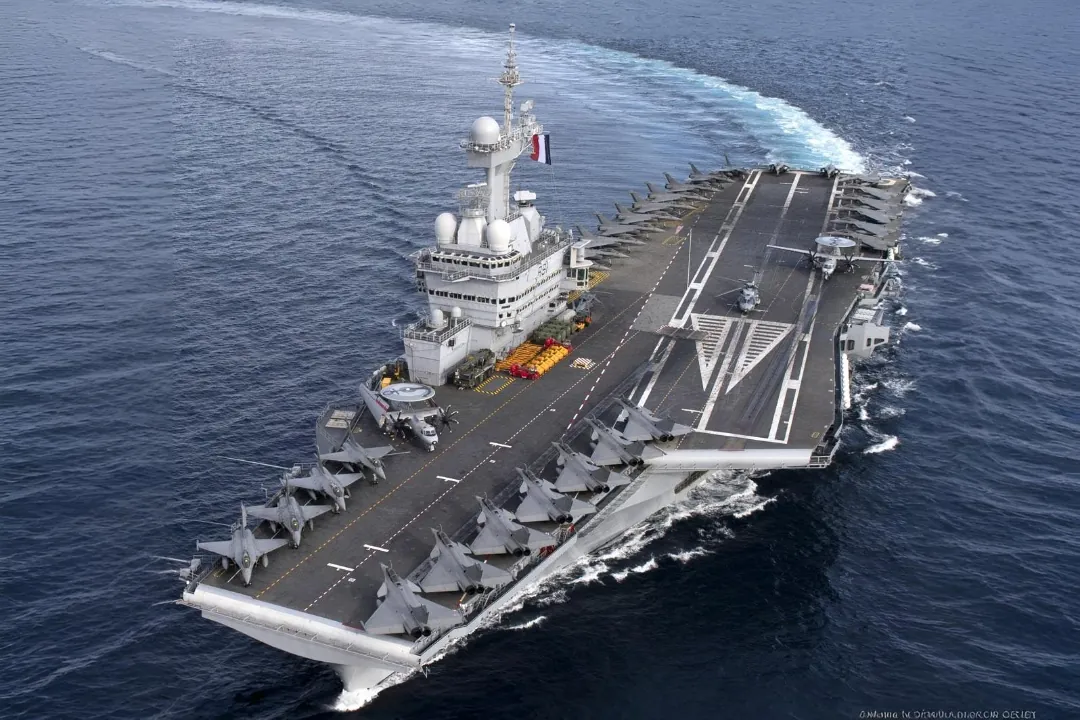
In many ways, this carrier isn’t just a vessel. It’s policy made steel.
Technical Specifications: What Powers Charles de Gaulle?
Numbers don’t usually stir emotion. But with warships, they should.
Behind every statistic on Charles de Gaulle aircraft carrier is a design choice, something engineers debated, politicians funded, and sailors now rely on at sea.
Let’s start with scale. She’s smaller than American supercarriers, yes, but still enormous by European standards.
Core Dimensions
| Specification | Detail |
| Full Load Displacement | ~42,000 tons |
| Length | 261.5 meters (858 ft) |
| Beam (Flight Deck Width) | ~64 meters |
| Draft | 9.5 meters |
| Crew | ~1,350 ship crew + ~600 air wing |
To visualize that: picture nearly 2,000 people living and working aboard a floating airbase the length of three football fields.
Now the heart of the ship, the propulsion system.
Unlike conventional carriers, Charles de Gaulle runs on two K15 nuclear reactors. These generate steam that drives turbines, producing roughly 76,000 shaft horsepower. No diesel refueling every few days. No dependence on tanker ships for propulsion fuel.
Top speed? About 27 knots (50 km/h). Not blistering by sports car standards, but for 42,000 tons of steel, that’s impressive.
And endurance? The reactors can operate for years before refueling. In practical terms, food supply, not fuel, is what limits deployment length.
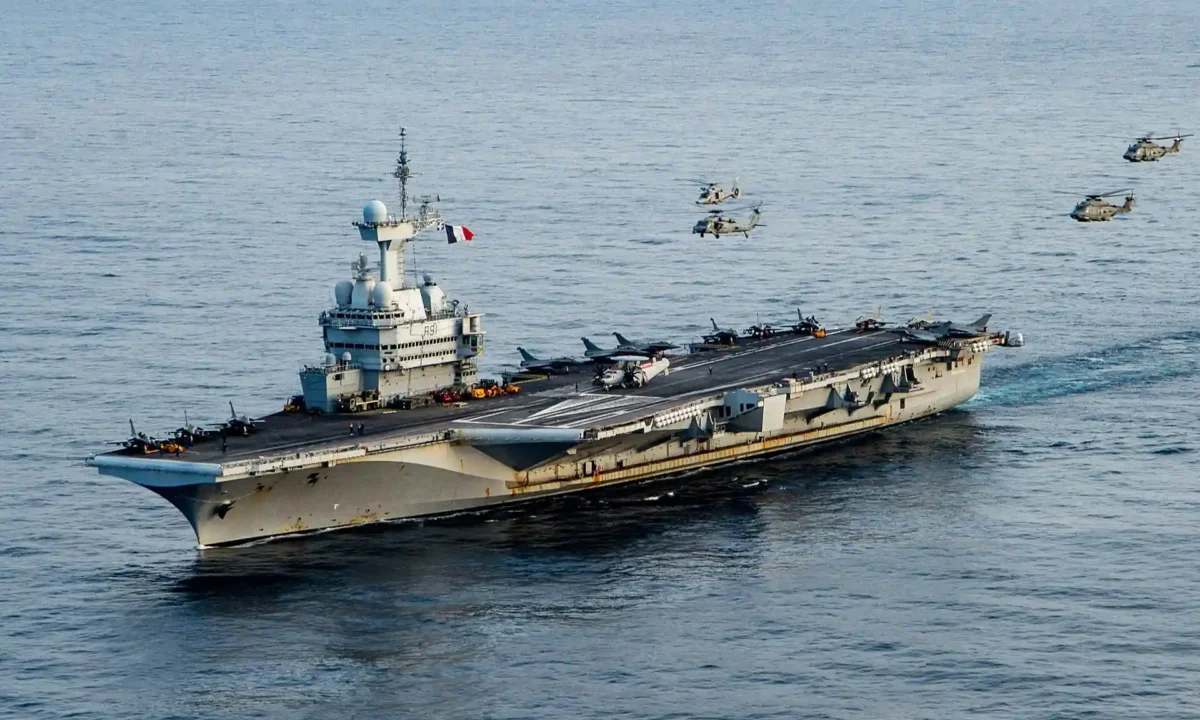
One often-overlooked detail: the angled flight deck and two American-built steam catapults. This CATOBAR setup (Catapult Assisted Take-Off But Arrested Recovery) allows heavier aircraft launches than ski-jump systems used elsewhere in Europe.
So while it may not match U.S. carrier size, Charles de Gaulle punches above its weight, built leaner, but optimized for sustained global operations.
And honestly? That balance between size and capability is part of what makes it fascinating.
Flight Operations & Air Wing: The Real Power of Charles de Gaulle
If the hull is muscle and the reactors are heart, the air wing is the punch.
Because a carrier without aircraft is just a very expensive ferry.
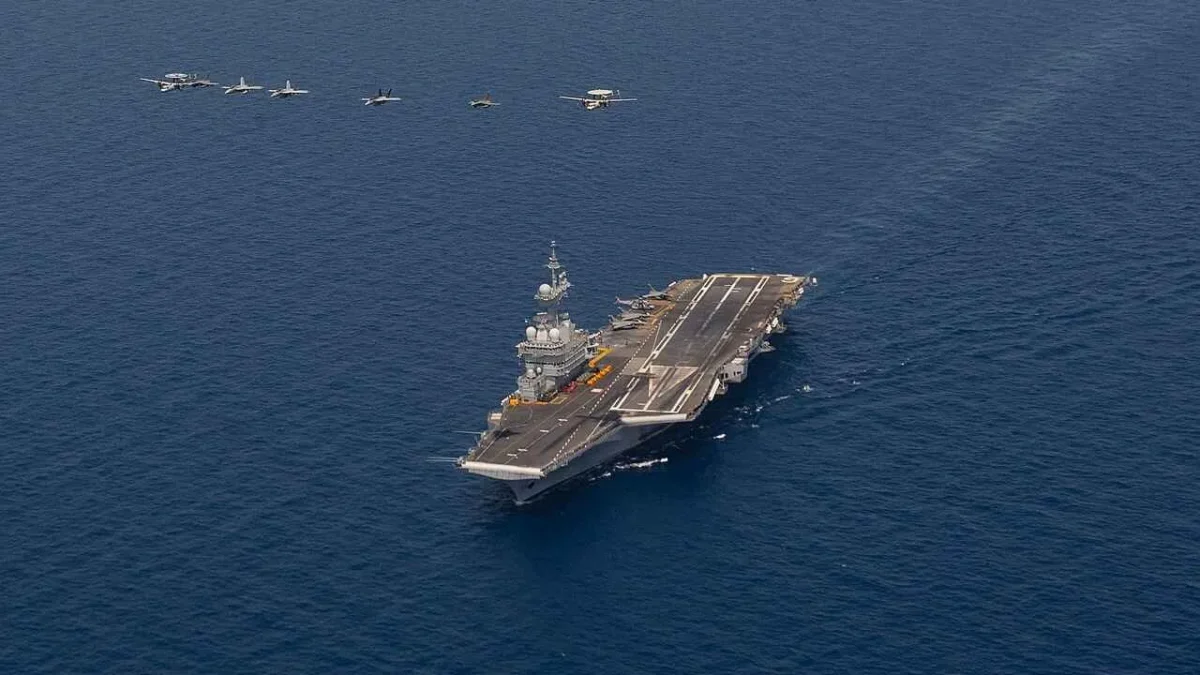
The Charles de Gaulle aircraft carrier operates a CATOBAR system, catapult launches and arrested landings, the same method used by U.S. Navy supercarriers. That matters. It allows heavier, fully armed jets to launch with maximum payload rather than sacrificing fuel or weapons.
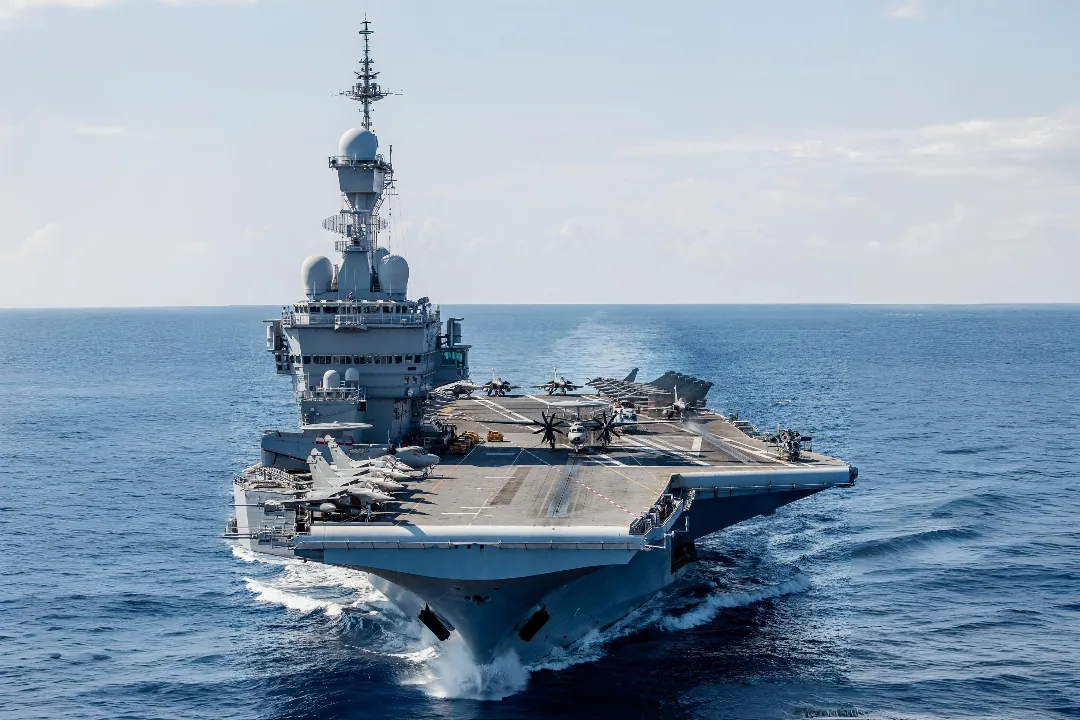
At the center of its air wing sits the Dassault Rafale M. This isn’t just a fighter. It’s a multirole workhorse capable of air superiority, deep strike, reconnaissance, and nuclear deterrence missions.
In combat operations over Libya, Iraq, and Syria, Rafale M jets launched directly from Charles de Gaulle and conducted precision strikes hundreds of miles inland.
Supporting them is the E-2C Hawkeye, a flying radar platform that extends surveillance beyond the horizon. Think of it as the carrier’s airborne air-traffic controller and early warning shield combined.
A typical air group might look like this:
| Aircraft Type | Approx. Number |
| Rafale M fighters | 24–30 |
| E-2C Hawkeye | 2–3 |
| Helicopters (NH90, Dauphin) | 4–6 |
Total capacity floats around 30–40 aircraft depending on mission.
Here’s the interesting twist: unlike U.S. carriers designed for overwhelming mass, Charles de Gaulle’s air wing is calibrated for flexibility. It can scale up for high-intensity combat or downshift into reconnaissance and maritime security roles.
The deck cycle is intense, launch, recover, refuel, rearm. Repeat. Controlled chaos, really.
And when those Rafales line up at the catapult, engines screaming against the holdback bar, you realize something:
This ship doesn’t just carry aircraft. It generates air power from the sea.
How Charles de Gaulle Protects Itself
Here’s something people often assume: aircraft carriers are unstoppable fortresses.
They’re not.
In reality, a carrier like Charles de Gaulle is both powerful and vulnerable. It’s the centerpiece of a strike group, but also a high-value target. So while its fighter jets project force outward, the ship itself maintains layered defenses to survive in hostile waters.
Let’s start with radar and situational awareness. The carrier is equipped with advanced 3D radar systems capable of tracking multiple aerial and surface threats simultaneously. Paired with combat management systems, this allows rapid threat assessment, because in naval warfare, seconds matter.
For hard defense, the ship carries the Aster 15 missile system. These vertically launched missiles intercept incoming aircraft or anti-ship missiles at medium range. Think of them as the ship’s mid-range shield.
Closer in? That’s where point-defense systems step up.
| System | Purpose |
| Aster 15 Missiles | Medium-range air defense |
| Sadral Launchers (Mistral missiles) | Short-range missile defense |
| 20mm Cannons | Close-in threat suppression |
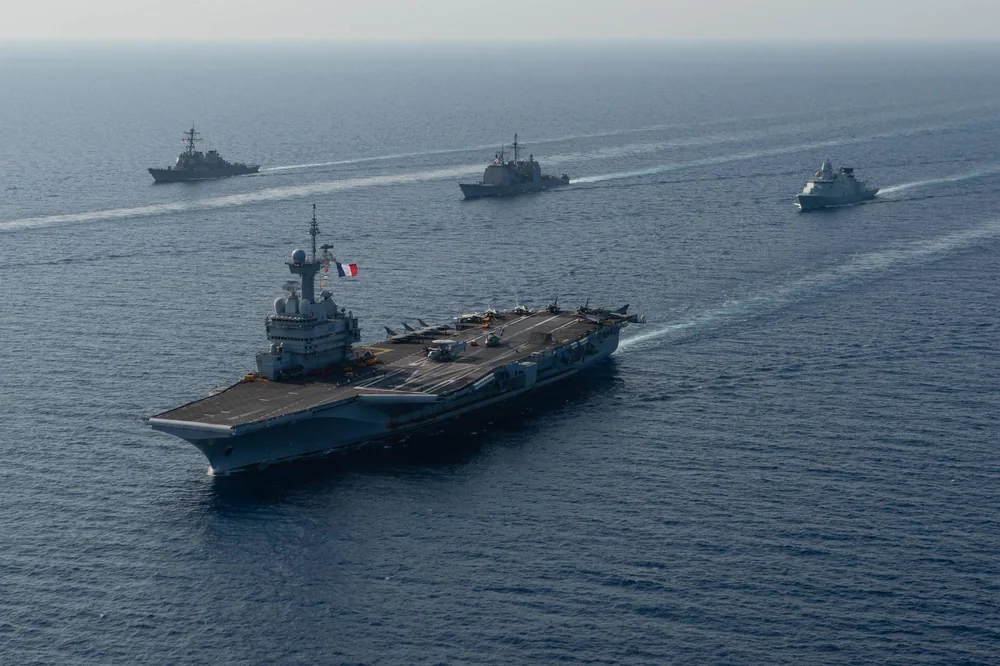
Still, here’s the nuance most overlook: Charles de Gaulle rarely sails alone. It operates within a carrier strike group that includes air-defense destroyers, frigates, submarines, and support ships. The carrier provides offensive air power; escorts provide extended protection.
So the ship isn’t built to fight solo, it’s built to command and anchor a networked force.
And that’s the real defense philosophy here. Not brute armor. Not overwhelming firepower.
Layered systems. Cooperative security. A floating ecosystem of protection built around France’s most valuable naval asset.
Steel helps. Missiles help more.
But coordination? That’s what keeps it alive.
Where Charles de Gaulle Has Proven Its Power
A warship’s résumé isn’t written in brochures. It’s written in deployments.
Since entering service in 2001, Charles de Gaulle has logged thousands of sea days across the Mediterranean, Indian Ocean, Persian Gulf, and even the Indo-Pacific. Not ceremonial cruises, combat operations.
Its first major operational test came after 9/11. During Operation Héraclès, the carrier deployed to the Indian Ocean in support of coalition operations in Afghanistan.
French Dassault Super Étendard jets flew reconnaissance and strike missions hundreds of miles inland. For France, this was proof: it could project air power without relying on foreign airbases.
Fast forward to 2011. During the Libya intervention (Operation Harmattan), aircraft from Charles de Gaulle conducted sustained strike sorties against ground targets. At peak tempo, the carrier launched dozens of sorties per day, an intense operational rhythm for a ship its size.
Then came the fight against ISIS. Between 2015 and 2019, Rafale M fighters launched from the carrier conducted missions over Iraq and Syria. In one deployment, the air wing flew over 1,000 sorties in just a few months.
Here’s a simplified snapshot:
| Operation | Region | Role |
| Héraclès | Afghanistan | Strike & Recon |
| Harmattan | Libya | Air Campaign |
| Chammal | Iraq/Syria | Anti-ISIS Ops |
But there’s another dimension rarely discussed: diplomacy. When Charles de Gaulle sails into a region, it signals commitment. Allies feel reassured. Rivals take note.
And perhaps that’s the most fascinating part.
This ship doesn’t just fight wars, it shapes conversations before they start.
The Future After Charles de Gaulle: Enter PANG
No warship lasts forever. Not even one powered by nuclear reactors.
By the late 2030s, Charles de Gaulle will reach the end of its operational life. Instead of extending it indefinitely, France has chosen something more ambitious: a next-generation replacement known as the Porte-Avions Nouvelle Génération, or simply PANG.
And this isn’t a minor upgrade. It’s a generational leap.
Early projections suggest the new carrier will displace around 70,000–75,000 tons, nearly double the size of Charles de Gaulle. It will feature next-gen nuclear reactors and electromagnetic catapults (EMALS), replacing traditional steam systems.
Here’s a side-by-side snapshot:
| Feature | Charles de Gaulle | PANG (Planned) |
| Displacement | ~42,000 tons | ~75,000 tons |
| Propulsion | 2 × K15 reactors | New-generation reactors |
| Catapult System | Steam CATOBAR | Electromagnetic (EMALS) |
| Entry into Service | 2001 | ~2038 (planned) |
Why go bigger?
Because the future air wing will likely include heavier, more advanced aircraft, possibly a naval version of the Franco-German-Spanish Future Combat Air System (FCAS). Larger deck space means greater sortie generation and improved operational tempo.
But here’s the subtle strategic angle: France isn’t replacing Charles de Gaulle because it failed. It’s replacing it because it succeeded. The carrier validated the nuclear model, proved its combat value, and anchored French power projection for over three decades.
PANG is less a replacement, and more a continuation of a philosophy.
Steel evolves. Strategy adapts.
But the idea remains the same: France intends to keep a sovereign, blue-water carrier capability well into the mid-21st century.
