

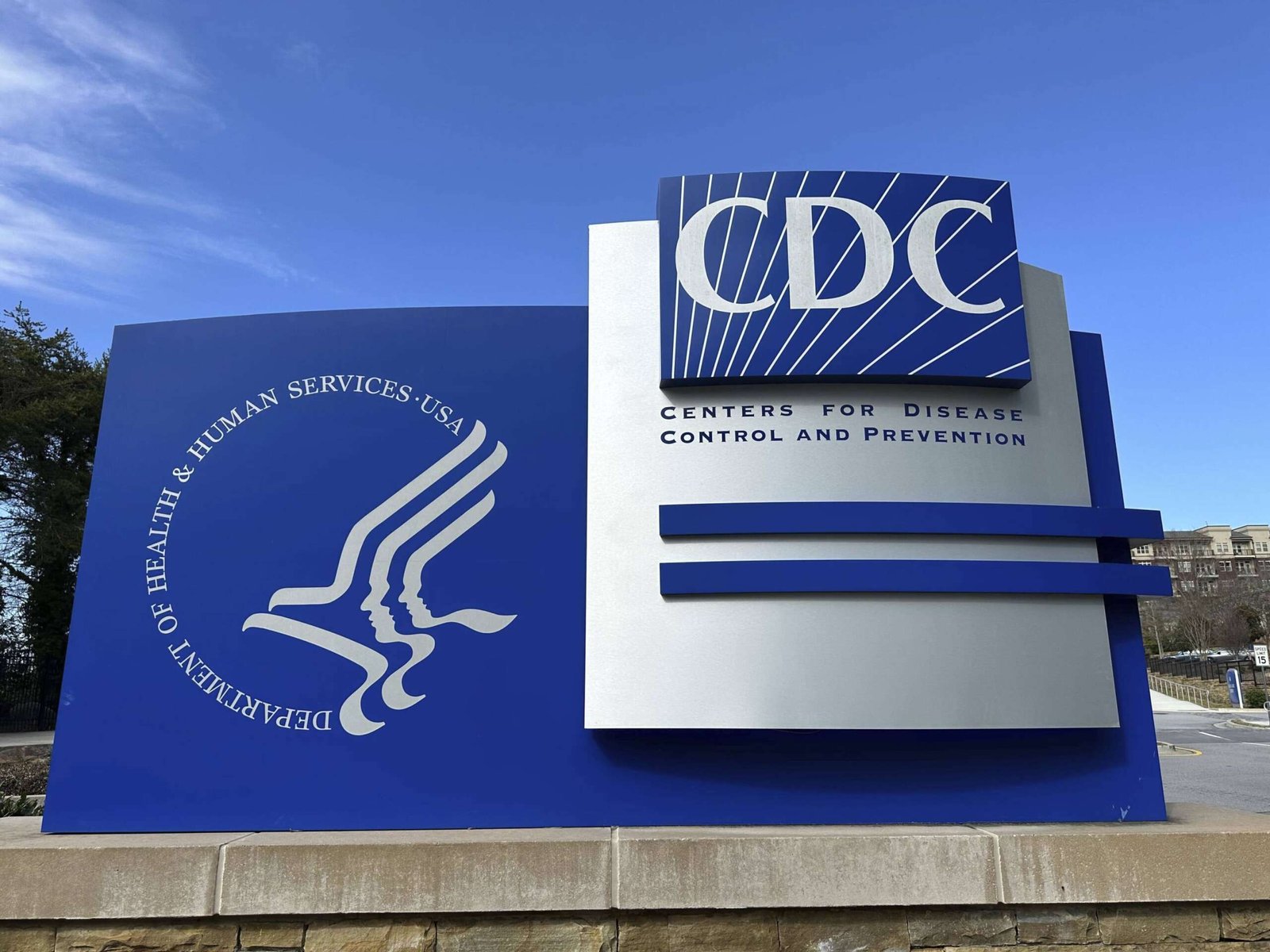
The Centers for Disease Control and Prevention is stepping up efforts to recruit employees to respond to a major Ebola outbreak overseas, now that the agency has elevated the response to its highest level.
Jay Bhattacharya, the Senate-confirmed director of the National Institutes of Health who is performing the delegable duties of CDC director, told CDC employees in an email Tuesday that the 2026 Ebola outbreak — with more than 1,100 confirmed cases — is the second-largest Ebola outbreak ever recorded in the Democratic Republic of Congo, and the third-largest Ebola outbreak documented globally.
Bhattacharya told CDC employees, in a renewed call for frontline responders, that the agency’s Ebola response “will likely last several months and requires substantial staffing.”
“The coming months will require us to make hard decisions about how to prioritize work, especially programmatic activities in [CDC centers, institutes and offices],” he wrote. “We understand the challenges related to balancing program priorities and support for emergency responses, and we appreciate your leadership and flexibility in planning for how your CIO can support response needs.”
In an internal meeting last month, CDC’s National Center for Emerging and Zoonotic Infectious Diseases (NCEZID), which is responsible for the prevention and control of rare but deadly diseases, told employees that the agency’s Ebola response is expected “to go on many months,” probably for another six to 12 months. In that same meeting, NCEZID leadership shared that an internal survey found 50% of respondents rated their personal workplace morale as “somewhat low” or “very low.” Staffing and budget were “by far the dominant concerns,” mentioned in nearly 40% of survey responses.
On June 26, CDC escalated its Ebola response to a Level 1 activation — CDC’s highest level of emergency response that is “reserved for critical emergencies,” according to its website. During a Level 1 activation, “CDC assigns the largest number of staff possible to work 24/7 on the response.”
“Elevating to Level 1 reflects the urgency, scale and complexity of the outbreak and allows CDC to bring additional resources, coordination, and operational support to the response,” Bhattacharya wrote.
A longtime CDC employee told Federal News Network that Level 1 activations are “fairly rare.”
“Things feel very different at CDC when those are happening, versus lower-level responses,” the employee said.
HHS Press Secretary Emily Hilliard said in a statement that by elevating its Ebola outbreak response to a Level 1 activation, CDC is “ensuring the agency is better positioned to provide the highest level of operational support.”
A second CDC employee said a majority of the agency’s emergency responses fall under Level 2 or Level 3 activations, which call for a smaller and more targeted response from the agency’s workforce. The employee said the last time CDC ordered a level 1 activation was in 2020, in response to the COVID-19 pandemic. CDC also reached a level 1 activation for the 2016 Zika virus outbreak, 2014 Ebola outbreak, 2009 H1N1 influenza outbreak and Hurricane Katrina in 2005.
The second CDC employee said the agency is still reeling from deep workforce cuts and “running on fumes.” Despite shedding more than a quarter of its workforce last year — a net loss of more than 3,200 employees — CDC has hired less than 200 employees since the start of the second Trump administration, according to a federal workforce database last updated in May.
Meanwhile, CDC is also supporting ongoing responses to measles, New World Screwworm and polio. CDC’s Emergency Operations Center for the World Cup will also remain active through July. CDC officially ended its hantavirus response on June 24 after containing an outbreak aboard a cruise ship.
“Given this, we are taking a coordinated and deliberate approach to meet the staffing needs of each of our responses and critical non-response work across the agency,” Bhattacharya wrote.
Bhattacharya is calling on more CDC employees to join the CDCReady Responder program. The program, launched after the start of the COVID-19 pandemic, is focused on developing a multidisciplinary task force at CDC to respond to major health threats. As of July 2024, the CDCReady Responder program had about 2,750 employees enrolled. Bhattacharya is asking CDC supervisors to encourage staff to enroll in the program, and to approve Ebola response assignments as soon as they are submitted.
CDC, however, is currently not offering time-off incentives for employees who have completed their frontline tour of duty. A notice obtained by Federal News Network states that the agency’s Post-Deployment Time Off Award (PDTOA) program “has been suspended by HHS.”
“Until HHS reopens this program, supervisors will need to elect another form of recognition for these employees,” the notice states.
A third CDC employee said Sean Slovenski, CDC’s new principal deputy director and chief operating officer, “is aware of the issue and working to resolve it.”
“Response supervisors are entering time-off awards into EASI for all their staff as they roll off response,” the third employee said, referring to the software platform CDC uses to submit awards. “The chief of staff has already submitted the award request for hantavirus deployers and any Ebola deployers who are finishing a rotation. Once EASI is no longer accepting time-off award nominations, CDC will need to find a new method for awarding post-deployment time off.”
Hilliard, the HHS press secretary, said CDC discontinued the practice of granting administrative leave following deployments several years ago.
“Incentive programs operate within designated award windows, and the current timing is not aligned for this specific award, which the CDC is aware of and addressing,” she added. Hilliard said more than 400 employees who deployed during the May 17–June 14 response window are currently being processed for Post-Deployment Time Off Awards under the applicable incentive window.
“Supervisors also continue to have other established mechanisms available to recognize employees who support deployments, consistent with applicable personnel policies,” Hilliard said.
In May, CDC also scaled back performance-based bonuses for its employees, opting instead to focus a majority of such funds on “special act” awards with less-defined eligibility criteria. Employees who scored as the agency’s top performers received the biggest cut.
Slovenski told employees at a recent town hall meeting that CDC is going through a “strategic planning process” that will take a closer look at the agency’s staffing and potentially the need for more hiring. He said it’s not yet clear what CDC’s hiring needs are, but added that it’s unlikely that the agency will pursue additional reductions in force.
“The strategic planning process isn’t code for more layoffs. It’s not it at all. We might find in this that we need to build up this organization and add more people. We’re going into this with the notion that we don’t have the answer,” Slovenski said.
CDC employees, however, have heard this message before. In an all-hands meeting in March, Bhattacharya told employees that he was looking to “shore up some of the gaps” in its workforce stemming from widespread layoffs. Bhattacharya said HHS leadership was specifically looking to resume hiring in CDC’s chronic disease operations.
According to governmentwide workforce data, CDC has made 176 new hires since the start of the second Trump administration. So far this fiscal year, the agency has made 38 new hires. According to OPM’s data, CDC has posted 68 job announcements so far in FY 2026. USAJobs shows the agency is currently looking to make several new hires.
Federal News Network previously reported that HHS has authorized CDC to make about 900 new hires, as the department embarks on a hiring surge to bring in 12,000 new employees. HHS Secretary Robert F. Kennedy, Jr. told House appropriators in April that with this hiring surge, “We will have made up all the employees that we lost, and we’ve replaced them with a better group of people.”
But unlike the rest of HHS, CDC employees say their agency isn’t doing much hiring, because the agency would be required to give priority consideration to former employees who were laid off last year. Instead, CDC has been addressing its most urgent staffing gaps through temporary reassignments — sometimes moving employees into jobs in which they have little-to-no experience. CDC employees compared the workforce reshuffling to a “game of musical chairs.”
Bhattacharya acknowledged in a recent town hall meeting that CDC hasn’t done a lot of hiring yet, but has moved employees around the agency to address several public health emergencies.
“I want to also recognize many staff members who are backfilling crucial roles while colleagues are deployed in those responses. Your flexibility ensures the CDC’s essential work continues without interruption,” he said. “I’m very familiar with the idea of taking on more than one job at the same time, and I know many of you are as well.”
CDC is also looking for permanent picks to fill its leadership ranks. According to former CDC officials, over 80% of the agency’s center director positions are currently held by acting officials. Slovenski told employees during the recent town hall that “I’ve never seen such a plethora of acting roles in my life,” adding that acting leaders typically don’t feel empowered to make decisions with lasting impact.
If you would like to contact this reporter about recent changes in the federal government, please email jheckman@federalnewsnetwork.com, or reach out on Signal at jheckman.29
Copyright
© 2026 Federal News Network. All rights reserved. This website is not intended for users located within the European Economic Area.
