

Bosnia and Herzegovina has returned to the centre of geopolitical rivalry in the Western Balkans. But unlike previous crises, the latest confrontation is not between Russia and the West. Instead, in early July, an unprecedented dispute has emerged between the United States and its principal European allies over energy, international governance and the future direction of the country itself.
For almost thirty years, the Office of the High Representative (OHR) has served as the international guarantor of the 1995 Dayton Peace Agreement, exercising sweeping executive powers (the ‘Bonn Powers’), with the authority to dismiss elected officials and impose legislation. The overall aim was to preserve Bosnia’s fragile constitutional order. While successive European governments have viewed this institution as indispensable to maintaining stability, Washington has increasingly favoured a reduced international role (less ‘hand-holding’), arguing that national institutions should assume greater responsibility. In short, they want to reduce the ‘culture of dependency’ that has dominated the country’s domestic scene since the end of the war in 1995. In recent weeks, this policy divergence has now developed into the most serious transatlantic disagreement since Dayton.
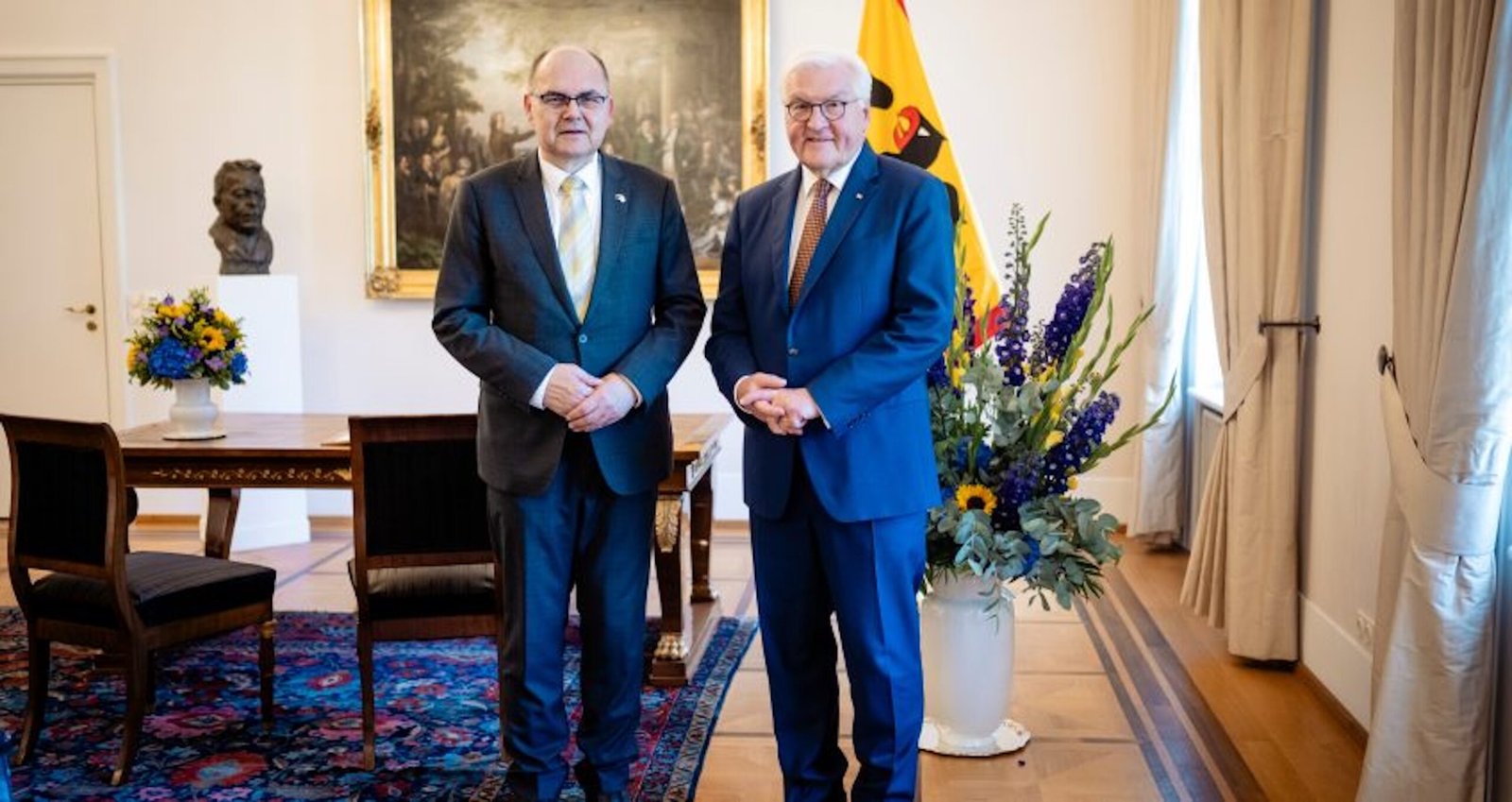
The immediate trigger has been the search for a successor to former High Representative Christian Schmidt, who resigned on 11 May. Rather than producing a routine diplomatic transition, German politician Schmidt’s resignation exposed profound disagreements within the governing Peace Implementation Council (PIC) Steering Board,[1] the executive body responsible for overseeing civilian implementation of the Dayton Agreement (and important in this case, appointing the High Representative). This consists of Canada, France, Germany, Italy, Japan, United Kingdom, United States, European Union (represented through the European External Action Service/EU institutions), Presidency of the Council of the European Union, European Commission, Organisation of the Islamic Cooperation (OIC), represented by Türkiye.

Washington is backing veteran Italian diplomat Antonio Zanardi Landi (currently Ambassador of the Sovereign Military Order of Malta to the Holy See), whose candidacy has the support of both the United States and Italy. According to US officials, Landi (75), has extensive diplomatic experience that makes him well placed to oversee Bosnia and Herzegovina during a period of political uncertainty, while encouraging a gradual transfer of responsibility from the OHR to domestic institutions. US Secretary of State Marco Rubio publicly endorsed the nomination, describing Landi as “capable of providing stability”.
However, France, Germany and the United Kingdom have instead rallied behind French diplomat René Troccaz, currently France’s Special Envoy for the Western Balkans. European governments argue that BiH’s institutions remain too fragile to contemplate weakening the authority of the High Representative and have expressed concern that any premature reduction in international oversight could embolden nationalist leaders, particularly Republika Srpska President Milorad Dodik, who has consistently and openly challenged the legitimacy of both the OHR and central institutions.
This disagreement has paralysed the Peace Implementation Council and despite repeated negotiations, its members have failed to agree on Schmidt’s successor, prompting Washington to warn that it may now reconsider its broader role within BiH’s international governance architecture should the deadlock continue. Such public disagreements between the United States and its closest European partners would have been almost unthinkable only a few years ago.
On 2 July, the PIC SB failed to agree once more and appointed the Principal Deputy HR, Louis Crishok (US diplomat) as acting HR, setting a deadline of 14 July for a final decision.
But underlying this diplomatic confrontation is an even more contentious issue: the Southern Interconnection gas pipeline.
Strategically, the project has long been viewed as a critical element of Bosnian energy security. The pipeline would connect Bosnia and Herzegovina directly to Croatia’s gas transmission network and LNG terminal on the northern island of Krk, providing an alternative to Russian gas supplies that currently dominate the Bosnian market. For both NATO and the European Union, reducing Russian energy dependence has remained a long-standing strategic objective throughout South-Eastern Europe.
In principle, therefore, the project should enjoy broad international support. The controversy instead concerns who will build it.
Earlier this year, authorities in Sarajevo selected the little-known American company AAFS Infrastructure and Energy to develop the project. The company has limited experience in major infrastructure construction but reportedly maintains close personal links to figures within Trump’s political and business networks. Transparency concerns surrounding the procurement process prompted criticism from European officials and civil society organisations in the country; questions were raised over the absence of an open competitive tender and the compatibility of the process with BiH’s EU accession obligations.
European diplomats increasingly believe that the Southern Interconnection has become the Trump administration’s main strategic priority in the region. According to diplomatic sources on the record, many European officials suspect Washington’s determination to reshape the leadership of the OHR is explicitly linked to ensuring that the gas pipeline proceeds without institutional or legal obstacles. While the Trump administration has denied any improper motivation, the perception has significantly complicated relations within the Western alliance.
And adding further complexity are reports concerning expanding Trump family business interests in Bosnia and Herzegovina. Donald Trump Jr. has made high-profile visits to Republika Srpska, while American investors linked to the Trump political network have shown increasing interest in energy and infrastructure projects throughout the country. Critics argue these developments reinforce the impression that commercial interests are playing an unusually prominent role in US policy. Supporters counter that greater US investment will only strengthen the country’s economy while accelerating diversification away from Russian energy.
For Bosnia and Herzegovina itself, the consequences extend well beyond a diplomatic appointment or a single infrastructure project. The country remains deeply divided between the Federation of Bosnia and Herzegovina and Serb-dominated Republika Srpska, with constitutional reform stalled and state institutions frequently paralysed by ethnic vetoes. The troublesome Dodik continues to advocate greater autonomy for Republika Srpska while rejecting the authority of the High Representative, creating recurring tensions with Sarajevo and Western governments. Against this backdrop, any weakening of the OHR carries significant implications for constitutional stability.
The dispute also highlights broader changes in transatlantic strategy. European governments continue to approach BiH primarily through the prism of EU enlargement. By contrast, the Trump administration has signalled a greater transactional emphasis on commercial diplomacy, energy security and reducing long-term international commitments. These differing priorities increasingly place Brussels and Washington at odds over how BiH should be governed during its transition towards European integration.
And for sure, the implications extend across the wider Western Balkans. Regional leaders are closely watching whether the West is able to oversee a coherent approach towards BiH, or whether competing national agendas will begin replacing the coordinated policies that have underpinned regional stability since the mid-1990s. For Russia, such open divisions among Western allies present an opportunity to exploit political fragmentation. For aspiring EU members across the Western Balkans, the dispute raises broader questions about the future credibility and cohesion of the wider Euro-Atlantic project itself.
Whether the eventual compromise favours Antonio Landi, René Troccaz or another consensus candidate (current EU Envoy for the Belgrade-Pristina dialogue, Danish diplomat, Peter Sorensen’s name has been touted), the unseemly episode has revealed a significant geopolitical shift. Bosnia and Herzegovina is once again serving as a strategic testing ground, not for confrontation between East and West, but now, for competing Western visions of diplomacy, security and economic influence. As energy security, commercial interests and international governance increasingly intersect, the outcome will shape not only BiH’s political future, but also the credibility of Western engagement across the entire Western Balkans for years to come.
Lincoln Gardner
