

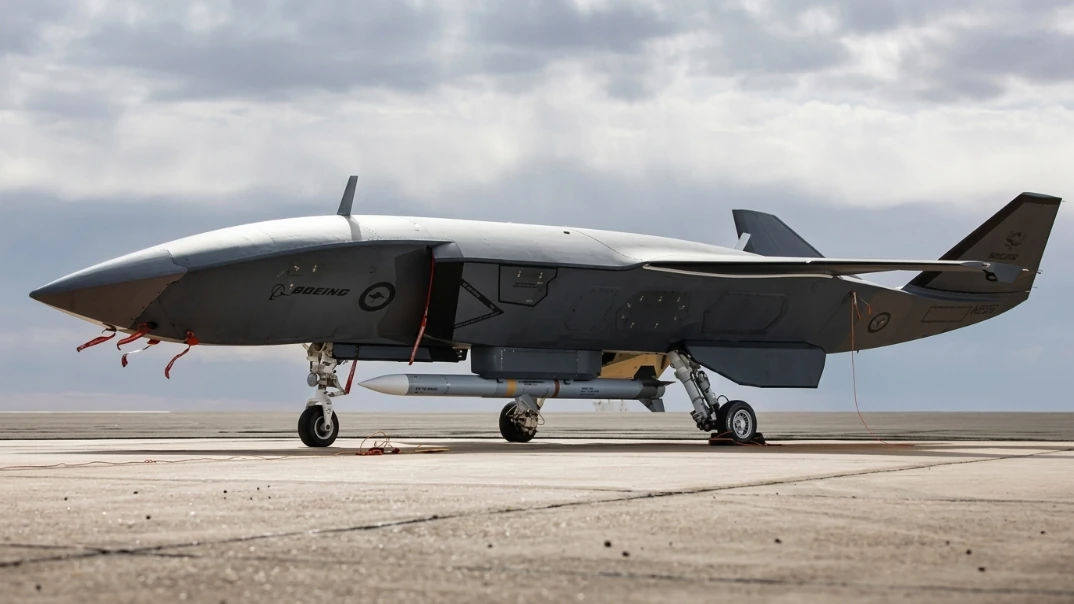
Defense Feeds, London – Boeing debuts MQ-28 Ghost Bat drone in Europe, bringing its collaborative combat aircraft (CCA) concept to one of the world’s most closely watched defense markets as the United Kingdom accelerates plans for autonomous airpower under its future combat aviation strategy.
The European appearance of the Australian-developed unmanned aircraft comes as NATO members increasingly evaluate how crewed fighters and autonomous platforms can operate together in contested airspace.
The debut reflects a wider transformation in military aviation, where unmanned aircraft are expected to complement rather than replace advanced fighter jets by extending sensor coverage, carrying additional payloads and assuming higher-risk missions.
Boeing Debuts MQ-28 Ghost Bat Drone in Europe
The milestone as Boeing debuts MQ-28 Ghost Bat drone in Europe introduces European defense planners to one of the most mature collaborative combat aircraft currently under development. Originally designed in partnership with the Royal Australian Air Force, the MQ-28 is intended to operate alongside crewed combat aircraft while performing missions that expand the effectiveness of the overall force.
Unlike traditional remotely piloted aircraft, collaborative combat aircraft are designed with a high degree of autonomy. They can fly in coordination with manned fighters, share sensor information, conduct reconnaissance and potentially carry mission payloads while responding to commands from a human operator.
The Ghost Bat’s modular nose section allows mission equipment to be adapted for different operational requirements, giving military planners greater flexibility as new technologies become available. This open-architecture approach is intended to simplify future upgrades without requiring extensive redesign of the aircraft itself.
Its European debut also aligns with growing interest among NATO allies in autonomous systems that can integrate with existing fourth- and fifth-generation combat aircraft.
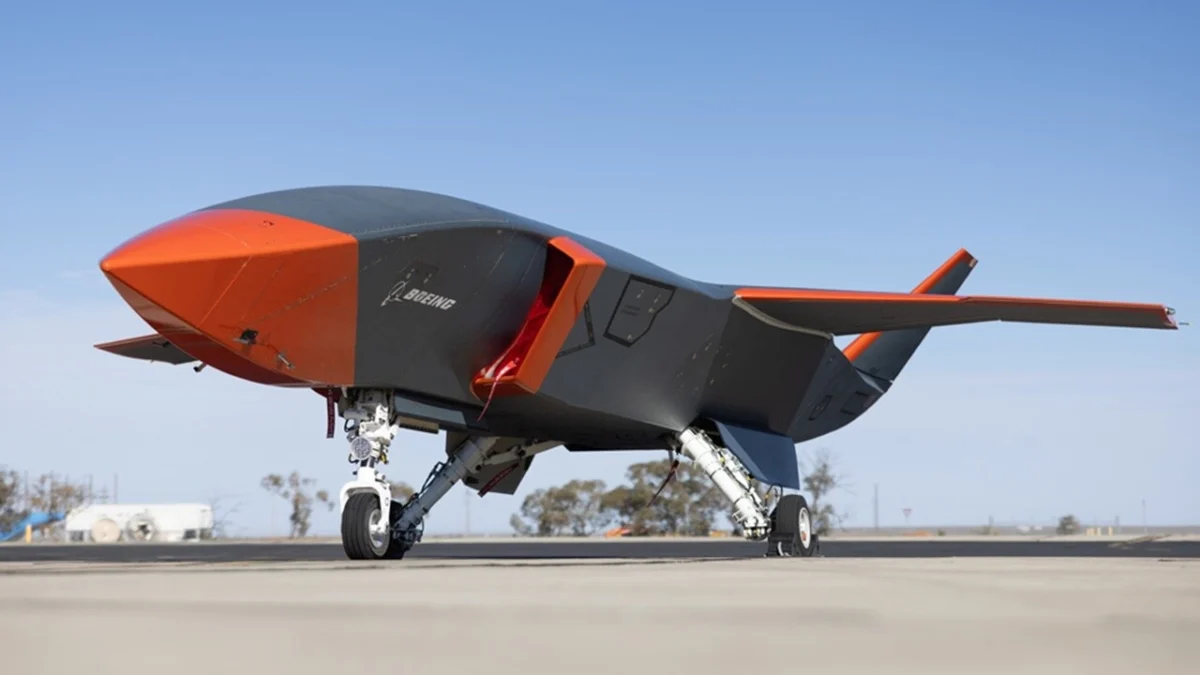
The UK Is Expanding Its Collaborative Combat Aircraft Vision
The appearance of the MQ-28 coincides with the United Kingdom’s efforts to advance its own collaborative combat aircraft initiatives. British defense planners increasingly view autonomous aircraft as an essential component of future air operations, particularly alongside platforms such as the Eurofighter Typhoon and the future Global Combat Air Programme (GCAP) fighter.
Collaborative combat aircraft are expected to perform a wide range of supporting tasks, including intelligence gathering, electronic warfare, communications relay and strike support. Assigning these missions to autonomous platforms could allow crewed aircraft to focus on command, decision-making and high-value engagements while reducing pilot workload in complex operational environments.
The concept has gained momentum across several allied nations as advances in artificial intelligence, secure data links and autonomous flight control make coordinated manned-unmanned teaming increasingly practical.
Rather than viewing drones solely as independent reconnaissance assets, air forces are now exploring integrated formations where multiple autonomous aircraft support a single crewed fighter, creating a more distributed and resilient combat force.
A New Direction for Future Air Combat
The decision as Boeing debuts MQ-28 Ghost Bat drone in Europe illustrates how collaborative combat aircraft are becoming a central element of next-generation airpower strategies. Major defense programs in the United States, Australia and Europe increasingly emphasize autonomous systems that can operate alongside advanced fighters while extending operational reach and reducing risk to aircrews.
For Boeing, presenting the Ghost Bat in Europe offers an opportunity to demonstrate a platform that has already accumulated significant flight-testing experience while positioning the aircraft for potential future cooperation with allied air forces.
From a strategic perspective, collaborative combat aircraft could enable air forces to field larger and more adaptable formations without proportionally increasing the number of crewed fighters. Autonomous wingmen can provide additional sensing, deception, electronic warfare or strike capacity while allowing commanders to distribute combat power across a wider operational area.
As NATO members continue investing in future combat aviation, autonomous aircraft are expected to become a routine part of air operations rather than a niche capability.
The fact that Boeing debuts MQ-28 Ghost Bat drone in Europe signals the accelerating shift toward manned-unmanned teaming, where collaborative combat aircraft will play an increasingly important role in enhancing survivability, expanding mission flexibility and supporting allied air superiority in future conflicts.
