

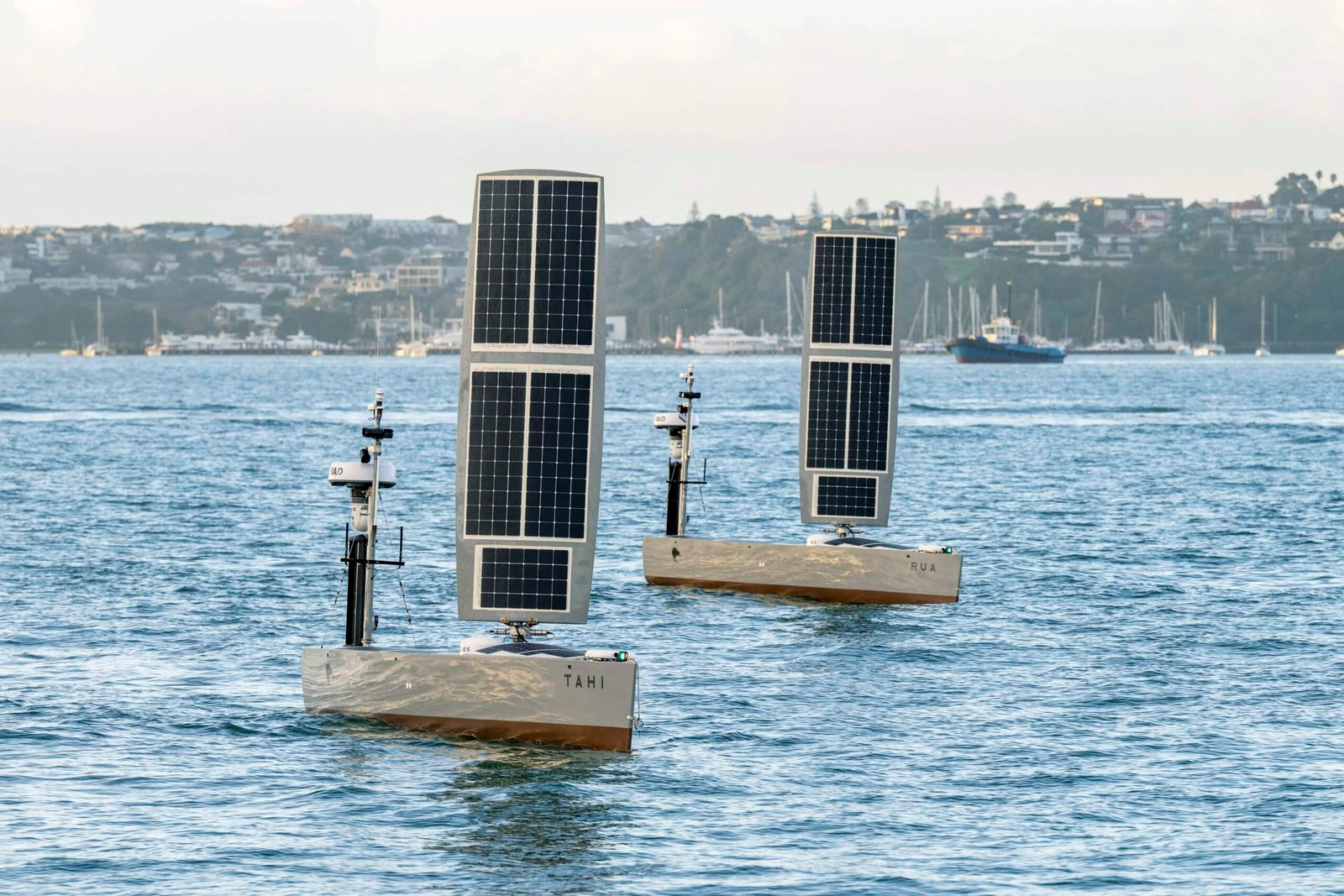
Wind, wave and sun are taking Bluebottle unmanned surface vehicles (USV) from Australian firm Ocius Technology far and wide across the region’s oceans. This diaspora was reinforced by a spate of announcements and inaugurations in recent days.
On 16 October 2026, Ocius opened a new engineering, production and maintenance hub for Bluebottles in Sydney. Notably, this hub incorporates a 24/7 global operations centre.
This expands the capacity of Ocius to meet growing demand for maritime surveillance from Australian and overseas customers. Indeed, the centre can conduct round-the-clock mission monitoring for both defence and civilian clients.
As well as 15 Bluebottles operated by the maritime Border Command, Ocius is manufacturing 40 Bluebottles for the Royal Australian Navy. These were ordered for A$176 million in March this year.
Ocius said in a press statement: “The site also incorporates dedicated research and development areas to advance the Bluebottle platform and its sensor, autonomy and mission systems. Additional engineering, manufacturing and technical space will accommodate Ocius’ rapidly increasing high-tech workforce, having grown to over 130 staff, while also allowing room for further scale.”
Ocius has gained 70 additional staff over the past year, and it now boasts a workforce of 130.
Robert Dane, Chief Executive Officer of Ocius Technology, commented of the new facility: “It brings together the people, technology and manufacturing expertise needed to build Australia’s Bluebottle fleet at pace, sustain vessels already operating at sea and respond to increasing global demand.”
Minister for Defence Industry Pat Conroy said, “I’ve said before that I want potential adversaries to understand that when they see an Ocius Bluebottle USV, it is a signal to get out of our ocean.”
Conroy, at an unveiling of uncrewed capabilities at the Anduril Australian facility in Sydney on 19 October, announced: “We’re…announcing today the first payload for the Ocius Bluebottle, which will be a thin-lined towed array sonar that will have the ability to detect submarines. So yet again we’re adding more capability to our autonomous systems.”

This effort falls under Project Sea 1200, and it sees Thales Australia’s BlueSentry thin-line acoustic array plus an accompanying acoustic processing suite integrated onto the Bluebottle.
The Bluebottle, plus Anduril Ghost Shark and C2 Robotics Speartooth autonomous underwater vehicles, will deploy to the USA in late October for an AUKUS Pillar II Maritime Big Play event in San Diego.
A week earlier, Ocius Technology opened its first ever maintenance base outside Australia. This facility is located in Auckland, New Zealand, and it will help service the pair of Bluebottles acquired by the Royal New Zealand Navy (RNZN) in April 2025, following a seven-month trial with the platform.
Ocius New Zealand opened the new centre on 13 October. The company stated, “The facility also gives Ocius a strategically located base in the Pacific as demand for autonomous maritime surveillance continues to grow across the region.”
New Zealand has a vast maritime territory to monitor, as do many Pacific Island nations. As an asymmetric and low-cost solution, the Bluebottle USV’s persistence is ideal for rampant border security and transnational crime threats.

Rear Admiral Garin Golding, Chief of Navy, RNZN, remarked, “New Zealand is a maritime nation. Its prosperity, security and its role in the Pacific depends on knowing what’s happening across a vast area of ocean. USVs are an important part of the defence force’s move towards smarter, more sustainable maritime surveillance.”
Golding added, “Our Bluebottles, Tahi and Rua, are enabling us to maintain a persistent watch over New Zealand’s maritime environment. The establishment of Ocius NZ’s facility means our Bluebottles can be maintained locally, maximising their time at sea and strengthening New Zealand’s national security.”
Indeed, the RNZN and New Zealand Customs Service recently operated its two Bluebottles in Fijian waters in a four-week deployment. They were carried to Fiji by C-130J Hercules, and the USVs identified 137 vessels of interest as they conducted surveillance of maritime routes and established a pattern of life.
Australia has committed to donating Bluebottle USVs to Fiji too. Conroy made the announcement last week, promising that the first units would arrive in Fiji in early 2027. They will help combat drug smuggling, illegal fishing and organised crime, although Australia did not reveal how many USVs would be gifted.
There have also been media reports that Japan is acquiring two Bluebottles, although this has not been confirmed officially.
by Gordon Arthur
