

In an interview with David Sale — Managing Director, Asia Pacific, Bell — the company’s 2026 agenda comes into focus: expand the portfolio, accelerate the MV-75, and deepen training ecosystems like the Veris VR simulator. With 1,900 aircraft in the field and industrial partnerships spanning Japan, Korea, and Southeast Asia, Sale explains why Bell is evolving from a rotorcraft provider into an integrated capability partner for the region’s commercial and defense operators.
With such a storied history, what can you tell us about Bell’s current presence in Southeast Asia and Asia Pacific as a whole?
Bell’s presence in Asia Pacific is deeply rooted and continues to grow with real momentum. Our regional hub is strategically anchored at Seletar Aerospace Park in Singapore — a 15,500 square meter facility that serves as the operational heartbeat of everything we do in this part of the world. It houses our regional office, a full-service MRO and completion center, spares warehousing, and, critically, our Bell Training Academy. This isn’t a satellite office — it’s a serious, purpose-built investment that reflects how central Asia Pacific is to Bell’s global strategy.
Beyond Singapore, Bell maintains a meaningful physical presence in two of the region’s most significant markets. In Japan, Bell has a local office in Tokyo since 2015 serving as the in-country base for commercial and technical support. That office milestone, however, only tells part of the story — Bell’s history in Japan stretches back over 70 years, with the first deliveries of Bell aircraft made in 1952. Historically, Bell has supplied most of the helicopters — over 1,500 aircraft — that have been used or are still in service in Japan.
In Australia, Bell operates its own dedicated service center through Bell Textron Australia, at Coffs Harbour Airport in New South Wales and Redcliffe, Queensland, offering a comprehensive suite of capabilities including MRO, avionics upgrades, customization, structures, paint, and worldwide parts logistics — making it a full-service hub for Australian and broader regional customers. In addition, Bell has a dedicated overhaul facility in Clontarf, Brisbane too.
Underpinning our physical footprint is a robust network of approved Customer Service Facilities (CSF) and Authorized Maintenance Centers (AMC) that extends Bell’s reach across the wider Asia Pacific region. These AMCs and CSFs ensure our Bell operators have access to factory-backed support close to where their aircraft operate.
Throughout Asia Pacific, approximately 1,900 Bell aircraft are flying every single day across this region — in corporate transport, law enforcement, emergency medical services, and defense roles.

Can you share with us what Bell’s focus is for 2026?
2026 is a year of clear strategic intent for us. On the commercial side, we are continuing to build on the extraordinary momentum of platforms like the Bell 505 and Bell 429, both of which are performing exceptionally well across Asia Pacific. The Bell 429 is gaining traction in the region — we recently announced new orders from Japan’s Nakanihon Air and a corporate Bell 429 delivery to an Indonesian customer.
On the defense side, 2026 marks a significant acceleration. Our MV-75 — the U.S. Army’s Future Long-Range Assault Aircraft — is moving into a new phase, and the strategic relevance of that program to the Indo-Pacific theatre cannot be understated.
We debuted TRU Simulation’s Veris Virtual Reality Bell 505 Flight Simulator in Asia Pacific at this year’s Singapore Airshow that signals our intent to deepen our training ecosystem across the region, not just sell aircraft. In short, 2026 is about deepening roots while reaching new horizons.
How is Bell actively looking to expand on its current portfolio and strengthen its presence in the region?
Portfolio expansion for us is happening on multiple fronts simultaneously. The Bell 505 has evolved well beyond its initial identity as a light commercial helicopter — it is now proving itself as a genuine military training platform, and we see more than 50 potential opportunities across the Asia Pacific region alone as ageing military trainer fleets come due for replacement. That is a significant pipeline, and we are actively pursuing it.
At the same time, we are investing in the full ecosystem around our aircraft. The debut of the Veris VR at Singapore Airshow 2026 is a perfect example — it signals that Bell is not just an aircraft manufacturer, we are a capability partner. Customers across this region are increasingly looking for integrated solutions: the platform, the training, the support, and the long-term service relationship.
What are some of Bell’s latest achievements with its well-established line of military rotorcraft and customer base in Asia?
The milestone we are perhaps most proud of in recent memory is the successful completion of delivery of 40 Bell 505 helicopters to the Republic of Korea Armed Forces — both the Army and the Navy. Seeing 40 Bell 505s now training the next generation of Korean military aviators is deeply satisfying, and it validates the platform’s credentials in the demanding world of military aviation.
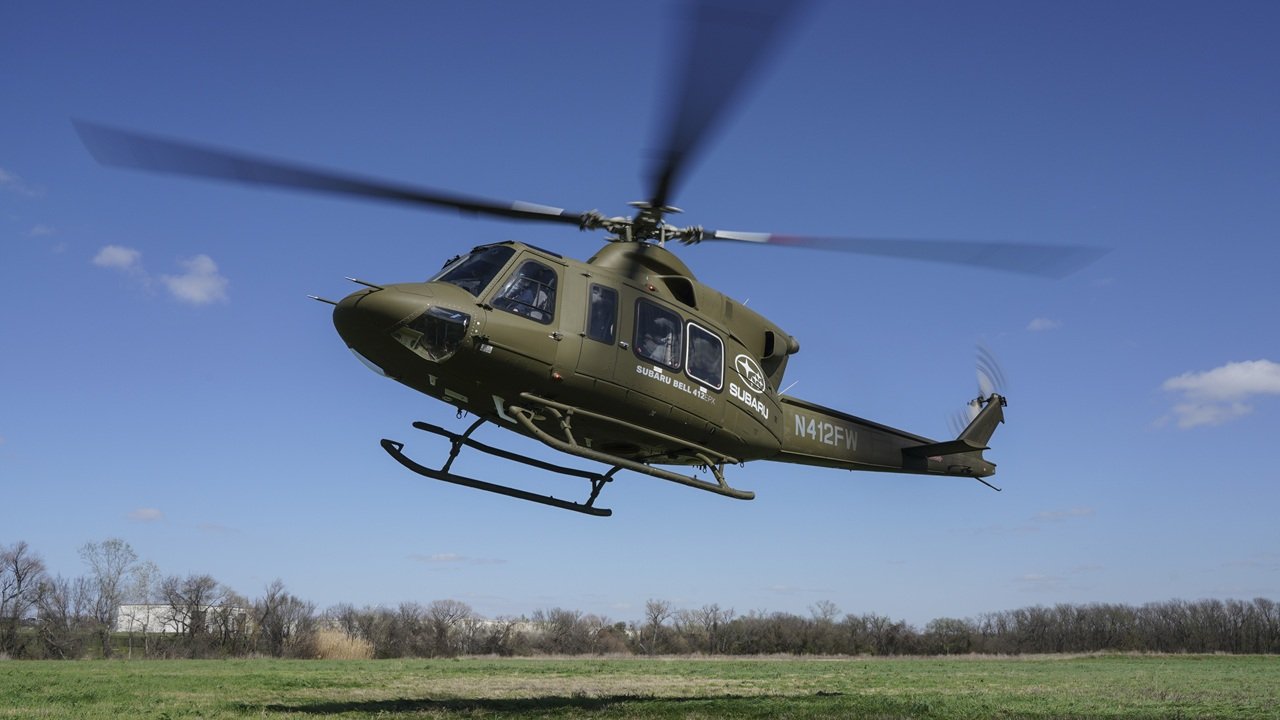
Beyond Korea, the Bell 412 continues to be a workhorse of choice for militaries across the region. We continue to see interest from several Southeast Asian defense customers for the latest variant the SUBARU Bell 412EPX. Indonesia also has a long and trusted relationship with the Bell 412 family, operating one of the largest fleets in the region.
Looking ahead, the MV-75 is the program that has the attention of defense planners across the Indo-Pacific. With twice the speed and twice the range of any current-generation rotorcraft, it represents a generational leap in long-range assault capability — precisely the kind of reach that matters enormously in a geography as vast as the Pacific.
What have been Bell’s strategies in collaboration with regional partners to strengthen their respective defense industries?
Our philosophy is straightforward: meaningful engagement, not transactional selling. We believe the strongest customer relationships are built when we contribute to the development of a nation’s sovereign defense capability, not just fulfil a purchase order.
In Japan, the relationship with SUBARU is the clearest illustration of this: Bell’s long-term partner SUBARU was awarded the contract for the Japan UH-X program to replace the Japan Ground Self-Defense Force’s fleet of UH-1J aircraft, with the UH-2 utility helicopters being built by SUBARU at their facility in Utsunomiya. That industrial partnership — spanning local assembly, engineering contribution, and government aircraft customization — directly sustains skilled aerospace employment and sovereign maintenance capability within Japan.
This commitment is also expressed through the everyday work of our CSF and AMC network. These Bell approved and audited third party facilities across the region are not passive maintenance shops — they are active contributors to local aerospace industries.
Across the region, our CSF and AMCs employ locally trained technicians, hold national airworthiness certifications, and build the kind of in-country expertise that governments increasingly look for when making long-term platform decisions.
We take a long view in this region. The relationships we are building today — in training, in MRO, in technology transfer, and in industrial collaboration — are the foundations of a presence that will serve Asia Pacific for decades to come.
